That new fridge looks amazing in the kitchen. Two weeks later? Fingerprints everywhere. You wipe it down, and half a day later they’re back. Add cooking grease and it gets worse. Then there’s the oven: six months in, the panel edges start darkening and the colour barely matches what you bought.
People usually blame poor cleaning or rough handling.
That’s not always the problem.
Sometimes it’s the panel itself. More specifically, the layers you can’t see.
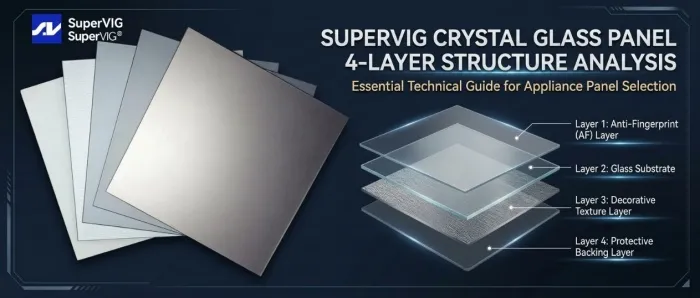
SuperVIG® decorative glass panels have four layers, from front to back. Think of a sandwich, except every layer tackles a very specific engineering problem.
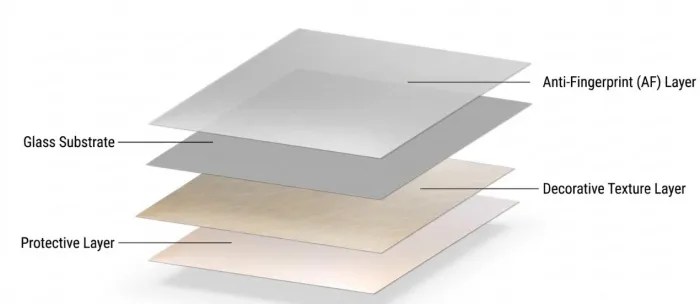
The outermost layer is too thin to see. It’s the AF layer: Anti-Fingerprint.
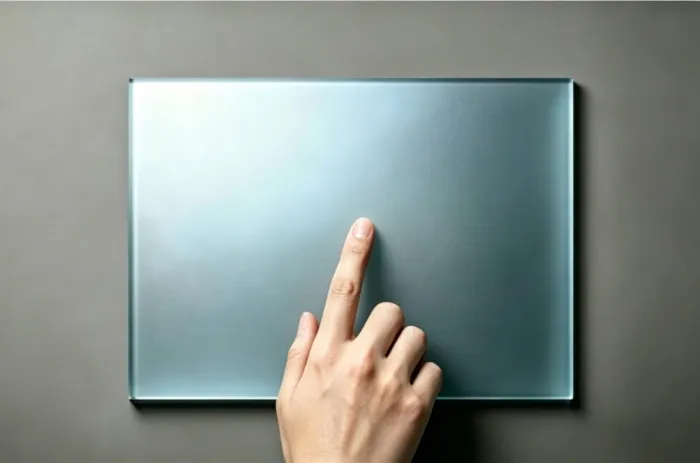
Here’s how it works. Inspired by the lotus-leaf effect, the AF coating covers the glass with a fluorinated nanomaterial that brings surface energy way down. Water and oil bead up instead of spreading across the surface. Oils from fingerprints struggle to stick, and any marks left behind wipe off easily.
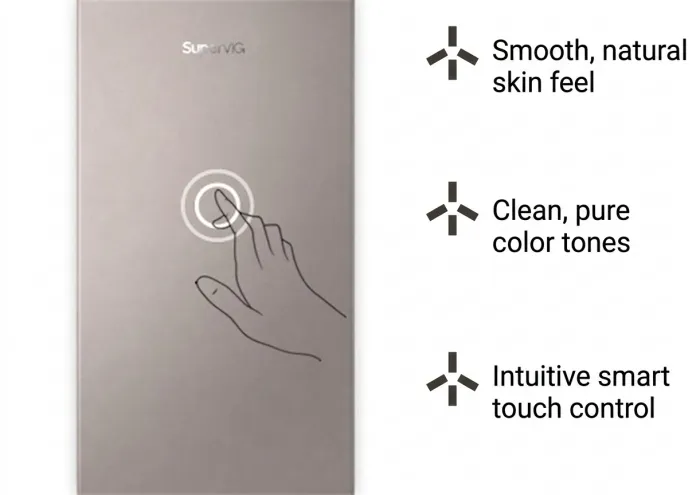
That tiny coating makes a big difference.
Without it, dark panels, especially black and space grey, become fingerprint magnets. Open the fridge a dozen or more times a day and the greasy marks quickly ruin that premium look. In a kitchen, grease and steam make things even tougher: ordinary appliance panels can look grimy within months.
SuperVIG®’s AF coating works with the fourth protective layer to improve cleaning efficiency by about 50% compared with ordinary panels. That figure comes from comparative testing.
This is the glass itself: toughened glass in thicknesses from 2.8 to 6 mm.
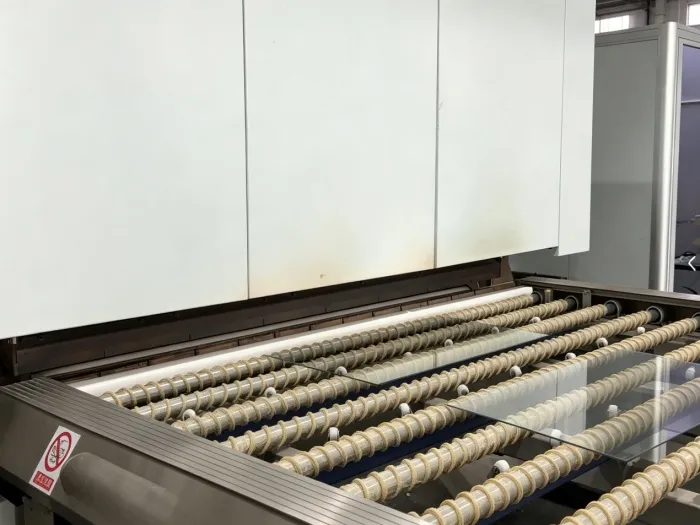
If you’ve ever cracked a phone screen, you know glass strength matters. Toughening creates internal stresses so that, if the glass breaks, it breaks into small pieces rather than sharp shards. These appliance panels follow GB 15763.2, the safety-glass standard for buildings, with a much larger safety margin than ordinary decorative glass.
Why offer so many thicknesses?
Different appliances put different loads on the panel. Large fridge doors need 4 to 6 mm for flatness and strength. A smaller washing-machine panel can use 3.2 mm, while internal partitions can use 2.8 mm. Get the thickness wrong and you’re either paying for glass you don’t need or risking a warped panel.
Then there’s another detail that matters: optical consistency.
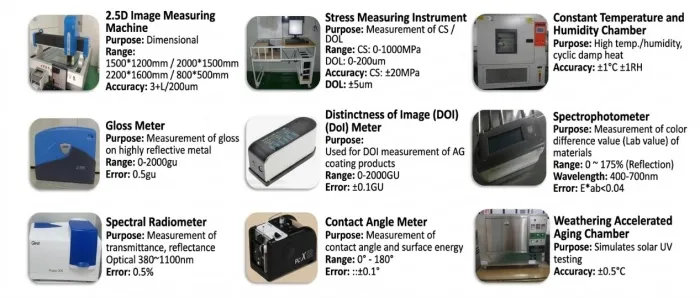
SuperVIG® uses a spectrophotometer to keep the colour difference E*ab within 0.04. For context, the threshold for a visible colour difference is roughly 1.0. At 0.04, panels from the same batch look the same to the eye. For appliance brands, that means more consistent production and fewer rejects.
This is the layer buyers actually notice. Colour, texture and the way light plays across the panel all come from here.
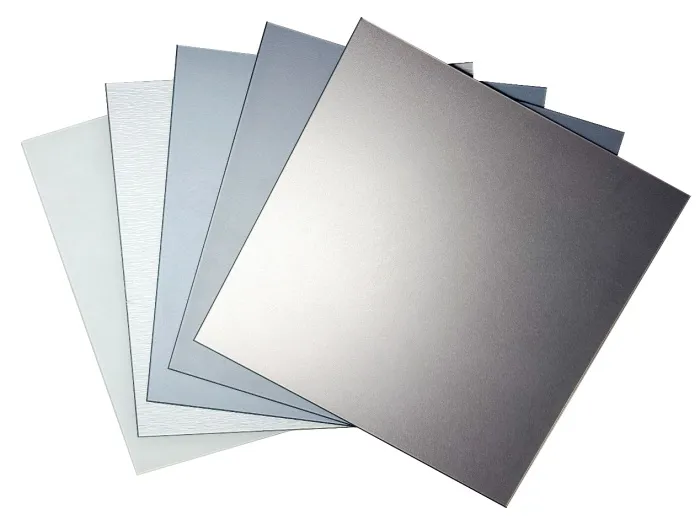
There are two main production routes.
Low-temperature screen printing applies ink to the glass surface. It’s flexible and quick to prototype, making it a good fit for testing new designs and small custom batches.
High-temperature screen printing takes it further. Ceramic enamel is fired onto the glass during toughening at 600 to 700 °C, bonding the colour to the substrate. It resists heat, fading and repeated cleaning, making it the go-to option for volume production and hot-running kitchen appliances.
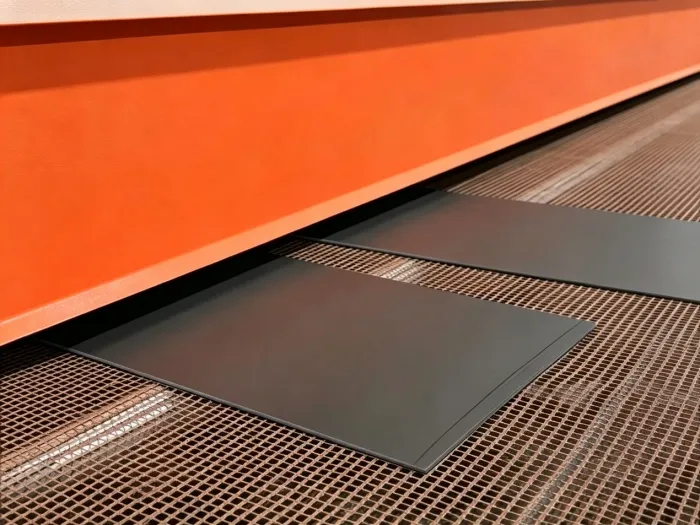
One thing people often miss: getting the colour right can take more than one print pass.
A gradient can need five or six layers of ink, each with its own mesh count, screen tension and ink mix. Mesh counts range from 80 to 300. A higher count gives finer detail but lets less ink through, so more passes may be needed to build the right colour depth. One layer off, and the final colour is off too.
That’s why a cheap panel can look fine as a sample, then turn into a colour-matching headache in mass production.
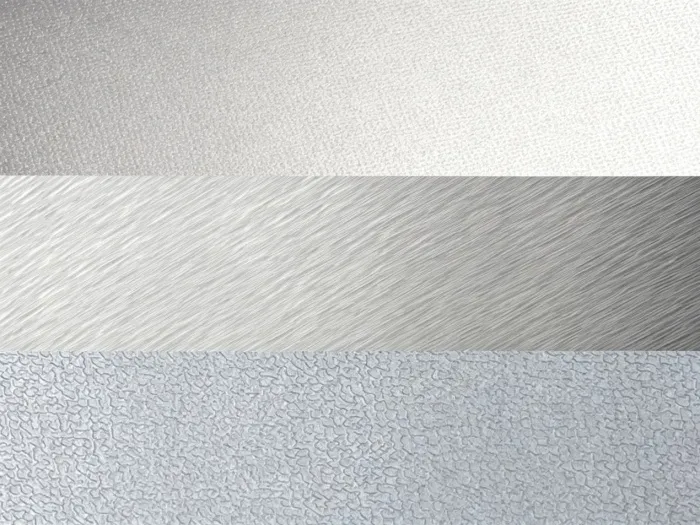
SuperVIG® also uses AG etching. Chemical etching creates microscopic structures in the glass surface, turning mirror-like reflections into diffuse reflections to cut glare. It can also create brushed, fabric-like or leather-like textures you can feel. The texture is etched into the glass itself, so there’s no surface film to peel off.
Most buyers don’t even know this innermost layer is there.
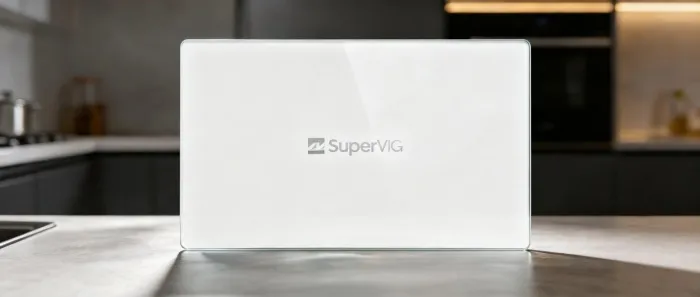
Its job is simple: protect the printed design and coatings from scratches and corrosion. During shipping, installation and everyday use, the panel’s back can meet foam, tape, cleaning products and humid air. Without protection, the design can oxidise and peel from behind, leaving faded patches visible from the front.
SuperVIG® protects both sides: the AF layer tackles fingerprints and grease on the front, while the protective layer guards against scratches and corrosion on the back. The printed layer also achieves the highest ISO cross-cut adhesion rating, staying bonded to the glass even when a blade cuts a test grid into the coating.
By now, you’ve probably spotted it: these layers depend on each other.
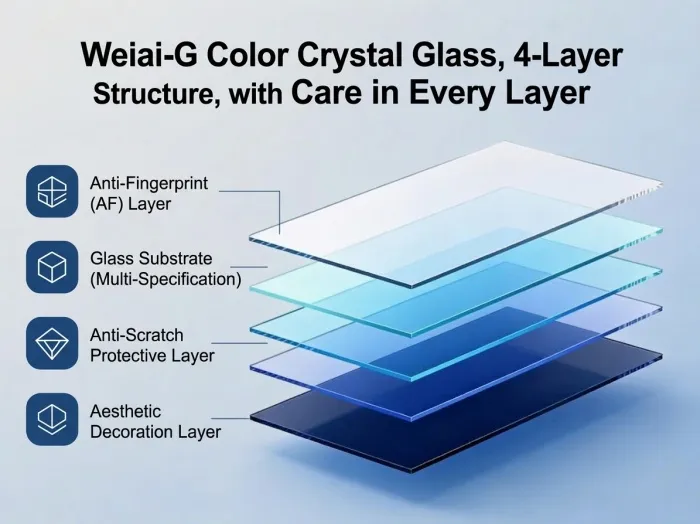
The AF coating lowers surface energy to help keep grease from sticking.
The toughened glass provides strength and safety.
The decorative layer uses low- or high-temperature screen printing to deliver the look and durability.
The protective layer guards the back.
The production sequence, material compatibility and temperature profiles all have to line up. Get one wrong and the finished panel suffers.
For example, the AF coating goes on after toughening and screen printing because high temperatures damage the fluorinated material. AG etching happens before printing because the etching solution attacks ink. Getting those steps right is where manufacturing experience shows.

SuperVIG® is a wholly owned subsidiary of Super Tech Advanced Material, Chinese stock code 688398. Its parent company brings over 20 years of vacuum-insulation experience and a deep understanding of insulation materials, manufacturing processes and sealing to decorative glass panels.
SuperVIG®’s four-layer panel is already proven in production at 4.8 million sets a year. From fridges, ovens and washing machines to home energy-storage systems, it offers one-stop panel supply across a wide range of applications.
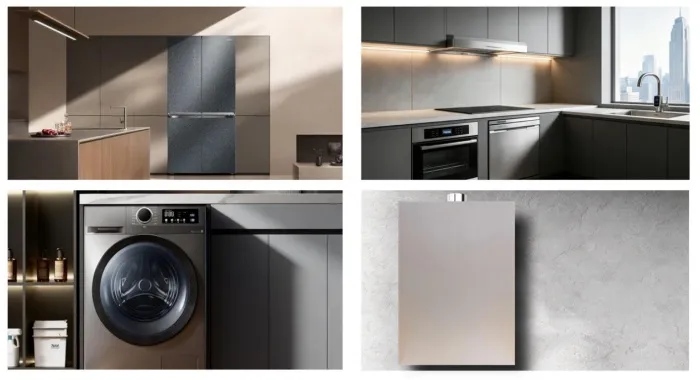
At panel level, those four layers tackle fingerprints, discolouration and wear.
For appliance brands, the aim is a finish that still looks good five years later, with lower lifetime after-sales costs and fewer disappointed customers.
A durable, safe, recyclable decorative glass panel also helps cut waste and gives buyers a better experience for longer.
The details buyers never see are often the ones that keep them happy.
 English
 日本語
日本語 한국어
한국어 français
 Deutsch
 Español
 italiano
 русский
 português
 العربية
 Türkçe