Fujian Super Tech Advanced Material Co., Ltd.
market@supertech-vip.com

Blog

Aug. 07
2026
Thermal Conductivity 0.012 W/(m·K), Resilience Coefficient 0.48: LNG Elastic Blanket Performance Explained Through Storage Tank Design
At coastal LNG receiving terminals, the massive storage tanks stand like fortresses guarding energy security. Storing LNG at -162℃ safely for decades takes far more than a strong shell.Today, we look...
Thermal Conductivity 0.012 W/(m·K), Resilience Coefficient 0.48: LNG Elastic Blanket Performance Explained Through Storage Tank Design
Aug. 06
2026
The Furnace Heat Is Still Intense 30 Metres Away—The Insulation Challenge in a Steel Mill Control Room
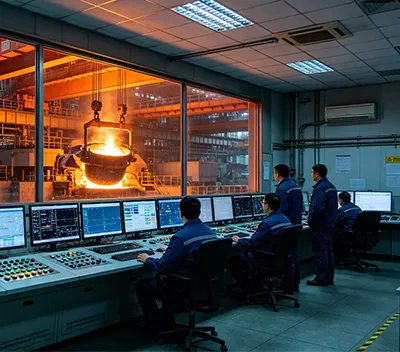
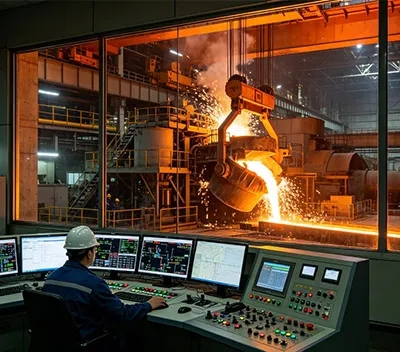
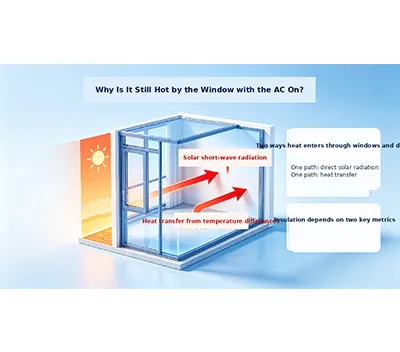
Why is a steel mill control room still hot and energy-hungry when the air conditioning runs all year?The furnace is 30 metres away. There is a wall in between. And a pane of glass.The air conditioning...
The Furnace Heat Is Still Intense 30 Metres Away—The Insulation Challenge in a Steel Mill Control Room
Aug. 05
2026
From a Local VIP to Global LNG Thermal Solutions supplier : VacuEco Supertech VPU Cryogenic Insulation for LNG Carriers
LNG Carrier Insulation Enters a New Stage of CompetitionLNG carriers are known as the tiaras of shipbuilding because of their high technical barriers and construction complexity. As global shipbuildin...
From a Local VIP to Global LNG Thermal Solutions supplier : VacuEco Supertech VPU Cryogenic Insulation for LNG Carriers
Aug. 03
2026
How Should LNG Carrier Insulation Be Selected? See How VacuEco Supertech VPU Metal-Barrier Vacuum Insulation Panels Can Recover the Space of an Entire Cargo Tank
Thicker LNG tank insulation can cost more than space—it can reduce transport revenue.For an LNG carrier, hull dimensions, tank capacity, and sailing efficiency determine the vessel’s overall economi...
How Should LNG Carrier Insulation Be Selected? See How VacuEco Supertech VPU Metal-Barrier Vacuum Insulation Panels Can Recover the Space of an Entire Cargo Tank
Aug. 01
2026
Selecting Suitable Insulating Windows and Doors Based on Heat-Transfer Principles (Part III): Vacuum Insulating Glass Systems for Insulating Windows and Doors
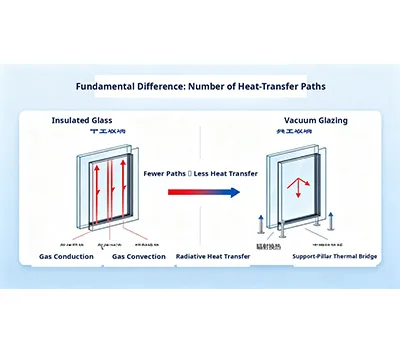
Insulating Glass Unit Systems for Insulating Windows and DoorsA vacuum insulating glass system consists of two or more panes separated by support pillars to form a vacuum cavity between the panes. The...
Selecting Suitable Insulating Windows and Doors Based on Heat-Transfer Principles (Part III): Vacuum Insulating Glass Systems for Insulating Windows and Doors
Jul. 31
2026
Selecting Suitable Insulating Windows and Doors Based on Heat-Transfer Principles (Part II): Factors Affecting the Performance of IGU-Based Insulating Window and Door Systems
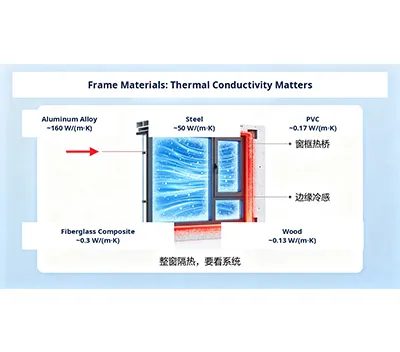
Glass Used in IGU-Based Insulating Window and Door SystemsSolar-control coated glass. A coating changes the optical properties of the glass, selectively reflecting and absorbing solar radiation in the...
Selecting Suitable Insulating Windows and Doors Based on Heat-Transfer Principles (Part II): Factors Affecting the Performance of IGU-Based Insulating Window and Door Systems
Jul. 30
2026
Selecting Suitable Insulating Windows and Doors Based on Thermal Performance (Part I): Introduction to Energy-Control Characteristics and Basic Performance Metrics
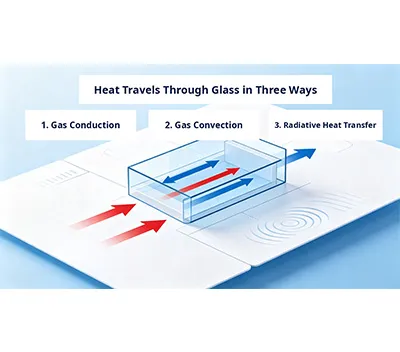
Classification and Distribution of Heat-Transfer Control in Insulating Windows and DoorsSolar Radiation at the Earth’s Surface (AM1.5)Solar radiation reaches the Earth’s atmosphere as electromagneti...
Selecting Suitable Insulating Windows and Doors Based on Thermal Performance (Part I): Introduction to Energy-Control Characteristics and Basic Performance Metrics
Jul. 29
2026
Reduce Edge Leakage in Conventional VIPs: VAP® Aluminum-Based VAP for Multiple Industries
Professionals working with refrigerators and freezers, cold-chain logistics, ultra-low-energy buildings and rail-transit insulation often face several practical problems:Conventional bag-type VIPs req...
Reduce Edge Leakage in Conventional VIPs: VAP® Aluminum-Based VAP for Multiple Industries
Jul. 28
2026
From −196°C to 800°C: VAP® ST Vacuum Insulation Panels for Specialized Equipment
Professionals working with cold-chain tanks, LNG pipelines, high-temperature industrial equipment and insulated specialty transport often face several common problems:Conventional bag-type VIPs requir...
From −196°C to 800°C: VAP® ST Vacuum Insulation Panels for Specialized Equipment
Jul. 27
2026
Why Can Insulation Thickness Determine Whether an LNG Carrier Is Profitable?
Read this article to see why shipowners are actively switching to cryogenic insulation materials.A Factor Many People OverlookWhat determines the competitiveness of an LNG carrier?Many would say its e...
Why Can Insulation Thickness Determine Whether an LNG Carrier Is Profitable?
Jul. 26
2026
Why Are LNG/LPG Carrier Tanks Increasingly Dependent on High-Performance Cryogenic Insulation at -162℃?
From LNG carriers to LPG carriers, this article explains the core logic behind cryogenic tank insulation material selection.Start with One Number-162°C。This is the storage temperature of liquefied n...
Why Are LNG/LPG Carrier Tanks Increasingly Dependent on High-Performance Cryogenic Insulation at -162℃?
Jul. 24
2026
From Construction Cost to Operating Return—Why LNG Tank Insulation Must Be Evaluated on Total Lifecycle Cost
A Decision Many Terminal Owners Later RegretDuring the planning stage of a large LNG tank project, insulation-budget discussions often sound like this:“This material costs XX more. Can we use a cheap...
From Construction Cost to Operating Return—Why LNG Tank Insulation Must Be Evaluated on Total Lifecycle Cost