Before You Read
What is the biggest challenge in operating your terminal?
A. Excessive load on the BOG handling system
B. Persistently high compressor energy consumption
C. Difficulty reducing tank BOR any further
D. All of the above
Share your answer in the comments and see which issue matters most to others.
Have you ever calculated how much electricity your terminal uses each year to handle BOG? The figure may be much higher than you expect. Today, instead of discussing equipment, let's look further upstream: how can we reduce BOG generation at the source?

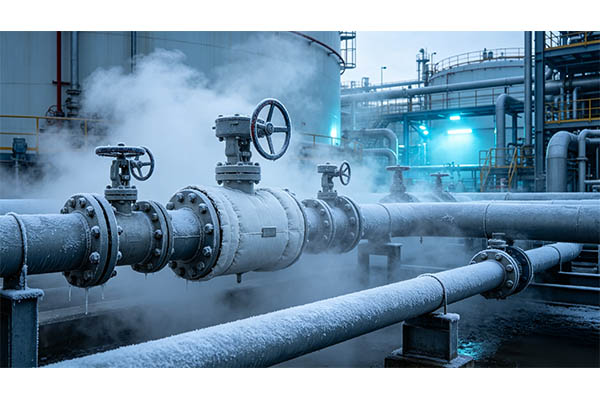
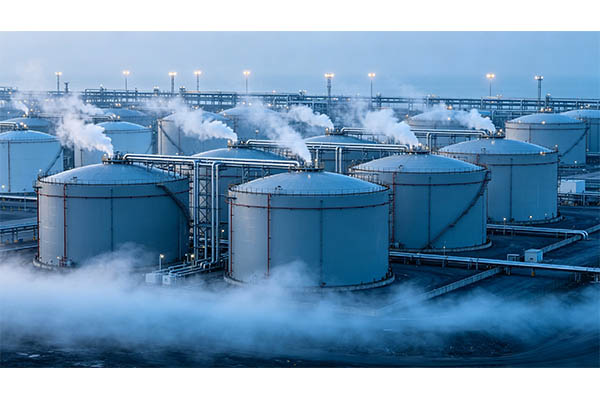
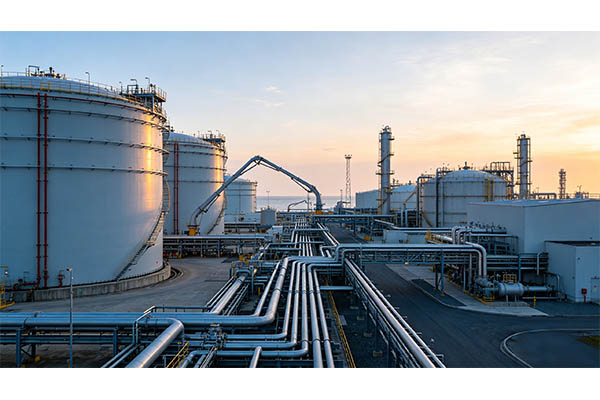
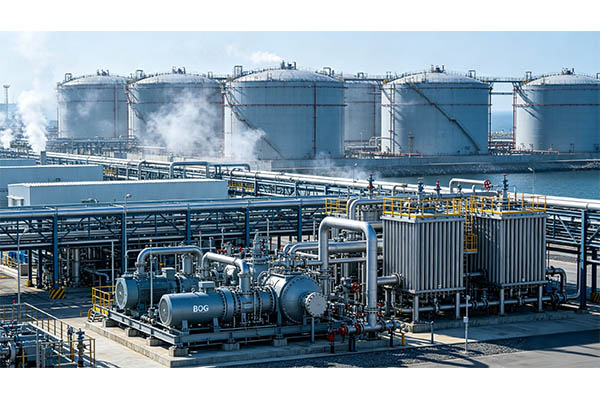
At an LNG terminal, BOG (Boil-Off Gas) is unavoidable. LNG is stored at -162°C. Any heat ingress causes natural boil-off. This BOG does not simply disappear; the terminal must manage it through compression, recondensation, send-out, or the vent protection system. LNG is stored at -162°C. Any heat ingress causes natural boil-off. The system is mature and reliable, but it also creates continuous energy demand and equipment load.
More BOG means a busier system; less BOG means easier operation.
Simple in principle, but solutions that address the source are still rare.
Many people focus on the BOG handling system but overlook a more fundamental question: why is so much BOG generated? The answer is simple: heat ingress. Better tank insulation means less heat entering the tank and less natural LNG boil-off. Therefore, improving tank insulation is one of the most fundamental ways to reduce BOG. Better tank insulation means less heat entering the tank and less natural LNG boil-off. However, as LNG terminals grow, energy costs rise, and operational requirements become more stringent, customers are looking for more advanced cold-insulation solutions.
What insulation system does your terminal use? Have you experienced high BOG levels?
Share your experience in the comments.
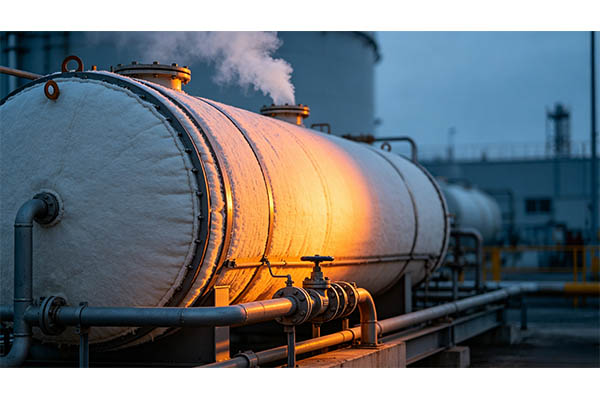
Developed by VacuEco, VPU (a metal-envelope vacuum insulation panel composite polyurethane module) uses vacuum insulation to greatly reduce heat transfer.
What is VPU?
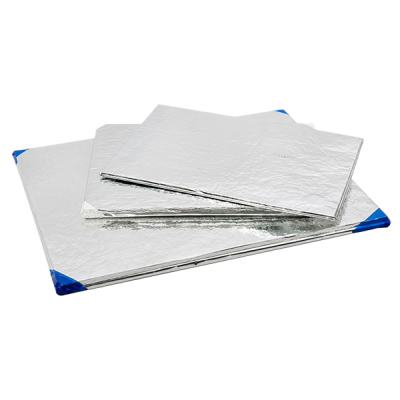
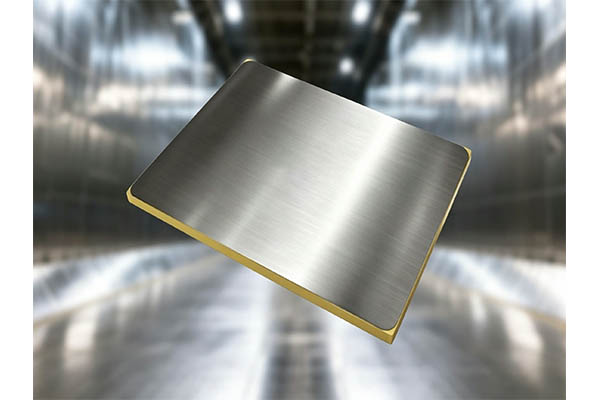
VPU (metal-envelope vacuum insulation panel composite polyurethane module), also known as a "VIP + PIR/PU Composite Insulation Panel," was developed by Super Tech. It combines a high-barrier 304 stainless steel VIP with PU/PIR.
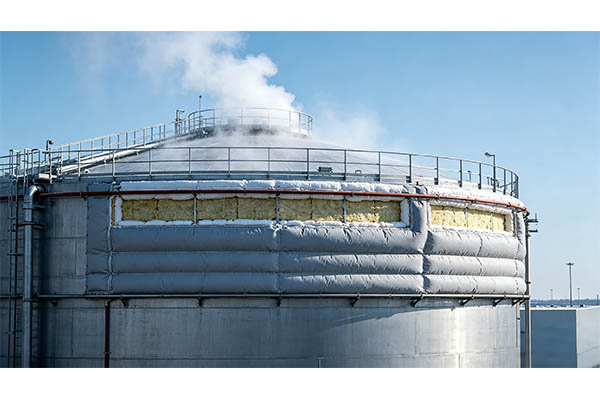
The vacuum eliminates gas-phase heat transfer, giving it much lower thermal conductivity than conventional insulation materials. VPU works on a simple principle: a vacuum insulation panel sealed in a high-barrier 304 stainless steel envelope is embedded in a polyurethane cold-insulation module. Under vacuum, gas conduction is almost eliminated, greatly restricting the path of heat into the tank.
Its metal VIP core has thermal conductivity as low as 0.6mW/m·K (0.0006W/m·K). Even after lamination, the composite achieves about 1.2mW/m·K (0.0012W/m·K), providing 25 times the insulation performance of perlite. Adding VPU insulation from Super Tech's VacuEco brand to the tank insulation system is like adding a highly efficient thermal barrier against heat ingress. With proper engineering design, a 200mm VPU insulation layer can provide insulation equivalent to an additional 1000mm of perlite, helping further reduce tank BOR and cut BOG generation by about 50%.
For terminal operators, the value of Super Tech VPU goes beyond low thermal conductivity.
The practical benefits are:
Lower load on the BOG handling system
Lower compressor operating load
Lower energy consumption in the recondensation syste
More stable operation during tank holding periods
More predictable long-term operating costs
In large-capacity tanks, even a modest reduction in BOR can deliver substantial economic value over time.
LNG terminals are energy infrastructure. The goal is not merely to optimize short-term investment, but to ensure reliable, economical, and stable long-term operation. VacuEco VPU brings high-performance insulation directly into the tank structure, reducing BOG at the source.
Less BOG means lower energy consumption; Lower system load means more operating margin; Less uncertainty means greater asset value.
For customers seeking more efficient terminal operations, VacuEco VPU is more than an insulation material—it is a proactive energy-management solution.
Join the Discussion
If your terminal could reduce its BOG handling load by 50%, how much could it save in annual operating costs?
Run the numbers in the comments, or share this with your operations team.
Want to know how VacuEco VPU can help your terminal reduce BOG?
Like and save this post for your next insulation-system selection.
Message us for a technical proposal.
VacuEco | Super Tech
Reduce BOG at the source and make terminal operations easier.
Term | Definition |
LNG | Liquefied Natural Gas: natural gas cooled to about -162°C until it becomes liquid. |
BOG | Boil-Off Gas: gas generated when external heat enters during LNG storage and causes natural vaporization. |
BOR | Boil-Off Rate: the percentage of total LNG inventory that evaporates within a given period; a key measure of tank insulation performance. |
VPU | A metal-envelope VIP composite polyurethane module developed by Super Tech, combining a metal-envelope vacuum insulation panel with polyurethane for high-performance cold insulation. |
VIP | Vacuum Insulation Panel: a high-performance insulation material with greatly reduced thermal conductivity through evacuation. |
Thermal Conductivity | A measure of a material's ability to transfer heat, expressed in mW/m·K. The lower the value, the better the insulation performance. |
Recondensation | The process of compressing and reliquefying BOG; one of the main methods used to handle BOG at LNG terminals. |
Perlite | An insulation fill commonly used in the annular space of LNG tanks, with thermal conductivity of about 30~40mW/m·K. |
Cellular Glass Block | An insulation material used at the base and sidewalls of LNG tanks, with good compressive strength. |
Full-Containment Tank | A large LNG storage tank with a 9% nickel steel inner tank and a prestressed concrete outer tank. |
 English
 日本語
日本語 한국어
한국어 français
 Deutsch
 Español
 italiano
 русский
 português
 العربية
 Türkçe