As of June 1, 2026, the new national energy efficiency standard for refrigerators (GB 12021.2-2025) has officially come into effect, which is widely regarded by the industry as the strictest energy efficiency standard.
We want to investigate a heated debate: Could using vacuum insulation panels (VIP) alone easily enable a refrigerator to meet the new national standard Grade 1? The answer is complicated.
Today, let's explore the cutting-edge thermal insulation technology, to whit, vacuum insulation panels.
Many people fail to realise how strict new energy efficient standards for home appliances such as New China Standards are. Taking a 500L double-door refrigerator as an example, under the previous China Standards, a daily electricity consumption of approximately 0.92 kWh meet requirements; however, the new Class 1 energy efficiency requirement is 0.55 kWh/day—a decrease of 40%.
This means that relying solely on traditional polyurethane foam for insulation would be insufficient.
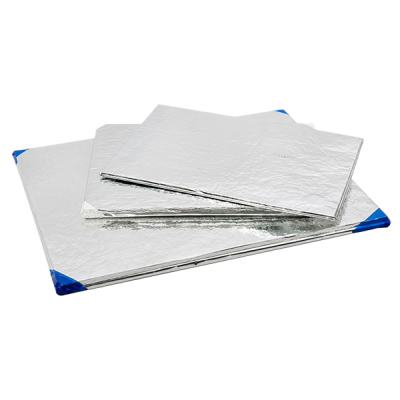
To achieve low power consumption and minimal space usage, vacuum insulation panels are a good fit.
Vacuum insulation panels, due to their extremely low thermal conductivity (8–10 times that of conventional materials), is likely to become a necessary component rather than an optional one for high cold capacity and energy-efficient refrigerators, however, this does not mean vacuum insulation panels will work for every refrigerator.
Even with vacuum-insulated panels many refrigerators still underperform. Why?
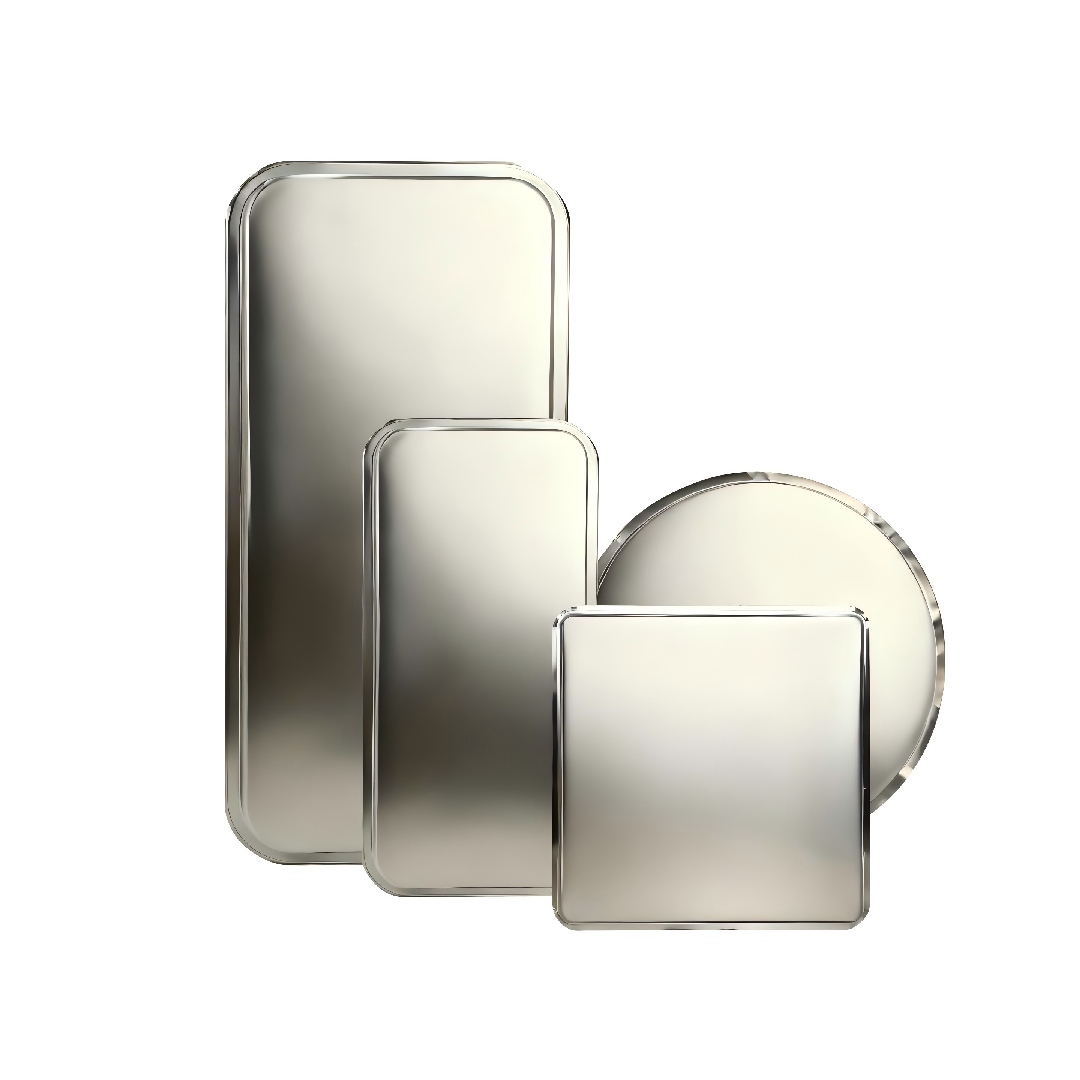
The answer lies in multi-layer barrier film.
Most vacuum insulation panels use multi-layer barrier film to reduce leakage. Of which the excess film material must be manually folded. This approach not only incurs high labor costs but also is unreliable. More, multi-layer barrier film sealing is highly susceptible to damage during transportation or handling, as well as during the foaming process in refrigerator manufacturing; additionally, their barrier performance deteriorates under prolonged exposure to temperature fluctuations. Lastly, puncture will make vacuum insulation panels immediately useless and must be replaced.
Puncture risk is a serious issue for vacuum insulation panels.
To address this weakness, Supertech launches shell-type and four-sided sealed vacuum insulation panel—the Supertech-Yujia (Supertech-VAP). This flagship product is noted for its reliability and puncture resistance.
The Supertech VAP employs shell sealing, completely eliminating the manual edge folding process. This reduces the risk of air leakage caused by edge damage as well as make a smoother surface.
Impacts are inevitable for the manufacture and daily use of refrigerator. Most VIPs are not up for rough handling, whereas the Supertech VAP uses different casing that enhances puncture resistance by over 6.2 times.
Laboratory data show that the Supertech VAP not only exhibit low thermal conductivity at room temperature but also maintain exceptionally low thermal bridging effects and long service life under extreme conditions such as high-temperature/high-humidity environments (e.g., tropical climates) and low-temperature storage.
Many people wonder why Supertech has become the industry leader in refrigerator used VIPs.
To become a component vendor for big home appliance brands is difficult.
This is the "Purgatory of Benching Vendors". Many of our clients require the panel to undergo life tests, simulating a ten-year aging process under conditions ranging from tropical rainforests and severe cold regions to desert environments. They also conduct aging comparisons between Supertech vacuum-insulation panels and other vendors stuffs, evaluating their energy-saving performance relative to traditional materials, as well as their resistance to aging and stability. And we often come up on top.
Customers will integrate our VIP into multiple prototype devices, repeatedly calculating the optimal volume of foam material required for precise panel fit. Every curvature and groove position must be perfectly aligned. These tests prove our VIPs really work in real life.
After passing the laboratory stage, custom VIPs for each customer must also be mass produced in production line. Supertech not only manufactures insulation panels but has also implemented automated production line upgrades to align with customers' customized production schedules. Particularly, the introduction of four-sided sealing technology has significantly improved product yield rates, with relentless focus on product stability and achieving exceptionally low defect rates—this is precisely what enables major clients to place large-scale orders. The folded-edge vacuum insulation panels produced continuously to date undergo multiple quality inspections before shipment, ensuring the excellence of core insulation components and meeting stringent energy efficiency requirements for customers.
As Wang Kunming, Chairman of Sait New Materials, noted, the relationship between enterprises and their customers has evolved beyond mere transactions to a value-driven "strategic symbiosis."
With the advent of China's "dual-carbon" strategy and the narrowing of national subsidies for home appliances to only those with Class 1 energy efficiency, the adoption rate of vacuum insulation panels in China is soaring.
But today, Supertech has long extended far beyond refrigerators.
The company’s VIP 2.0 technology has expanded application scenarios across a wide temperature range from-269°C to 800°C. Whether ensuring low-temperature endurance for new energy vehicles or achieving energy efficiency in high-temperature industrial pipelines, Supertech is driving the future of insulation with its "vacuum technology".
So, returning to the original question: can a VIP along enable a refrigerator to meet the requirements of Level 1 New China Energy Efficiency Standards?
The answer is:
Vacuum insulation panels have long been a popular choice for mid-to-high-end refrigerators. Using material with great thermal performance like VIP can greatly increase the chance of your refrigerator being compliant with the current universal new National Standard Grade 1 energy efficiency requirement.
Moreover, by opting for the Supertech VAP that uses "Four-Sided Sealing" with exceptionally low leakage rates and comprehensive full-industry-chain testing capabilities, your refrigerators would be more than enough qualified for Class 1 energy efficiency.
In the fiercely competitive home appliance market, Supertech has been dedicated for over two decades to developing vacuum insulation technology. Through comprehensive independent R&D across its entire industrial chain, it has become the go-to choice for global refrigerator giants for two decades, emerging as the "invisible champion" behind their success.
Make energy-efficient refrigerators be Level 1 New China Energy Efficiency Standards and EU's Grade A compliant. Choose Supertech–your trusted "vacuum insulation guardian".
 English
 日本語
日本語 한국어
한국어 français
 Deutsch
 Español
 italiano
 русский
 português
 العربية
 Türkçe