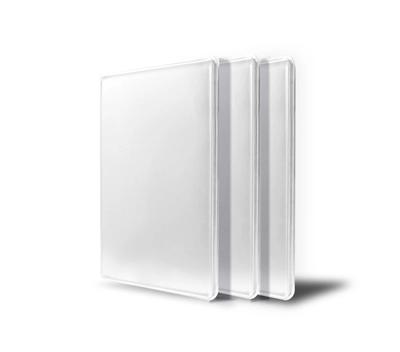
Before You Read
Membrane tanks are emerging as a new trend in LNG storage. Do you know how they differ from conventional full-containment tanks?
Tell us in the comments: does your project use a full-containment tank or a membrane tank?
By the end of this article, you may find that the membrane tank + VPU combination offers more value than expected.

Historically, China’s onshore LNG terminals have mainly used full-containment tanks made with 9% nickel steel. This mature, widely adopted technology remains the mainstream solution for large LNG storage tanks.
In recent years, however, onshore membrane LNG tanks have entered the deployment stage in China. They use an approximately 1.2 mm corrugated stainless-steel membrane as the sealing layer, while the external prestressed-concrete structure carries the main load. Key advantages include:
Approximately 90% less steel;
Approximately 10% more usable volume;
Better seismic performance.
As membrane tank projects in Tianjin Nangang, eastern Guangdong, and other locations come online, matching high-performance cryogenic insulation modules are creating a new market opportunity.
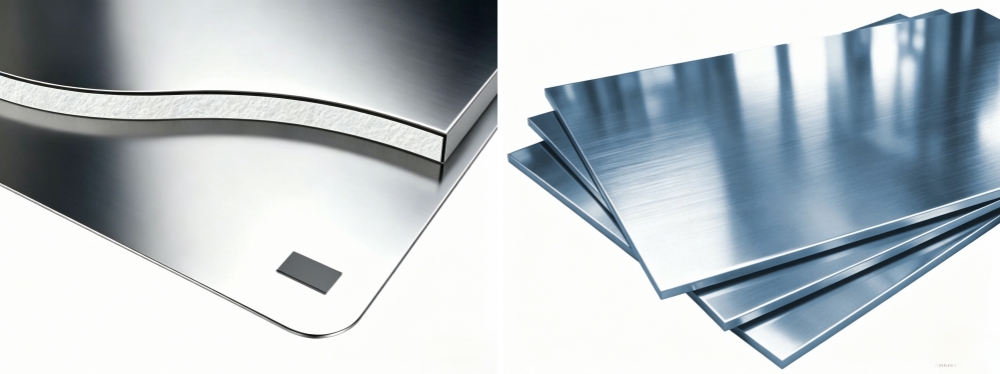
Unlike traditional 9% Ni steel full-containment tanks, membrane tanks typically use PU or PIR cryogenic insulation modules. These modular systems are factory-made, easy to install on site, and highly consistent in size.
VPU—the metal-barrier VIP/PU composite module developed by Super Tech’s VacuEco team—is naturally suited for integration into membrane tank insulation modules.
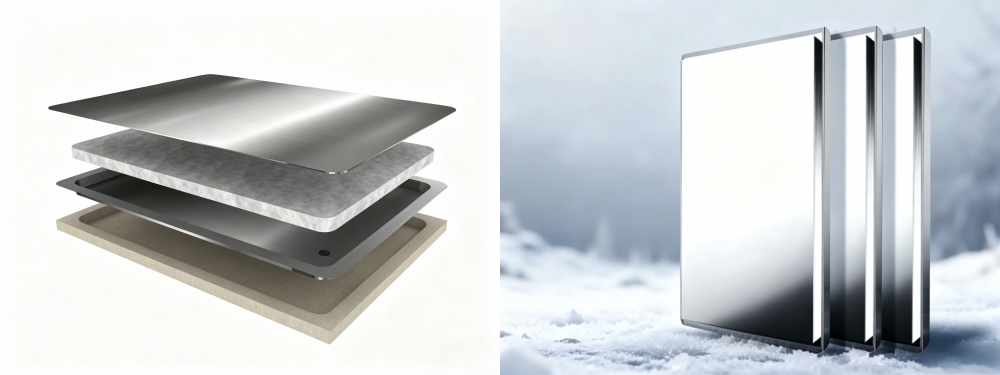
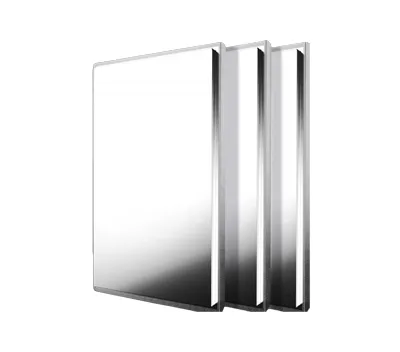
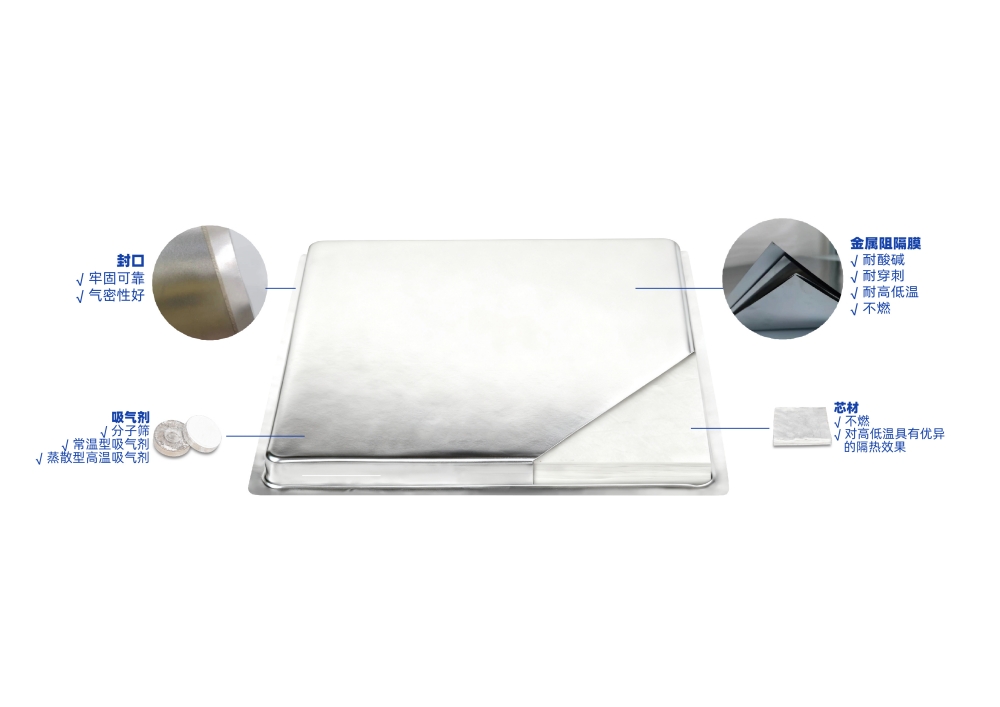
VPU (Metal-Barrier VIP + PU Composite Module), also described as a “VIP + PIR/PU Composite Insulation Panel,” is a new cryogenic insulation material in which a high-barrier 304 stainless-steel vacuum insulation panel (VIP) is embedded in a polyurethane (PU) foam module. It combines the ultra-low thermal conductivity of vacuum insulation with the engineering advantages of a PU module.
During PU or PIR module production, the metal VIP can be foamed into the center of the module, effectively embedding a vacuum insulation layer inside the cryogenic insulation module.
This upgrades the module from conventional insulation to high-efficiency composite cryogenic insulation, improving thermal performance and reducing daily boil-off.
Which cryogenic insulation module is your membrane tank project currently using? Have you considered a composite VPU solution? Share your thoughts in the comments.
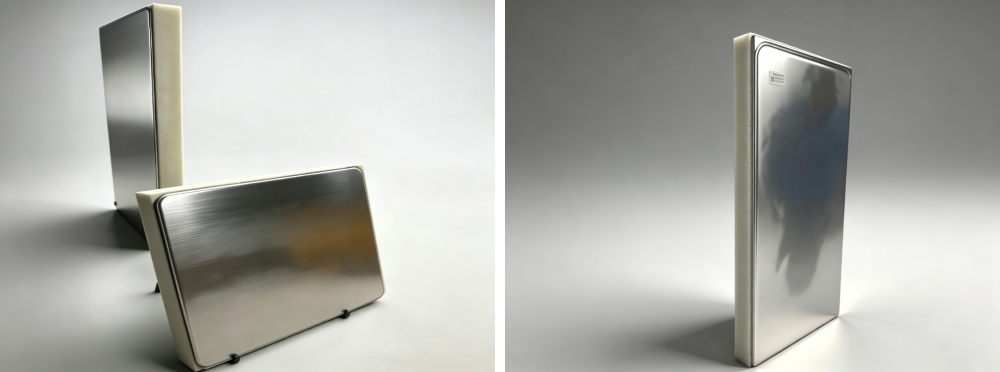
For engineering customers, even the most advanced material is difficult to adopt if installation is complex or integration is difficult.
The advantage of using VacuEco VPU in membrane tanks is that it can be integrated into the existing cryogenic insulation module system. Customers gain higher performance while keeping an installation method similar to conventional modular construction.
This means:
✅ Highly modular;
✅ Better dimensional accuracy;
✅ Easier on-site installation;
✅ Higher cryogenic insulation performance;
✅ More usable volume with a thinner insulation layer (for comparison, 20 mm provides insulation performance comparable to 200–300 mm of asbestos insulation);
✅ Better suited to standardized project deployment.
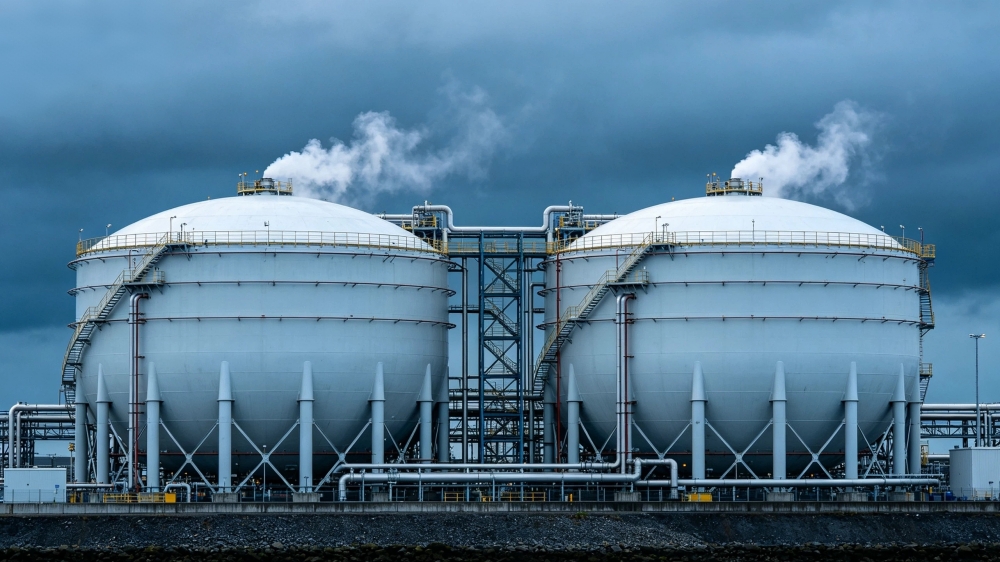
One of the core advantages of membrane tanks is improved space utilization and lower metal consumption. Super Tech VPU further enhances their cryogenic insulation performance.
Membrane Tank + VPU can create a more competitive storage tank solution:
Lighter structure;
Less steel;
Greater usable volume;
Higher cryogenic insulation performance;
Lower BOR;
More economical long-term operation.
For owners, design institutes, and EPC contractors planning membrane tank projects, VacuEco VPU is more than a material upgrade. It is a system-level enhancement for the next generation of LNG storage tanks.
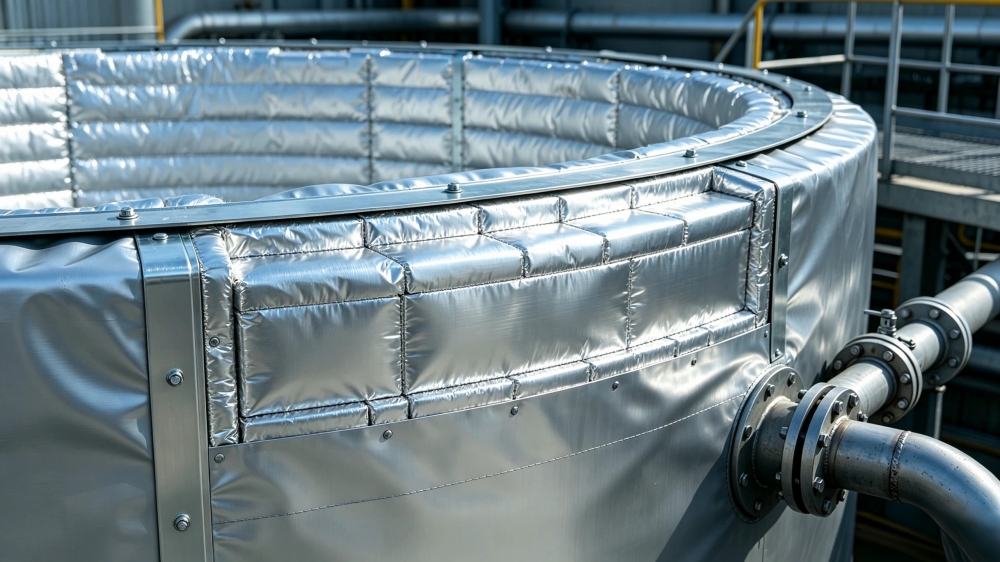
LNG storage tank technology is evolving. As tank designs expand from conventional full-containment tanks to membrane tanks, cryogenic insulation systems must evolve as well.
VPU gives membrane tank cryogenic insulation modules higher performance, better compatibility, and greater customer value.
Future LNG storage tanks should not only be larger and safer, but also more energy-efficient.
VacuEco VPU is an important choice for bringing high-performance cryogenic insulation to membrane LNG storage tanks.
Interested in a Membrane Tank + VPU Solution?
Like and save this technical reference.
Selecting cryogenic insulation modules for a membrane tank project? Message VacuEco for a tailored recommendation.
Share this with design institutes and owners planning membrane tank projects.
Glossary
Term | Definition |
LNG | Liquefied natural gas in liquid form at approximately -162°C |
Membrane Tank | An LNG storage tank that uses an approximately 1.2 mm corrugated stainless-steel membrane as the sealing layer, with the external prestressed-concrete structure carrying the load |
Full-Containment Tank | A conventional large LNG storage tank with a 9% nickel-steel inner tank and a prestressed-concrete outer tank |
VPU | Metal-barrier VIP/PU composite module, a new high-efficiency cryogenic insulation material developed by Super Tech |
VIP | Vacuum Insulation Panel, a vacuum-encapsulated insulation material with extremely low thermal conductivity |
PU | Polyurethane foam, commonly used as the base material in cryogenic insulation modules for LNG membrane tanks |
PIR | Polyisocyanurate foam, an insulation material with better heat resistance and flame retardancy than PU |
BOR | Boil-off rate: the percentage of total LNG volume that evaporates each day; lower is better |
BOG | Boil-off gas: gas naturally vaporized from LNG due to heat ingress |
Thermal Conductivity | A measure of a material’s heat-transfer capability, in mW/m·K; lower values indicate better insulation |
Modular Cryogenic Insulation | An installation method in which cryogenic insulation materials are prefabricated into standard modules in a factory and transported to the site for installation |
9% Nickel Steel | Cryogenic steel containing approximately 9% nickel. It retains good toughness at -196°C and is the main material used for full-containment tank inner shells. |
 English
 日本語
日本語 한국어
한국어 français
 Deutsch
 Español
 italiano
 русский
 português
 العربية
 Türkçe