Electric vehicles are advancing faster than ever. Battery energy density is climbing, charging speeds are pushing past 350 kW, and pack designs are becoming increasingly compact. Yet one fundamental engineering challenge remains at the center of every EV development program: how to manage heat inside a lithium-ion battery pack reliably, safely, and efficiently.
Thermal management directly determines how long a battery lasts, how safely it charges, and how consistently it performs across seasons and driving conditions. As traditional insulation materials struggle to meet the demands of next-generation EV platforms, Vacuum Insulation Panels (VIPs) are emerging as a high-performance thermal barrier solution for lithium battery systems.
This guide explains why battery thermal management matters, where conventional insulation falls short, and how VIPs address the specific thermal challenges of modern EV battery packs.
Lithium-ion battery cells operate best within a relatively narrow temperature window — commonly cited as approximately 20°C to 40°C for optimal performance. Outside this range, performance and safety are both affected.
Accelerated electrochemical degradation
Reduced charging efficiency and accepted current
Shortened cycle life
Increased risk of thermal runaway in severe cases
Reduced power output and available energy
Slower lithium-ion diffusion (limits charging rate)
Increased internal resistance
Reduced driving range
| Event | Heat Generation Level |
|---|---|
| DC fast charging (150–350 kW+) | Very high |
| High-speed acceleration | High |
| Regenerative braking | Moderate |
| High ambient temperature + solar load | Moderate to high |
| Cell imbalance or localized defects | Variable / potentially severe |
Without effective thermal control, heat distributes unevenly across battery cells, creating hot spots that accelerate localized aging and increase safety risk. A well-designed Battery Thermal Management System (BTMS) — combining cooling, heating, and insulation — is therefore essential for maintaining stable, safe operating temperatures throughout the battery’s service life.
Common insulation materials used in EV battery systems include polyurethane foam (PU foam), expanded polystyrene (EPS), fiberglass, ceramic fiber, and aerogel blankets. Each provides some degree of thermal protection, but all face meaningful constraints in modern EV applications.
EV manufacturers are under constant pressure to maximize battery capacity within a fixed pack volume. Traditional insulation materials require significant wall thickness to achieve acceptable thermal resistance. Every millimeter of insulation competes directly with:
cell volume
structural components
coolant routing
crash protection zones
Thicker insulation means less room for cells — directly reducing energy density.
During fast charging or a thermal event, materials with higher thermal conductivity allow heat to transfer more rapidly. This can:
accelerate temperature rise in adjacent cells
reduce the time available for detection and response
increase the risk of thermal propagation
Battery mass directly affects vehicle range and efficiency. Conventional insulation materials — especially when applied in the thicknesses needed for adequate performance — add unnecessary mass to battery modules and packs.
Repeated heating and cooling cycles can gradually degrade certain insulation materials, reducing their thermal resistance over the battery’s service life.
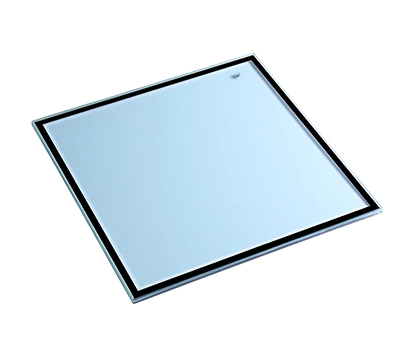
A Vacuum Insulation Panel achieves extremely low thermal conductivity by removing air from a sealed internal structure. Since air molecules are responsible for a large portion of conductive and convective heat transfer, eliminating them dramatically reduces heat flow through the panel.
Microporous core material (commonly fumed silica or glass fiber-based)
Multilayer high-barrier film (gas and moisture barrier)
Vacuum-sealed enclosure
Getter and desiccant materials (to absorb residual gases and moisture over time)
| Insulation Material | Typical Thermal Conductivity (W/m·K) |
|---|---|
| Vacuum Insulation Panel (VIP) | ~0.002–0.008 |
| Aerogel blanket | ~0.012–0.020 |
| PU foam | ~0.020–0.030 |
| XPS | ~0.028–0.035 |
| EPS | ~0.030–0.040 |
| Fiberglass | ~0.030–0.045 |
Note: Values vary depending on density, temperature, aging state, and test conditions.
VIPs can deliver 5 to 10 times better insulation performance than conventional foam materials at equivalent thickness — or achieve the same insulation with a fraction of the thickness.
The most significant advantage of VIPs is their ability to deliver high insulation performance within a very thin profile. In EV battery pack design, this translates directly to:
Higher cell packing efficiency — more cells fit in the same pack volume
Thinner module walls — improved volumetric energy density
More design flexibility — space freed for coolant channels, busbars, sensors, and structural integration
Reduced pack thickness — enabling flatter underbody designs
In compact battery architectures, even a 2–3 mm reduction in insulation wall thickness per module can meaningfully improve overall pack energy density.
Thermal runaway is one of the most serious safety risks in lithium battery systems. When a cell fails and enters an uncontrolled exothermic reaction, the primary engineering goal is to prevent heat from propagating to adjacent cells and modules.
VIPs contribute to thermal runaway containment by:
Slowing heat transfer between cells and modules
Extending the time window available for detection systems and safety responses
Reducing heat flux to neighboring cells during a thermal event
Supporting a layered safety strategy alongside venting paths, fire-resistant materials, and detection systems
Important note: VIPs are not a standalone fireproof solution. They are most effective as part of a comprehensive thermal safety design that includes cell spacing, venting, detection, and structural containment.
As battery energy density increases and fast-charging platforms become more common, the importance of effective thermal barriers between cells and modules continues to grow.
Because VIPs achieve target insulation performance with less material thickness, they can help reduce:
insulation component mass
overall pack size (which may reduce housing and structural mass)
secondary support structure requirements in some designs
For EV manufacturers, even modest weight reductions contribute to:
longer driving range
improved energy efficiency
better vehicle dynamics
reduced structural load on the chassis
As DC fast charging speeds increase from 150 kW toward 350 kW and beyond, thermal loads inside battery packs intensify significantly. Managing this heat is one of the most challenging aspects of fast-charge system design.
VIPs help by:
Reducing external heat ingress during high-ambient-temperature charging
Minimizing temperature gradients between pack zones
Stabilizing internal temperatures during repeated fast-charge cycles
Reducing thermal stress on cells and interfaces
More stable temperatures during charging support:
more consistent charging curves
reduced electrochemical degradation per cycle
improved long-term cycle life
safer operation within thermal management margins
Modern EV battery platforms are moving toward:
Cell-to-Pack (CTP) designs with higher cell density
Structural battery integration, where the pack is part of the vehicle body
Thinner underbody profiles for improved aerodynamics and interior space
Localized thermal isolation to contain hot spots
VIPs are well-suited to these architectures because they provide high insulation performance within minimal installation space — a combination that conventional materials cannot easily match.
| Application | Function |
|---|---|
| Between battery modules | Reduce module-to-module heat transfer |
| Cell-to-cell thermal barriers | Isolate neighboring cells, slow propagation |
| Battery pack enclosure | Environmental insulation reduces ambient heat ingress |
| Around electronics zones | Protect sensitive components from heat |
| Fast-charging infrastructure | Manage localized heat generation |
| Stationary energy storage (ESS) | Temperature stability for grid-scale systems |
VIPs depend on vacuum integrity. If the barrier film is punctured or damaged:
Vacuum conditions may be compromised
Thermal conductivity can increase significantly
Insulation performance may decline
Common protective design approaches:
rigid outer casings or shells
foam cushioning layers around VIP panels
recessed mounting pockets
controlled fastener placement to avoid edge stress
assembly process controls to prevent sharp-edge contact
Real-world VIP performance depends not only on the panel itself but also on:
edge heat leakage paths
gaps and joints between panels
interface adhesives and mounting hardware
compression points
Good system design minimizes these thermal bridges to preserve effective insulation performance.
VIPs carry a higher unit cost than conventional foam insulation. In EV applications, they are most commonly justified where:
Pack thickness is a critical design constraint
Safety targets require stronger thermal propagation resistance
Fast-charge performance drives warranty and reliability requirements
Premium vehicle platforms demand best-in-class thermal management
Several converging trends are expected to accelerate VIP use in EV battery systems:
Higher energy density targets
As manufacturers push toward 300+ Wh/kg at the pack level, every cubic centimeter of insulation space becomes more valuable.
Ultra-fast charging platforms
800V architectures and 350 kW+ charging speeds intensify thermal management requirements across the entire pack.
Solid-state battery development
Solid-state cells may operate at different temperature profiles, potentially creating new insulation requirements.
Stricter battery safety regulations
Evolving standards around thermal runaway propagation resistance are increasing the engineering value of effective thermal barriers.
Lightweight EV architecture
As manufacturers target lower vehicle mass, every component — including insulation — is evaluated for weight efficiency.
Long-range commercial EVs
Trucks, buses, and delivery vehicles with large battery packs and demanding duty cycles place greater demands on thermal management systems.
Q: Do Vacuum Insulation Panels prevent thermal runaway in EV batteries?
VIPs do not prevent thermal runaway by themselves. However, they can significantly slow heat transfer and propagation between cells and modules, providing additional time for detection and response systems to activate. They are most effective as part of a layered thermal safety design.
Q: Are VIPs durable enough for automotive environments?
Yes — when properly integrated with mechanical protection. VIPs used in EV applications require protective casings, controlled assembly processes, and validation under vibration, thermal cycling, and mechanical abuse conditions relevant to automotive use.
Q: Can VIPs help with cold-weather EV performance?
Yes. VIPs can reduce heat loss from the battery pack in cold ambient conditions, helping maintain cell temperatures within the optimal operating range and supporting better low-temperature charging and power output.
Q: How thin can VIP insulation be in a battery pack?
This depends on the specific VIP product and thermal requirements. VIPs can often achieve effective insulation at thicknesses of a few millimeters — significantly thinner than foam alternatives needed for comparable performance.
Q: What is the service life of a VIP in an EV battery system?
High-quality VIPs with advanced barrier films and getter systems can maintain effective performance for many years under normal operating conditions. Lifespan depends on barrier film quality, sealing integrity, mechanical protection, and thermal cycling exposure.
Vacuum Insulation Panels offer a combination of properties that align well with the demands of modern EV battery thermal management: ultra-low thermal conductivity, thin profile, lightweight construction, and effective heat barrier performance.
As EV platforms continue evolving toward higher energy density, faster charging, and more compact architectures, the engineering value of advanced insulation materials like VIPs will continue to grow — both for performance optimization and for battery safety design.
For EV manufacturers and battery system engineers evaluating thermal management materials, VIPs represent a technically mature and increasingly practical option for next-generation battery pack design.
 English
 日本語
日本語 한국어
한국어 français
 Deutsch
 Español
 italiano
 русский
 português
 العربية
 Türkçe