Let us begin with a real scenario.
Leadership of company A is amazed by an energy audit report that has just come out.
Annual electricity expenditure: RMB 22 million. Of this, more than 20% is attributable to avoidable heat loss caused by inadequate insulation performance.
In other words, over RMB 4 million per year in electricity cost of company A is effectively “lost to the atmosphere” through the insulation system.
This is not an isolated case. It is a common issue that substandard industrial insulation increases energy cost and reduce profit margin.
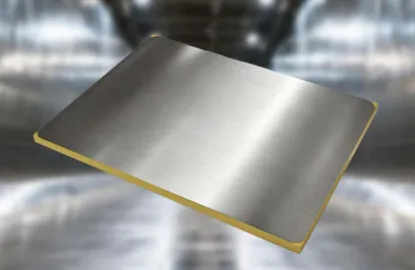
In this article, we use a simplified thermodynamic model to show why metal VIPs might be a better alternative for rock wool for industrial insulation.
To ensure a consistent comparison, we use following parameters:
Parameter | Value |
Insulation area (A) | 10,000 m² |
Working temperature | 300℃ |
Ambient temperature | 30℃ |
Difference in temperature (ΔT) | 270℃ |
Annual operating time | 8,760 hours |
Reference electricity price | 0.75 RMB/kWh |
Solutions:
Option A: 150 mm rock wool
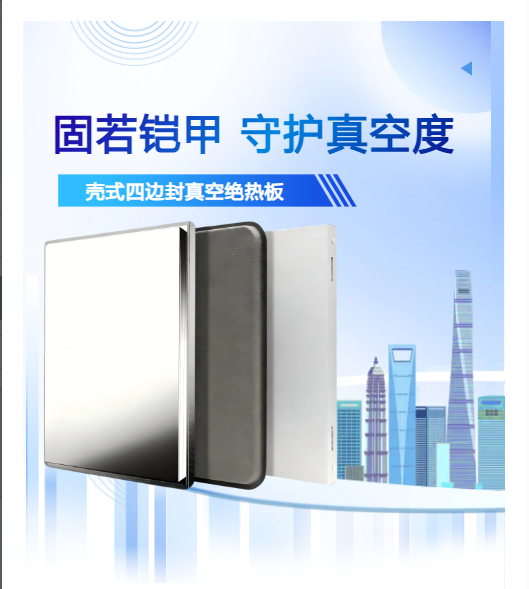
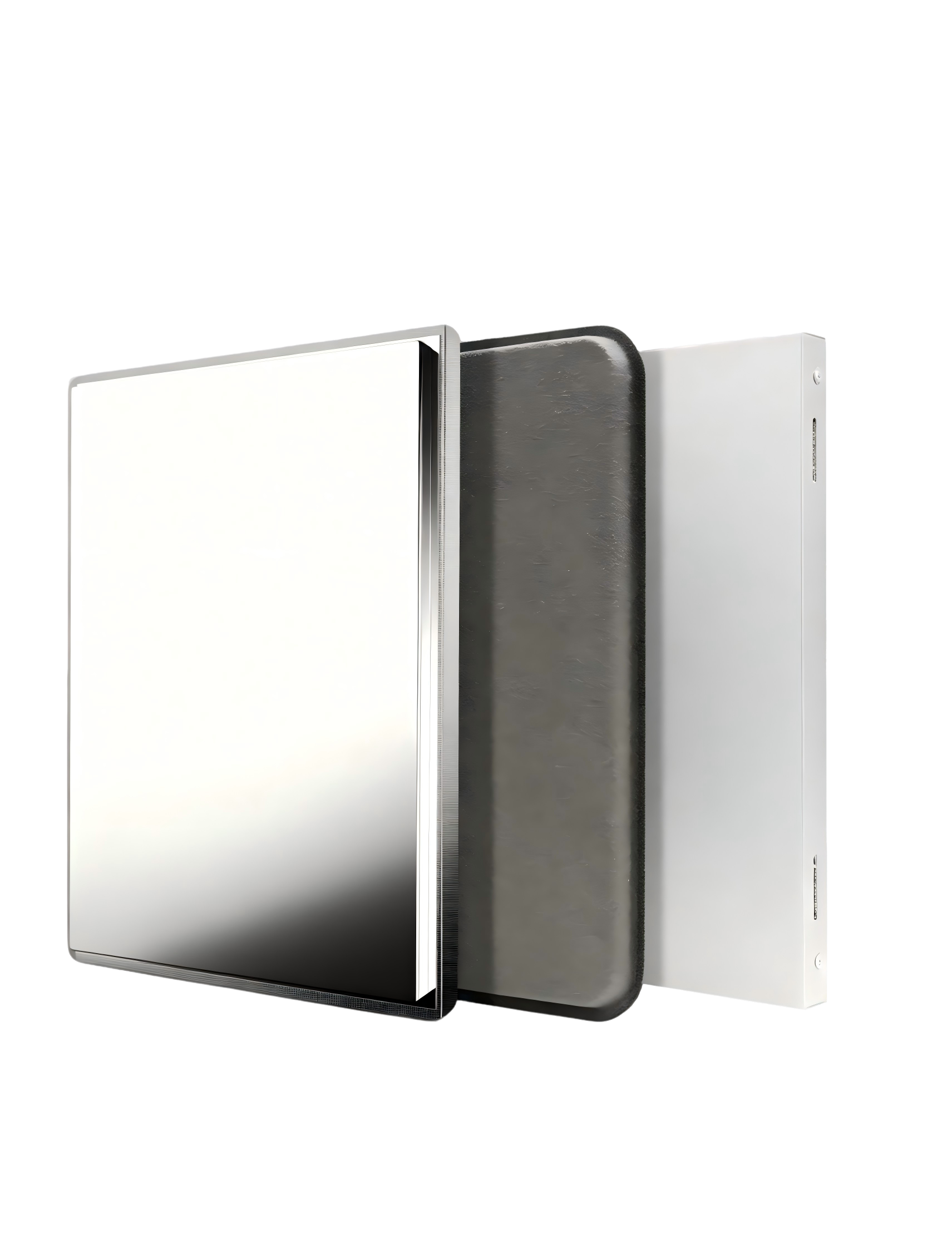
Option B: 50 mm Supertech VAP vacuum insulation panel
Step 1: Heat transfer coefficient (K value)
Solution | Calculation | Coefficient of heat transfer K |
Option A | 0.04 ÷ 0.15 | 0.267 W/(m²·K) |
Option B | 0.002 ÷ 0.05 | 0.040 W/(m²·K) |
The heat transfer coefficient of the rock wool solution is approximately 6.7 times higher than that of Supertech VAP, the metal vacuum insulation panel.
This means that, under the same temperature difference, the rock wool insulation system loses heat at around 6.7 times the rate.
Even at a thickness of 150 mm, rock wool cannot match the thermal performance of a 50 mm vacuum insulation panel.
Step 2: Calculate the heat loss power (Q value)
Solution | Calculation | Heat loss power Q |
Option A | 0.267 × 10,000 × 270 | 720 kW |
Option B | 0.040 × 10,000 × 270 | 108 kW |
In simple terms:
For the 150 mm rock wool solution, the system generates 720 kW of heat loss in order to maintain the required operating temperature.
That is equivalent to running 720 separate 1 kW electric heating elements continuously.
By contrast, the 50 mm metal vacuum insulation panel solution reduces the heat loss to only 108 kW and subsequently substantially lowering the energy used.
Step 3: Annual electricity cost
Solution A:
Annual electricity use: 720 kW × 8,760 h = 6,307,200 kWh (approximately 6.31 million kWh)
Annual electricity cost: approximately RMB 4.73 million
Solution B:
Annual electricity use: 108 kW × 8,760 h = 946,080 kWh (approximately 950,000 kWh)
Annual electricity cost : approximately RMB 710,000
Comparison | Option A | Option B | Difference |
Coefficient of heat transfer (K) | 0.267 W/(m²·K) | 0.040 W/(m²·K) | Reduced by approximately 85% |
Heat loss power (Q) | 720 kW | 108 kW | Reduce by 612 kW |
Annual loss of electrical energy | 6.31 million kWh | 950,000 kWh | Save 5.36 million kWh |
Annual loss in electricity cost | RMB 4.73 million | RMB 710,000 | Save RMB 4.02 million |
Carbon emission conversion: 0.42 kg/kWh | Approximately 2,650 tons of CO₂ | Approximately 399 tons of CO₂ | Reduced emissions by approximately 2,251 tons |
(The carbon emission data is for reference only)
The greater the heat loss, the more frequently the heating system must operate at high load to compensate for the heat loss, which accelerates equipment aging, increases maintenance frequency and downtime.
High-temperature processing demands extremely high temperature uniformity. Poor thermal insulation leads to frequent temperature fluctuations, directly impacting product yield—these losses are often harder to quantify than electricity costs.
As the carbon trading market continues to expand, better thermal performance of metal VIP is more valuable. Each reduction of one ton of carbon emissions can be converted into tradable carbon assets or help mitigate potential carbon tax costs.
Contrasting Item | Option A | Option B | Advantage |
Insulation thickness | 150 mm | 50 mm | Save 100 mm |
Weight | Heavier | Lighter | Reduce structural loads |
Installation | Hard | Easy | Easier to install |
In industrial insulation where every inch of space counts, saving 100 mm is great.
Caveats:
All above data are based on theoretical calculations using a steady-state heat transfer model. In reality, the following factors may affect final outcomes:
① Heat bridge effect
Thermal bridges exist at the edges, joints, and fasteners of vacuum insulation panels, resulting in an actual overall thermal conductivity that exceeds the nominal value we mention.
② Dynamic temperature variation of thermal conductivity
The thermal conductivity of materials is not constant and varies with increasing temperature. The actual λ value under high-temperature conditions would be different than what is mentioned above.
③ Actual system operation time
The above calculation is made assuming machines are used 24/7.
④ Comprehensive calculation of Total Life Cycle Cost (LCC)
The upfront cost for vacuum insulation panels is typically higher. Because vacuum-insulated panels are more expensive.
Cost breakdown | Option A | Option B |
Upfront cost | Lower | Higher |
Annual operational cost | Lower | Lower |
Maintenance cost | High | Low |
Service life | Short | Long |
Estimated payback period | — | Usually 2 to 3 years |
When choosing an insulation material, energy economics should be considered.
In our case study,
even with a thickness of 150 mm, the rock wool solution still underperforms and results in RMB 4.73 million in annual electricity cost caused by heat loss.
By contrast, the 50 mm metal vacuum insulation panel solution reduces this cost to approximately RMB 710,000.
The cost difference is approximately RMB 4.02 million.
The upfront cost for implementing a high-performance insulation system can typically be fully recovered within 2 to 3 years.
It is both economical and ecological.
Under today’s energy-saving, emission-reduction, and carbon-neutrality trends, reassessing your insulation material may be a good choice.
#EnergyEfficiency #HeatLossReduction #IndustrialInsulation #VacuumInsulationPanel #MetalVIP #CarbonReduction #IndustrialEnergySaving #ThermalManagement
 English
 日本語
日本語 한국어
한국어 français
 Deutsch
 Español
 italiano
 русский
 português
 العربية
 Türkçe