Certainly! Here's the translated article with HTML tags preserved:
Choosing the right insulation material for cold chain packaging is one of the most consequential decisions in temperature-controlled logistics. The insulation inside a shipper determines how long products stay within their required temperature range — and that directly affects product safety, regulatory compliance, shipping cost, and the risk of costly temperature excursions.
Traditional materials like polyurethane foam (PU foam), expanded polystyrene (EPS), and extruded polystyrene (XPS) have served the cold chain industry for decades. Vacuum Insulation Panels (VIPs) represent a newer generation of thermal insulation that offers fundamentally different performance characteristics.
So, which is actually better for cold chain packaging? The honest answer is: it depends on your specific application. This guide provides a detailed, practical comparison to help procurement teams, packaging engineers, and cold chain managers make an informed decision.
Cold chain logistics is becoming more demanding, not less. Several trends are raising the performance bar for thermal packaging:
Longer and more complex shipping lanes — international routes with multiple handoffs, customs delays, and variable ambient conditions
More sensitive products — biologics, cell therapies, and mRNA-based medicines have strict temperature requirements
Higher product values — a single failed shipment can represent significant financial and patient safety consequences
Stricter regulatory expectations — GDP guidelines, WHO recommendations, and regional regulations increasingly require documented temperature control
Rising air freight costs — dimensional weight pricing makes package size a direct cost driver
In this environment, insulation performance is not just a technical specification — it is a business and compliance variable.
Before comparing materials, it helps to understand what insulation actually does in a cold chain shipper.
A passive cold chain package maintains temperature by:
Slowing heat transfer from the external environment into the payload compartment
Using a refrigerant (gel packs, PCM, dry ice) to absorb heat that does enter
Maintaining temperature until the refrigerant is exhausted or the shipment arrives
The insulation material determines how fast heat enters the package. Better insulation means:
slower heat ingress
longer refrigerant life
extended temperature hold time
more tolerance for delays and ambient temperature spikes
The key physical property is thermal conductivity (λ) — the lower the value, the better the insulation.
PU foam is one of the most widely used insulation materials in cold chain packaging, from refrigerated containers to insulated shipping boxes.
How it works: PU foam traps gas within a closed-cell structure, reducing heat transfer through the material.
Strengths
Cost-effective for many applications
Good structural rigidity and compressive strength
Easy to manufacture in custom shapes
Widely available globally
Durable under normal handling conditions
Limitations
Requires relatively thick walls to achieve long temperature hold times
Thicker walls reduce internal payload volume
Larger external dimensions increase dimensional shipping weight
Performance degrades if the foam is compressed or damaged
Best suited for: Medium-duration shipments, cost-sensitive programs, applications where package size is not a primary constraint.
EPS is the familiar white foam material used in many disposable cold chain shippers and food packaging.
How it works: EPS consists of expanded polystyrene beads fused together, trapping air within the structure.
Strengths
Very low material cost
Lightweight
Easy to produce at high volume
Widely available for disposable applications
Limitations
Lower insulation performance compared with PU foam and VIPs
Requires thick walls for longer hold times
Lower durability — susceptible to cracking and surface damage
Limited reusability
Best suited for: Short-duration shipments, lower-value products, disposable packaging programs, cost-sensitive applications.
XPS is a denser, more uniform version of polystyrene insulation with improved moisture resistance.
How it works: XPS is manufactured through an extrusion process that creates a more consistent closed-cell structure than EPS.
Strengths
Better moisture resistance than EPS
Higher compressive strength
More consistent insulation performance
Better suited for reusable packaging systems
Limitations
Still requires significant thickness for demanding temperature profiles
Less thermally efficient than VIPs
Bulkier packaging compared with VIP-based systems
Best suited for: Reusable cold chain systems, applications requiring better durability than EPS, and moderate-duration shipments.
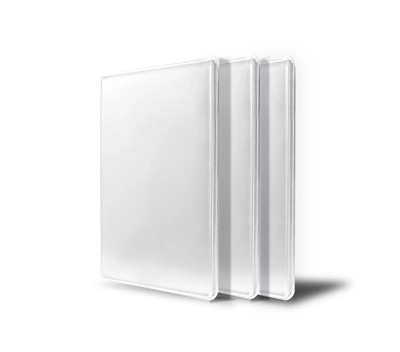
A Vacuum Insulation Panel is a fundamentally different type of insulation. Rather than trapping gas within a material structure, VIPs remove gas almost entirely from a sealed panel.
Microporous core material — provides structural support while allowing a vacuum to be maintained
Multilayer high-barrier film — prevents gas and moisture from entering the panel
Vacuum-sealed enclosure — the near-vacuum interior dramatically reduces heat transfer
Getter and desiccant materials — absorb residual gases and moisture to maintain vacuum stability over time
Heat transfers through materials via three mechanisms: conduction (through solid material), convection (through gas movement), and radiation. By removing gas from the panel interior, VIPs eliminate convective heat transfer and dramatically reduce conductive transfer — leaving only a small radiation component.
The result is thermal conductivity far lower than any conventional insulation material.
| Insulation Material | Typical Thermal Conductivity (W/m·K) | Relative Performance |
|---|---|---|
| Vacuum Insulation Panel (VIP) | ~0.002–0.008 | Excellent |
| Aerogel blanket | ~0.012–0.020 | Very good |
| PU foam | ~0.020–0.030 | Good |
| XPS | ~0.028–0.035 | Moderate |
| EPS | ~0.030–0.040 | Moderate |
Note: Values are indicative ranges. Actual performance depends on the specific product, density, temperature, and aging state.
In practical terms, A VIP panel can achieve similar insulation performance to a PU foam wall that is 5 to 10 times thicker. This difference has significant implications for package design, payload volume, and shipping cost.
For the same external package dimensions and refrigerant quantity:
VIP-based shippers typically achieve significantly longer temperature hold times
Foam-based shippers require more refrigerant or larger packages to match VIP hold times
This matters most for:
Long-distance international shipments
Routes with high delay risk (customs, airport handling)
High ambient temperature lanes
Products with narrow temperature windows
For the same external package dimensions:
VIP walls are thinner → more internal volume available for payload
Foam walls are thicker → less internal volume for the same external size
Why this matters for air freight:
Air freight is typically priced on dimensional weight (volume × density factor). A smaller external package with the same payload capacity means:
lower-dimensional weight charges
better pallet utilization
reduced per-unit shipping cost
For high-value pharmaceutical shipments, this can represent meaningful cost savings per lane.
VIP panels themselves have some mass, but because they enable thinner walls and smaller overall packages, the total system weight (insulation + refrigerant + outer shell) can be comparable to or lower than foam-based alternatives — especially when reduced refrigerant requirements are factored in.
Cold chain shipments frequently encounter unexpected delays — customs inspections, flight changes, hub transfers, and last-mile complications. VIPs provide a larger thermal buffer:
slower heat ingress rate
more time before the refrigerant is exhausted
better protection during extended delays
This is particularly valuable for pharmaceutical shipments where temperature excursions have regulatory and patient safety consequences.
| Factor | VIP | PU Foam | EPS | XPS |
|---|---|---|---|---|
| Puncture sensitivity | Higher (requires protection) | Low | Low | Low |
| Compressive strength | Depends on the outer shell | Good | Moderate | Good |
| Reusability | Good (with proper design) | Good | Limited | Good |
| Moisture resistance | Excellent (barrier film) | Good | Moderate | Good |
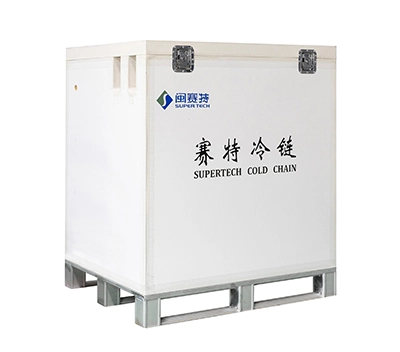
VIPs require protective outer shells to guard against puncture and physical damage. Modern VIP-based cold chain packaging systems are designed with this in mind — typically using rigid outer casings that protect the VIP layers while maintaining the overall package integrity.
| Cost Factor | VIP | PU Foam | EPS | XPS |
|---|---|---|---|---|
| Material unit cost | Higher | Moderate | Low | Moderate |
| Manufacturing complexity | Higher | Moderate | Low | Moderate |
| Shipping cost (dimensional) | Lower (smaller package) | Higher | Higher | Higher |
| Refrigerant cost | Lower (less needed) | Higher | Higher | Higher |
| Excursion risk cost | Lower | Higher | Higher | Moderate |
Total cost of ownership often favors VIPs for high-value, long-duration shipments — even though the upfront material cost is higher. The savings come from reduced dimensional freight charges, lower refrigerant requirements, and reduced risk of costly temperature excursions.
Despite VIP advantages, traditional insulation materials remain the right choice for many cold chain applications:
Choose PU foam, EPS, or XPS when:
Shipment duration is short (same-day, overnight, or 1–2 day lanes)
Temperature requirements are moderate, and excursion risk is low
Product value is lower, and excursion cost is manageable
Packaging is disposable, and the cost per use is the primary driver
Budget constraints make VIP investment difficult to justify
PU foam and EPS continue to serve the majority of routine cold chain shipments effectively and economically.
VIPs are typically the better choice when:
Shipment duration is long (48+ hours, international routes)
Temperature requirements are strict (2–8°C, frozen, or CRT profiles with narrow windows)
Product value is high (biologics, vaccines, clinical trial materials)
Delay risk is significant (international air freight, multi-stop distribution)
Payload volume efficiency is important (air freight dimensional weight)
Regulatory compliance requires documented temperature stability
| Application | Recommended Insulation | Reason |
|---|---|---|
| Vaccine international air freight | VIP + PCM | Long duration, strict temperature, and delay risk |
| Biologic / cell therapy shipment | VIP + PCM | High value, narrow temperature window |
| Clinical trial materials | VIP-based system | Regulatory requirements, high value |
| Routine pharma (short lane) | PU foam or XPS | Cost-effective, adequate performance |
| Fresh food (short distance) | EPS or PU foam | Low cost, short duration |
| Seafood (medium distance) | PU foam or XPS | Moderate performance, cost balance |
| Long-distance food export | VIP or hybrid system | An extended hold time is needed |
It is important to note that insulation material alone does not determine cold chain performance. An effective packaging system integrates:
Insulation material (VIP, foam, or hybrid)
Refrigerant type and quantity (gel packs, PCM, dry ice)
Outer container structure (rigid, semi-rigid, flexible)
Payload arrangement (product placement, void fill)
Qualification testing (thermal performance validation across seasonal profiles)
Even the best VIP panels require proper system engineering to deliver their full performance potential.
Several industry trends are increasing the demand for high-performance cold chain insulation:
Growth of biologics and cell/gene therapies — extremely temperature-sensitive, high-value products
Global vaccine distribution programs — long routes, variable ambient conditions
Expanding international pharmaceutical trade — longer lanes, more delay risk
Rising air freight costs — dimensional weight pricing rewards compact packaging
Sustainability pressure — smaller packages, less refrigerant, lower emissions
Stricter GDP and regulatory requirements — documented temperature control throughout the chain
These trends collectively favor insulation technologies that deliver better performance in less space — which is precisely the VIP value proposition.
Q: Are VIP cold chain shippers reusable?
Yes — VIP-based shippers are commonly designed for multiple uses. The key is proper handling, inspection between uses, and a protective outer shell design that prevents VIP panel damage.
Q: What happens if a VIP panel is punctured during shipping?
If the barrier film is punctured, vacuum conditions may be compromised, and thermal conductivity can increase. This is why VIP packaging systems use protective outer shells and reinforced structures. A punctured panel should be replaced before reuse.
Q: Can VIPs be combined with phase change materials (PCMs)?
Yes — VIP + PCM is a common and effective combination for pharmaceutical cold chain packaging. VIPs slow heat ingress while PCMs absorb the heat that does enter, together extending temperature hold time significantly.
Q: How do I know if VIPs are worth the cost for my application?
Calculate total cost of ownership: compare material cost against savings from reduced dimensional freight, lower refrigerant requirements, and reduced excursion risk. For high-value products on long lanes, VIPs typically offer a favorable total cost.
Q: Are VIP cold chain systems compliant with GDP and pharmaceutical regulations?
VIP-based packaging systems can be designed and qualified to meet GDP, WHO, and ISTA standards. Qualification testing and documentation are essential for pharmaceutical applications.
There is no single answer that applies to every cold chain application. The right insulation material depends on your specific combination of product sensitivity, lane duration, ambient conditions, payload value, and budget.
Traditional insulation (PU foam, EPS, XPS) remains practical and cost-effective for many routine cold chain operations — particularly short-duration, cost-sensitive, or disposable packaging applications.
Vacuum Insulation Panels offer superior thermal performance, better payload efficiency, and stronger temperature stability for demanding applications — particularly pharmaceutical logistics, long-duration international shipments, and high-value temperature-sensitive products.
As cold chain logistics continues to evolve toward longer routes, more sensitive products, and stricter compliance requirements, the performance advantages of VIP technology are becoming increasingly relevant across a wider range of applications.
 English
 日本語
日本語 한국어
한국어 français
 Deutsch
 Español
 italiano
 русский
 português
 العربية
 Türkçe