Service life of vacuum insulated glazing units
depends on their edge seals.
This article aims at the dissemination of accurate informationon vacuum insulated glazing edge-sealing in plain English.
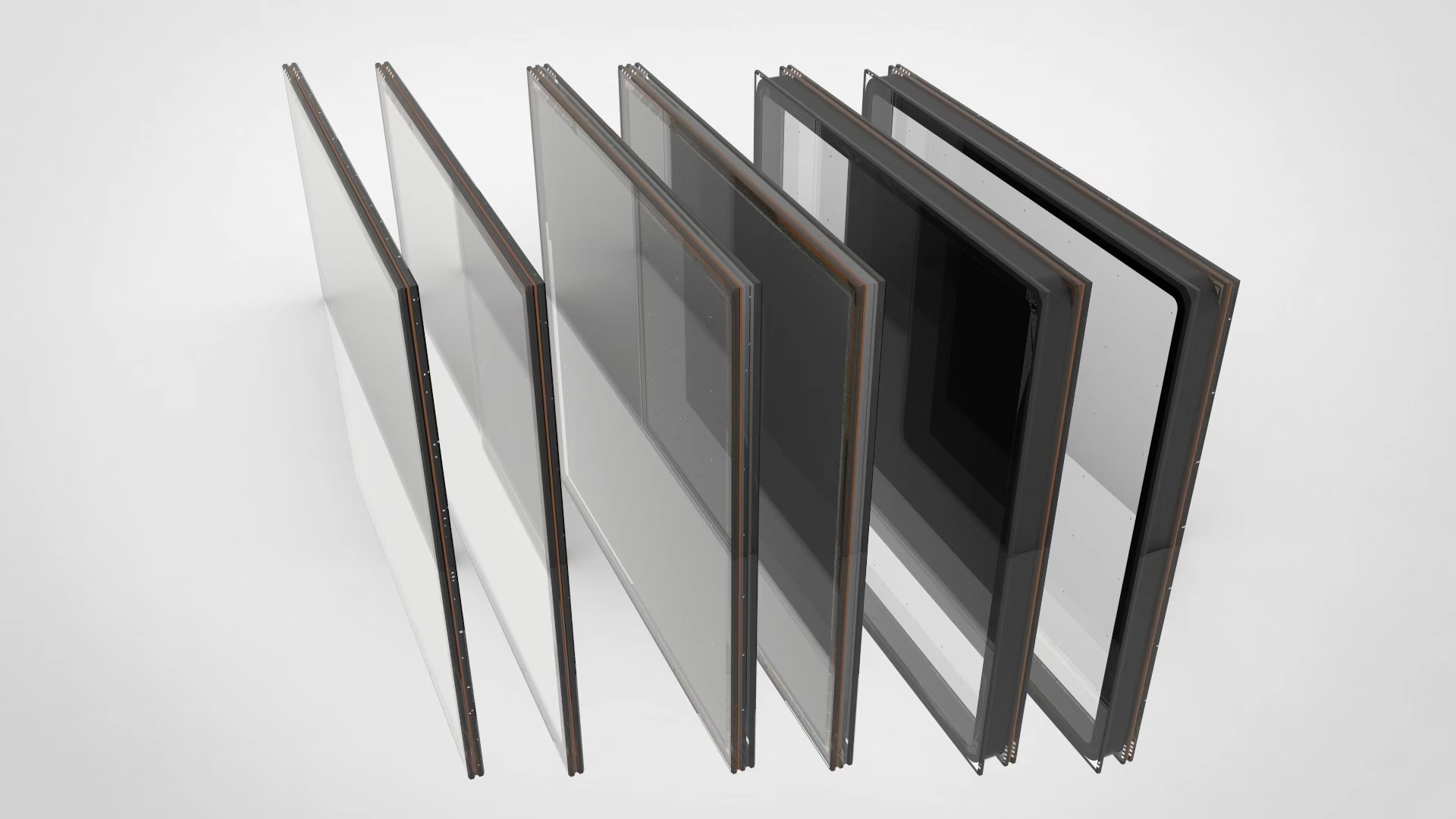
Vacuum insulated glazing is made by removing air from the cavity between two glass panes, which reduces heat transfer and improves thermal performance. To better maintain the vacuum and reduce gas leakage over time, the edges of the two panes are supposed to be hermetically sealed.
In other words:
A VIG unit is like a dewar
And a VIG edge seal functions like a dewar seal.
The seal is very important for VIG.
This determines:
Service life
Long-term thermal performance
Weather resistance and overall reliability
1. Glass-Frit Bonding
Meaning: Glass-frit bonding, also referred to as glass soldering or seal-glass bonding, describes a wafer bonding technique with an intermediate glass layer.
Material:
Type | Main Composition | Softening Temperature |
Leaded | PbO–SiO₂–B₂O₃ | Approx. 350-400°C |
Lead-free | Bi₂O₃ + B₂O₃ + ZnO | Above 550°C |
Advantage: The material is close to glass in composition, so its coefficient of thermal expansion (CTE) is compatible with the glass substrate.
Disadvantage:
➢ The bond between glass-frit solder and glass is wetting (like droplets of water on glass), rather than chemical bonding. Given that glass-frit solder is brittle and there is residual stress in the seal, seal cracks are more likely to occur.
2. Silver-Paste and Solder Alloy Sealing
Meaning:
A silver conductive paste is screen-printed onto the glass surface and sintered to form a solderable metallic transition layer. A low-temperature solder alloy is then used to seal.
Material:
Silver paste = 60-90% micron/nano silver powder + glass-frit solder + resinous solvent
↓ Screen printing
↓ High-temperature sintering
↓ Formation of a solderable metallic transition layer
↓ Final edge sealing with SAC305 (low-temperature solder)
Advantages:
High-temperature sintering provides higher bond strength.
SAC305 has some creep resistance, making the seal more flexible.
The process can be integrated with glass tempering.
NB:
➢ Silver powder does not chemically react with glass.
➢ Silver powder reduces the effective wetting area between the glass frit and the glass substrate, which may affect bond strength.
➢ The seal requires very precise temperature control. Too much heat may erode the silver-paste layer; too little heat may cause weak bonding.
3. Solder Alloy Sealing
Meaning:
We use a solder alloy that reacts directly with the glass surface and forms a chemically bonded metallurgical transition layer at the interface without silver paste, which reduces seal cracks.
Reaction mechanism:
Active component (M) + SiO₂ in glass → MO₂ + Si
Active component (M) + Si → MSi₂
CTE of the reaction products:
MO₂ ≈ 9.5×10⁻⁶/°C
MSi₂ ≈ 8.2×10⁻⁶/°C
CTE of soda-lime silicate glass: (8.5-9)×10⁻⁶/°C
✅ Similar thermal expansion and contraction → lower risk of edge-seal cracking
Key advantages:
➢ This type of solder alloy automatically forms a transition layer while reacting with the glass, eliminating the need for additional process steps.
➢ The reaction products naturally match glass in coefficient of thermal expansion. A more complete reaction creates a stronger interfacial bond, giving the process a wider margin for error and hence more reliable glazing units.
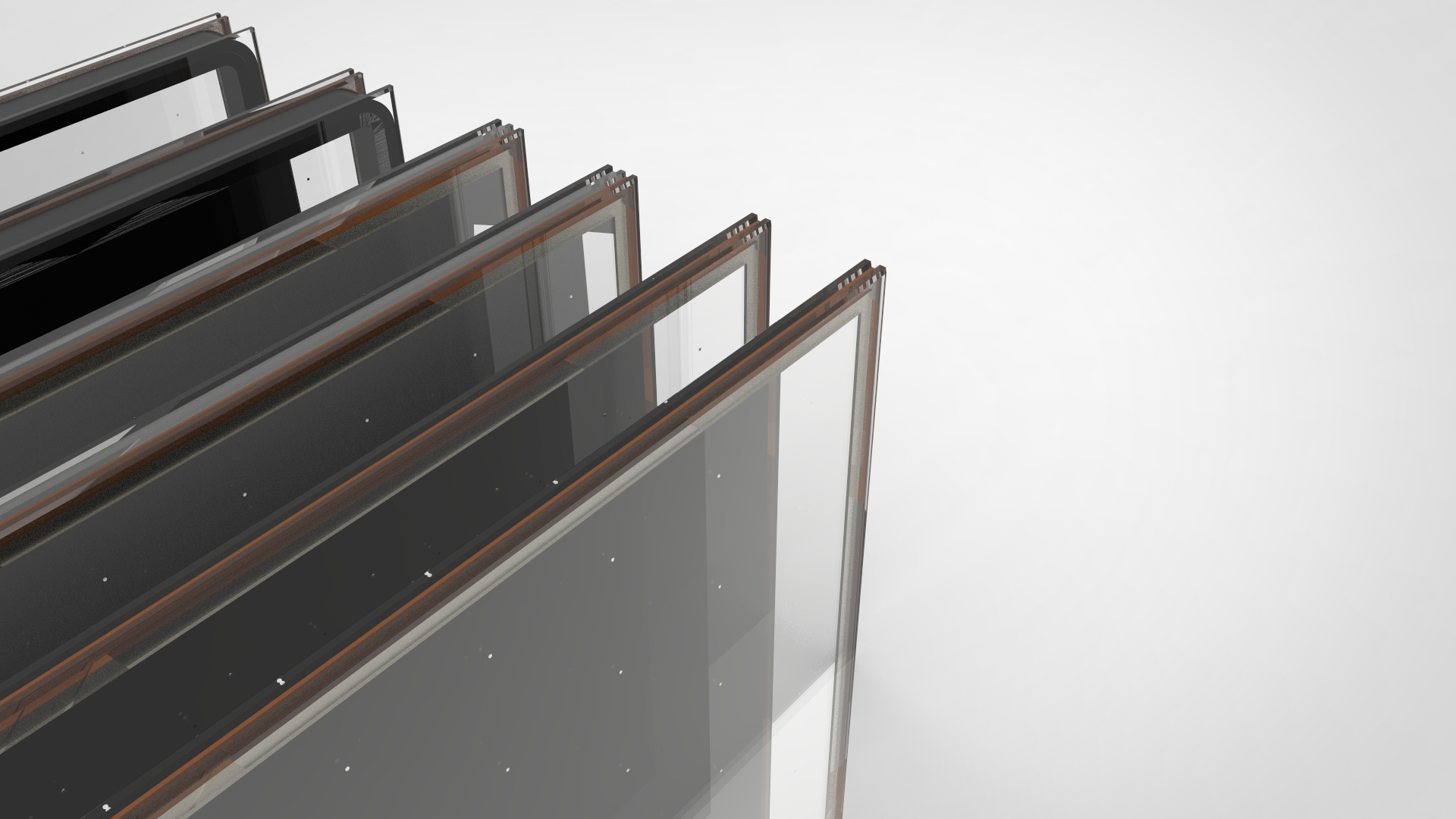
Shear strength comparison of three sealing methods:
Edge-Sealing Technology | Shear Strength | Description |
Glass-frit bonding | 3.45 MPa | Weak |
Silver-paste & Solder Alloy | 12 MPa | Durable, 3.5 times that of glass-frit bonding |
Solder Alloy | 20 MPa | Most durable, 5.8 times that of glass-frit bonding |
Analogy:
➢ Glass-frit bonding is like adhesive.
➢ Silver-paste and solder alloy sealing is like structural adhesive.
➢ Solder alloy sealing is like welding.
Advantages of Solder Alloy Sealing:
Both silver-paste and solder alloy sealing provide better creep resistance than glass-frit bonding.
Glass-Frit | Silver-Paste | Solder Alloy | |
Bonding method | Wetting | Wetting | Chemical metallurgical bond |
Edge-seal flexibility | Brittle | Flexible | Flexible |
Shear strength | 3.45 MPa | 12 MPa | 20 MPa |
Tolerance | Low | Medium | High |
Overall stability | Low | Good | Excellent |
Preview of Part II:
✓ How do edge-sealing materials perform under ultraviolet exposure, acidic and alkaline environments, and high-temperature/high-humidity conditions?
✓ Why are lead-containing edge-sealing materials being phased out?
✓ How does solder alloy edge sealing make tempered glass safer?
✓ How good is VIG edge thermal performance?
Terms (Part I)
Term | Explanation |
VIG | Vacuum insulated glazing: a double-glazed glass unit that has a vacuum space between two panes. |
Glass frit | A low-melting-point glass used in bonding processes |
Silver paste | A conductive paste consists of silver powder; after sintering, it forms a metallic transition layer. |
SAC305 solder | A lead-free low-temperature alloy solder composed of tin (Sn), silver (Ag), and copper (Cu). |
Metallurgical bonding | A bond formed by chemical reaction at the interface; it is much stronger than wetting. |
Shear strength (MPa) | The strength of a material or component against yielding or structural failure in shear. |
Creep | Slow deformation under long-term stress. Better creep resistance means better durability. |
CTE | The rate at which a material changes size with temperature. |
Wetting | Wetting is the ability of a liquid to maintain contact with a solid surface by displacing another substance or material. |
 English
 日本語
日本語 한국어
한국어 français
 Deutsch
 Español
 italiano
 русский
 português
 العربية
 Türkçe