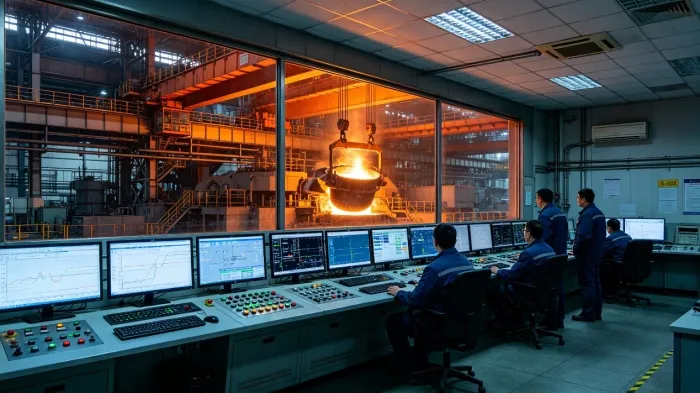
You can see the furnace fire. You can feel its radiant heat too.
Every large industrial furnace has an observation window. Operators use it to watch what is happening inside, so the glass has to stay clear. If you cannot see clearly, you cannot judge the furnace condition. Get that judgment wrong, and the risk goes up.
But here is the part people rarely stop to think about: The moment you look at the fire through the glass, its heat is coming straight back through that same glass at you.

An industrial furnace observation window has to do two things that seem to clash:
Stay clear — operators need a clean view inside the furnace.
Block heat — furnace radiation cannot be allowed to flood the operator side.
Here is how conventional solutions deal with that trade-off:
Solution type | U-value | Light transmission | Real-world issue |
Standard tempered glass (single pane) | 5.5–6.0 W/(m²·K) | High | Near-zero insulation; operator side gets very hot |
Wired fire-rated glass | 4.0–5.0 W/(m²·K) | Medium | Fire-focused; poor insulation |
Standard insulated tempered glass | 2.4–2.8 W/(m²·K) | Relatively high | Limited insulation; sealant ages fast in heat |
Special thick insulating glass | 1.5–2.0 W/(m²·K) | Low | Lower light transmission; worse visibility |
And this is the compromise the industry has lived with for years: Want better insulation? Accept a worse view. Want a clear view? Accept a lot more heat coming in.
Transparency and insulation were treated like an either-or choice for decades.
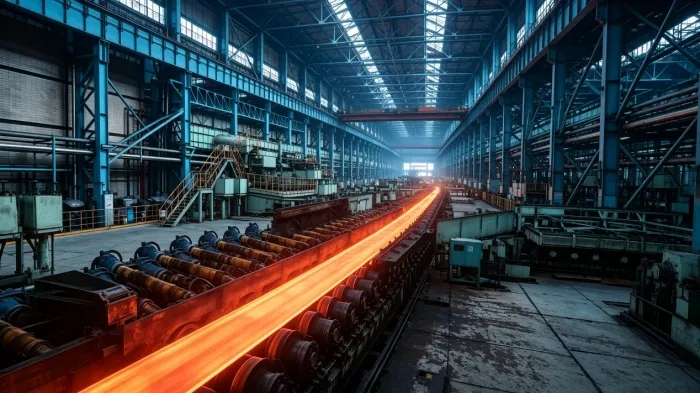
Long-term exposure to radiant heat puts operators at risk of heat stress and heatstroke.
With a standard tempered-glass observation window, combined furnace radiation can push the operator-side glass surface above 60℃.
Standing at that window to watch the furnace takes a toll, minute after minute.
In high heat, attention and judgment both start to drop.
Misreading the furnace condition in precision processes like steelmaking and smelting means unstable product quality and a higher scrap rate.
Standard glass can suffer thermal breakage under extreme temperature differences.
Around a furnace, those temperature differences can be extreme.
If it happens, the consequences can be severe.
Do transparency and insulation really have to fight each other?
No.
The problem was simply that older materials could not do both well at the same time.
Now they can.
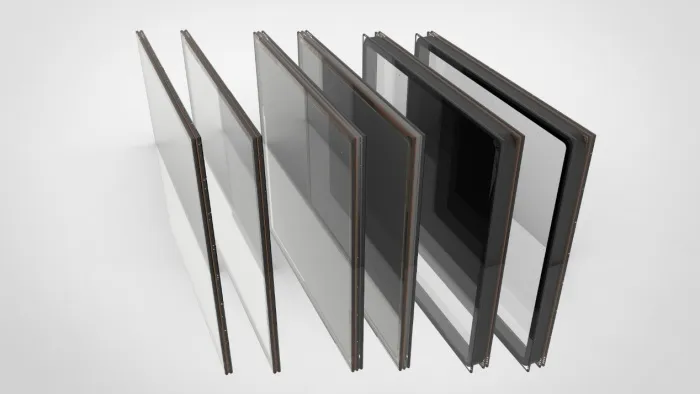
SuperVIG® vacuum glass is built around aerospace-grade vacuum sealing technology, without sacrificing light transmission, while pushing glass insulation performance to the top tier of the industry.
Comparison | Standard insulated tempered glass | Special thick insulating glass | SuperVIG® vacuum glass |
U-value | 2.4–2.8 W/(m²·K) | 1.5–2.0 W/(m²·K) | ≤0.6 W/(m²·K) |
Light transmission | Relatively high | Low; visibility is affected | High; clear visibility |
Glass thickness | 18–24mm | 30–50mm (thick and heavy) | 6.5–13mm (ultrathin) |
Sound insulation | 28–32 dB | 30–35 dB | ≥40 dB |
Seal durability | Ages in 5–10 years | Average | Dual seal; long-term stability |
Door/frame deformation | Standard frame: 17.05mm | — | ≤0.51mm, reduced by 97% |
Safety | Average | Average | Fully tempered; dual seal |
Why does deformation matter?
Temperature swings around industrial furnaces are extreme. At a 50℃ temperature difference, a conventional glass frame can deform by 17.05mm. The magnetic gasket pulls away from the frame, the seal fails completely, and the insulation effect drops to zero.
SuperVIG® uses a high-flexural-modulus material (>5GPa), limiting deformation to just 0.51mm under the same temperature difference.
The seal stays effective, so the insulation stays effective. In industrial furnace environments with repeated hot-cold cycling, that is a decisive difference.
The window is handled. But what about the wall around it? Heat does not enter through the glass alone. The glass-to-wall junction is exactly where thermal bridging is most likely to happen.
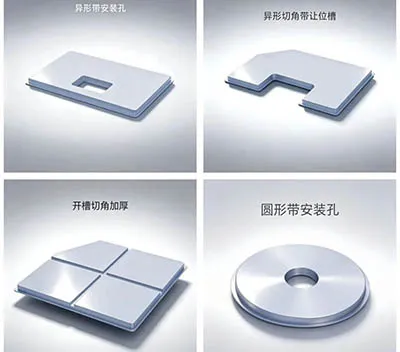
Use Supertech®VAP high-temperature metal vacuum insulation panels around the observation window as well:
[Furnace radiant heat]
↓[SuperVIG® vacuum glass] → U-value ≤0.6W/(m²·K), blocking heat transfer through the glass
↓[Wall with Supertech vacuum insulation panels] → Thermal conductivity ≤0.002~0.004W/(m²·K), blocking heat transfer through the wall
↓[Inside the operating room] → Much lower temperature, safer and more comfortable for operators
Glass and wall become one complete thermal barrier.
The thermal bridge is eliminated.
See the furnace clearly through the observation window. Just do not let the furnace heat come through with it. Whole-window U-value ≤0.6W/(m²·K), with no compromise on light transmission.
Deformation ≤0.51mm, so the seal stays intact. That is what an industrial observation window should look like.
SuperVIG® vacuum glass × Supertech®VAP high-temperature metal vacuum insulation panels — one vacuum-insulation solution covering everything from the observation window to the building envelope in high-temperature industrial settings.
Explore the SuperVIG industrial observation-window solution
Drop your furnace type and window size in the comments for a custom solution
 English
 日本語
日本語 한국어
한국어 français
 Deutsch
 Español
 italiano
 русский
 português
 العربية
 Türkçe