Let's start with a question: Suppose you operate an LNG receiving terminal. You want better tank insulation without major structural changes or adding thicker insulation. What would you choose?
Many terminal owners face this challenge. Today, VacuEco offers a new solution.
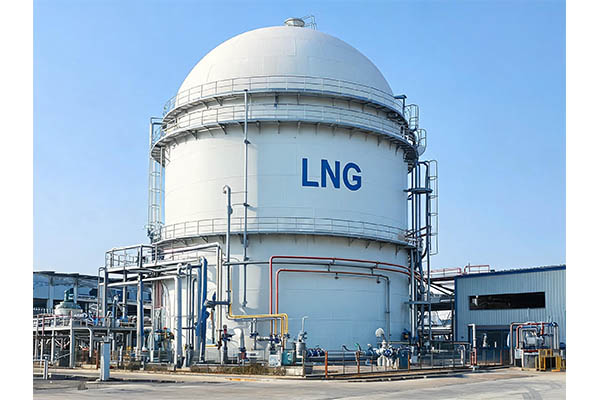
For operating onshore LNG tanks, improving insulation is not as simple as making the insulation layer thicker. Large tanks have complex, tightly engineered structures, including the outer tank, inner tank, annular space, suspended deck, and foundation. Significantly increasing conventional insulation thickness may cause several problems:
Take up more structural space
Increase material use
Make installation more difficult
Add structural modification costs
Affect the project schedule and overall investment
Customers therefore need more efficient insulation, not simply thicker insulation.
First, what is VPU?
VPU stands for “VIP + PIR/PU Composite Insulation Panel.” Developed by Super Tech, it combines high-performance metal-film vacuum insulation panels (VIPs) with polyurethane (PU), delivering ultra-low thermal conductivity in a modular, engineering-ready form.
One of VPU's main advantages is its high insulation performance at a relatively low thickness.
Put simply, VPU embeds high-vacuum insulation panels inside a polyurethane module, combining superior insulation with practical engineering application.
The composite module can achieve a thermal conductivity as low as approximately 1.2 mW/m·K (0.0012 W/m·K), while the core VIP can reach 0.6 mW/m·K (0.0006 W/m·K). Compared with conventional perlite (approximately 30–40 mW/m·K, or 0.03–0.04 W/m·K), glass wool, PU/PIR, and other materials, VPU provides higher insulation performance per unit thickness.
In other words:
In the same space, VPU delivers greater thermal insulation.
For the same insulation target, VPU requires less thickness.
Tank insulation can therefore be upgraded without extensive structural changes.
What is the current insulation thickness in your project? Have you faced the problem of needing more insulation but lacking space? Share your experience in the comments.
VacuEco VPU is designed to enhance existing insulation systems, not replace them:
For full-containment tanks:
VPU can be used with conventional perlite insulation. For example, VPU can be installed on the inner side of the concrete outer wall and combined with perlite filling to improve overall insulation performance.
For membrane tanks:
VPU can be integrated with PU or PIR insulation modules. Metal VIPs are embedded during module production to create high-performance composite insulation modules.
Advantages of this approach:
Keeps proven tank designs unchanged
Maintains the reliability of conventional insulation systems
Improves overall insulation through a composite structure
Simplifies installation and modular application
Customers often want to reduce BOR but are concerned about high upgrade costs, complex construction, and major structural impacts.
VacuEco VPU offers a more practical path:
It enhances the existing design instead of replacing it;
It improves performance with high-efficiency insulation instead of relying on excessive thickness;
It focuses on long-term tank operating value, not just laboratory data.
For new projects, VPU can be integrated at the design stage to raise the tank insulation standard.
For existing or retrofit projects, VPU also has potential as an additional high-performance insulation layer.
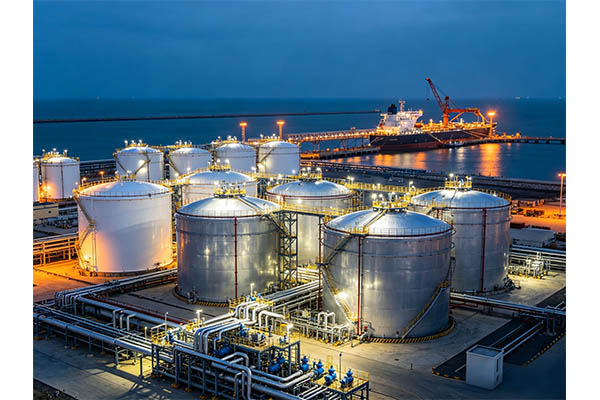
Valuable technology must offer advanced performance and fit into existing engineering systems.
The strength of VacuEco VPU is that it works with existing full-containment and membrane-tank insulation systems instead of requiring a new approach.
Conservatism in large energy projects is not a weakness; it is part of the safety logic. VPU adds a new high-performance option to proven tank insulation systems.
Improve insulation performance without major structural changes.
This is one of the core benefits VacuEco offers LNG tank customers.
Join the Discussion
What insulation system does your tank currently use? Have you considered an upgrade?
Share your experience in the comments, or send this to colleagues planning an LNG tank project.
Want to see how VacuEco VPU can be integrated into your existing insulation system? Message us. Our technical team will develop a solution for your project.
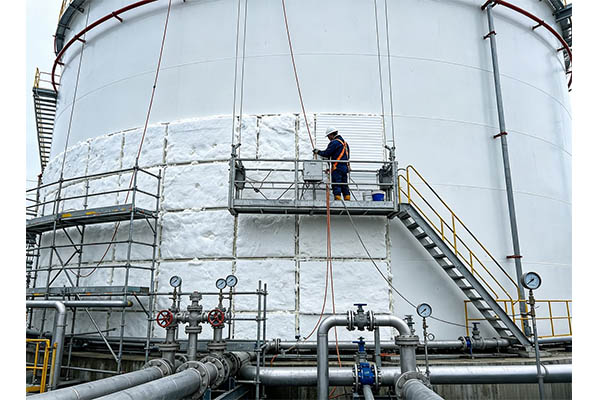
Vacuum insulation experts, making every tank more efficient.
Term | Definition |
LNG | Liquefied Natural Gas, natural gas liquefied at approximately -162°C. |
VPU | “VIP + PIR/PU Composite Insulation Panel,” a high-performance insulation module developed by Super Tech by integrating metal-film VIPs with polyurethane. |
VIP | Vacuum Insulation Panel, a high-performance insulation material with significantly reduced thermal conductivity through vacuum technology. |
BOR | Boil-Off Rate, the percentage of LNG vaporized relative to total tank inventory over a given period. |
BOG | Boil-Off Gas, gas naturally generated when LNG vaporizes due to heat ingress during storage. |
Full-containment tank | A large LNG tank with a 9% nickel-steel inner tank and a prestressed-concrete outer tank. |
Membrane tank | An LNG tank using an approximately 1.2 mm corrugated stainless-steel membrane as the sealing layer, with the external load carried by prestressed concrete. |
Perlite | An insulation fill commonly used in the annular space of LNG tanks, with a thermal conductivity of approximately 30–40 mW/m·K. |
PU/PIR | Polyurethane/polyisocyanurate, commonly used as the base material for membrane-tank insulation modules. |
Thermal conductivity | A measure of heat transfer through a material. A lower value indicates better insulation performance. |
Composite insulation | An insulation system that combines two or more materials to use the strengths of each. |
 English
 日本語
日本語 한국어
한국어 français
 Deutsch
 Español
 italiano
 русский
 português
 العربية
 Türkçe
![[Technical Series] Insulating Doors & Windows 101 (Part 2): How Heat Actually Moves Through the Glass](/uploads/image/20260814/how-heat-actually-moves-through-the-glass00.webp "[Technical Series] Insulating Doors & Windows 101 (Part 2): How Heat Actually Moves Through the Glass")