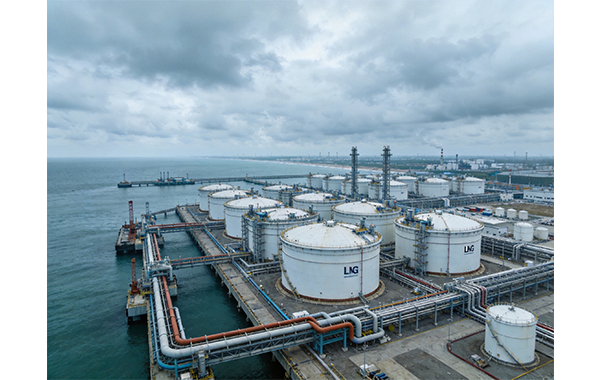
What does BOG mean? It is boiled-off gas, a small part of liquefied natural gas (LNG) that evaporates during loading, storage, transport, and unloading. BOG is inherent in LNG cryogenic storage due to heat input from the ambient environment and costs a lot to manage.
The LNG storage faces a major challenge due to inherent heat input from the environment. The effect of heat input is warming of the cryogenic fluid: if constant volume pressure increases in the storage vessel and constant pressure fluid boils, vapours are released from the vessel.
The vapours created due to the ambient heat input are called “boil-off gas”, or BOG.
The measure of boil-off is the amount of vapour per unit time. It can be an absolute measure: kg/h or kg/day, or a relative measure: % vaporized from the total amount per unit time take a 270,000 m³ LNG tank as an example. At a BOR of 0.05%/day, it can generate about 54.7 tons of BOG per day, equivalent to about 76,300 Nm³/day under standard conditions.
This is a big number.
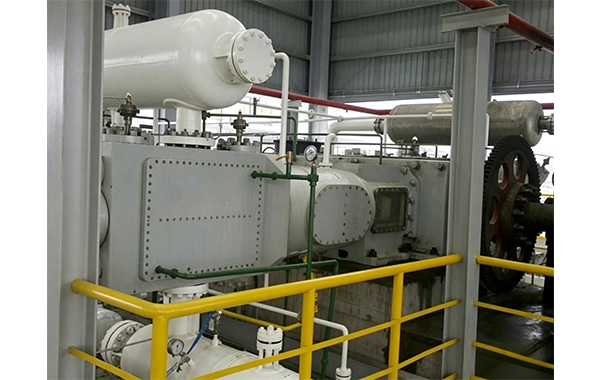
To recycle BOG, it must be compressed and condensed through multiple processes. LNG terminals usually use a compression + recondensation (reliquefication) process to liquefy BOG again.
This costs a lot.
Do you know a different method to manage BOG? Please leave a comment if you do.
Reducing BOR can reduce costs related to:
BOG generated
compressor and recondensation system load
tank operation
operating costs
And VacuEco VPU can help do this.
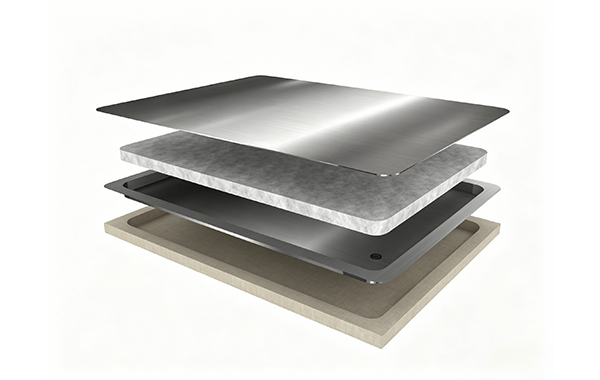
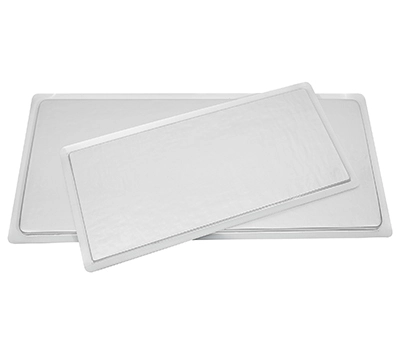
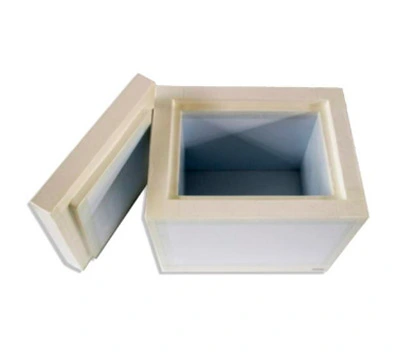
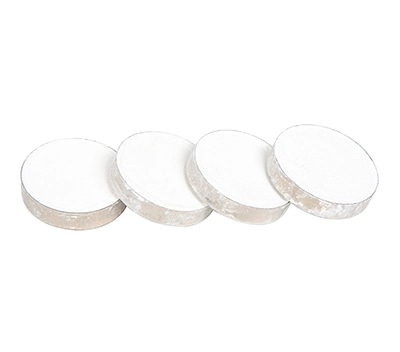
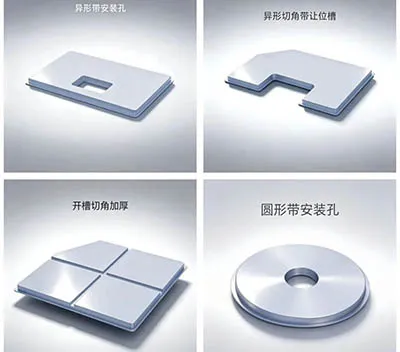
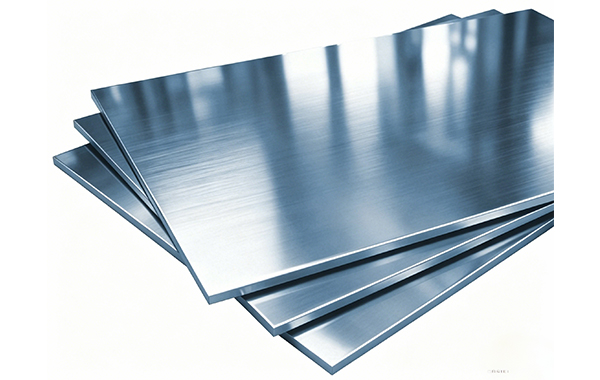
VPU stands for “VIP + PIR/PU Composite Insulation Panel.” It is a new cold-insulation module made by combining high-performance vacuum insulation panels (VIPs) with polyurethane (PU).
The core of VPU is the metal-film vacuum insulation panel. By using a core material sealed in a high-barrier 304 stainless-steel vacuum package, VPU sharply reduces gas conduction, convection, and radiation heat transfer. After compounding, its thermal conductivity can be as low as about 1.2 mW/m·K (0.0012 W/m·K), far below conventional perlite at about 30-40 mW/m·K — about 25 times better insulation performance than perlite.
This offers the best space-to-thermal performance ratio.
VacuEco VPU does not need to be a replacement; it works with the original insulation design.
For instance: Two 100 mm VPU layers can be added in a staggered-joint layout as an alternative to 1,000 mm perlite insulation. In the best-case scenario, it can reduce daily boil-off by about 50%.
Meaning:
Less BOG
Lower energy use for reliquefication and compression
More stable tank operation
Overall operating costs
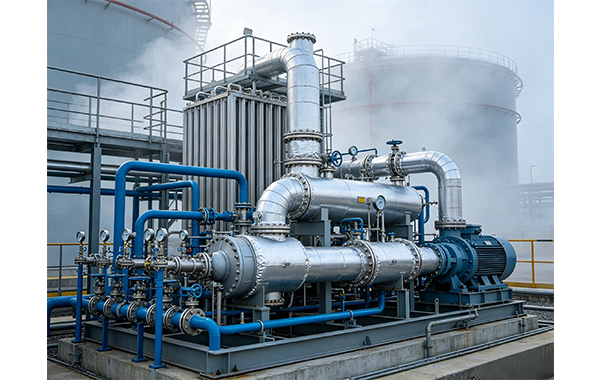
Better insulation pays for itself in the long term. LNG tanks are likely to be long-term investments as well. Our insulation material — VacuEco VPU — is very likely to be a good fit for your LNG terminals. VacuEco VPU offers the best thickness-to-thermal-performance ratio and can reduce BOR operational costs.
Do you like it?
What do you think of our VPU in LNG insulation?
We can share case studies with you if you want.
Please DM us to hear more.
Focused on vacuum insulation technology, providing efficient insulation solutions.
Terms | Definition |
LNG | Liquefied natural gas (LNG): natural gas liquefied at about -162°C. Its volume is about 1/600 of its gaseous volume, making it easier to store and transport. |
BOG | The vapours created due to the ambient heat input are called “boil-off”. |
BOR | Boil-off rate (BOR): the percentage of LNG that vaporizes within a given period relative to total tank inventory. |
VPU | “VIP + PIR/PU Composite Insulation Panel”: a high-performance cold-insulation module developed by SuperTech, made by combining metal-film vacuum insulation panels (VIPs) with polyurethane (PU). |
VIP | Vacuum insulation panel (VIP): a high-performance insulation material that greatly reduces thermal conductivity by creating a vacuum. |
λ-value | A measure of a material's ability to transfer heat. The unit is W/m·K or mW/m·K; the lower the value, the better the insulation performance. |
Full containment tank | 9% Ni steel LNG storage tank, with an outer shell made of concrete |
Perlite | A common insulation fill material used in the annular space of LNG tanks, with thermal conductivity of about 30-40 mW/m·K. |
Recondensation | A process that compresses and liquefies BOG again. It is one of the main BOG treatment routes at receiving terminals. |
 English
 日本語
日本語 한국어
한국어 français
 Deutsch
 Español
 italiano
 русский
 português
 العربية
 Türkçe