Worried about your devices overheating? Struggling to fit thermal management into a tight space? Today, as electronics slim down and battery energy densities climb, managing heat—both dissipating and insulating it—has become a critical dilemma.
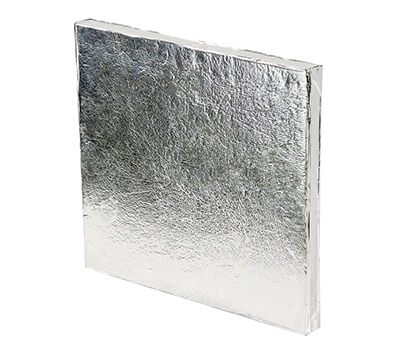
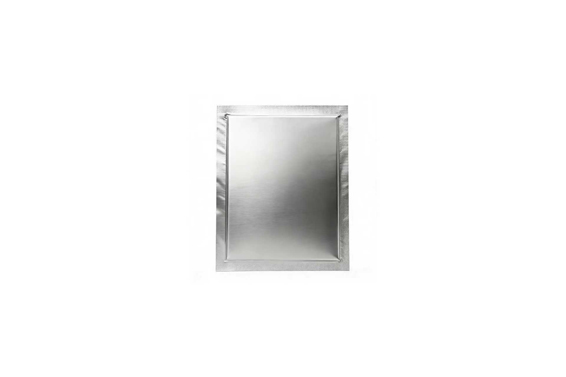
Traditional insulation materials are typically heavy and rigid, leaving them nowhere to go in the pursuit of sleek, compact design. That changes with the arrival of the ultra-thin vacuum insulation panel. As thin as 1.5mm and bendable to fit, it works like a "hidden" guardian, quietly building an efficient thermal barrier without taking up space.
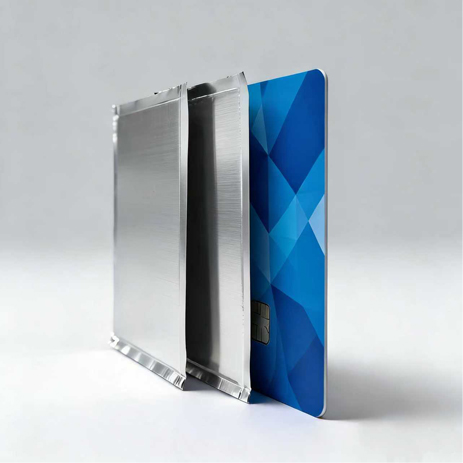
Imagine something the thickness of a credit card, yet delivering stunning thermal insulation performance. The core appeal of this ultra-thin vacuum insulation panel lies, first and foremost, in its ultimate physical form:
· Thickness Range: Available from 1.5mm to 5mm, offering flexibility that consumes almost zero valuable design space.
· Flexible & Bendable: Say goodbye to the installation limits of rigid materials. It conforms to curves and adapts to complex structures, granting thermal design unprecedented freedom.
· Ultra-Low Thermal Conductivity: Stably controlled within 2.5 mW/(m·K), its insulation efficiency is multiples—or even more than ten times—that of traditional materials.
Even more remarkable is its reliability. It maintains stable performance with minimal degradation across a harsh temperature range of -40°C to 85°C. Whether facing the extreme cold of the North or the intense heat inside a device, it handles it all with ease.
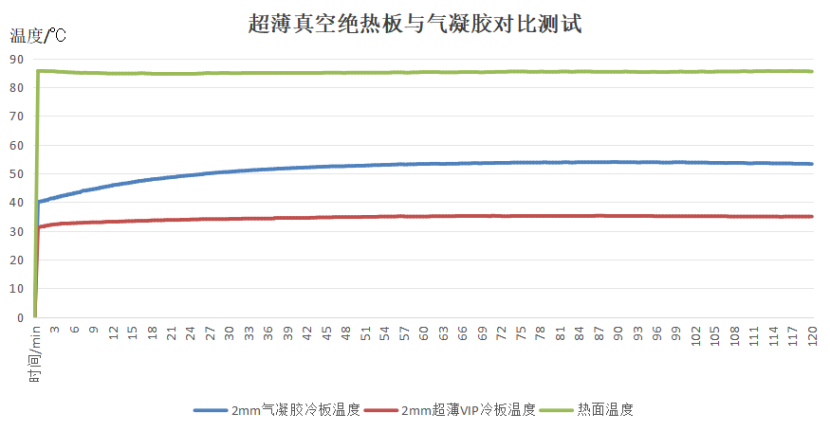
Claims are one thing, but actual comparisons are another. Under identical harsh conditions, we pitted a 2mm thick Aerogel against our 2mm thick Ultra-Thin Vacuum Insulation Panel:
· Test Scenario: Hot side temperature at 85°C, ambient temperature at 28°C, for a continuous duration of 120 minutes.
· The Results:
Aerogel: Cold side temperature rose to 53.3°C.
Ultra-Thin VIP: Cold side temperature remained at just 35°C.
A temperature difference of 18.3°C!
This isn't just a numerical lead; it is a fundamental transcendence in insulation effectiveness. Within limited space and thickness, the Ultra-Thin Vacuum Insulation Panel delivers superior "thermal blocking" power, making it incredibly difficult for heat to make any headway.
1. Consumer Electronics & Smart Devices
Applied to chipset areas in tablets and laptops, or inside wearable devices, this material effectively insulates heat sources from batteries, screens, and other sensitive components. This enhances both user comfort and device lifespan.
2. New Energy Vehicles
From thermal isolation between individual cells within battery packs to the firewall between the pack and the passenger cabin, its ultra-thin profile maximizes space utilization and boosts safety. It is also suitable for use inside the cabin to isolate heat sources and optimize air conditioning energy efficiency.
3. Precision Instruments & Specialized Equipment
In fields like aerospace and medical devices—where space and weight are critically sensitive—this material is the ideal choice for achieving efficient thermal insulation and ensuring the precise operation of equipment.
4. Energy Efficiency in Other Fields
For RVs and specialized containers where indoor space is precious, or for interior renovations requiring localized thermal isolation, it provides a highly efficient insulation solution that takes up almost no space.
This ultra-thin vacuum insulation panel brings more than just a new material; it unlocks new design possibilities. Engineers no longer need to compromise on the thickness or shape of insulation materials. They can now pursue slimness, compactness, and high performance with greater boldness.
It acts like a high-tech "thermal cloak"—soft and thin, yet possessing immense internal strength. It establishes a robust and elegant line of defense along the paths where heat attempts to spread.
When "thin" and "high-efficiency" are both achievable, and when "flexibility" and "durability" come together perfectly, thermal insulation technology enters a new era. With a form measured in mere millimeters, the ultra-thin vacuum insulation panel resolves thermal management challenges across industries, quietly driving a revolution toward lightweight and high-efficiency solutions.
The future is here. The 1.5mm vacuum insulation product is ready to adapt to a myriad of scenarios.
 English
 日本語
日本語 한국어
한국어 français
 Deutsch
 Español
 italiano
 русский
 português
 العربية
 Türkçe