In Part I we reviewed the structural principles and structural-strength differences of the three most common edge seals.
In Part II we will further examine the three edge seals, covering environmental resistance, environmental compliance, safety, and edge thermal performance.
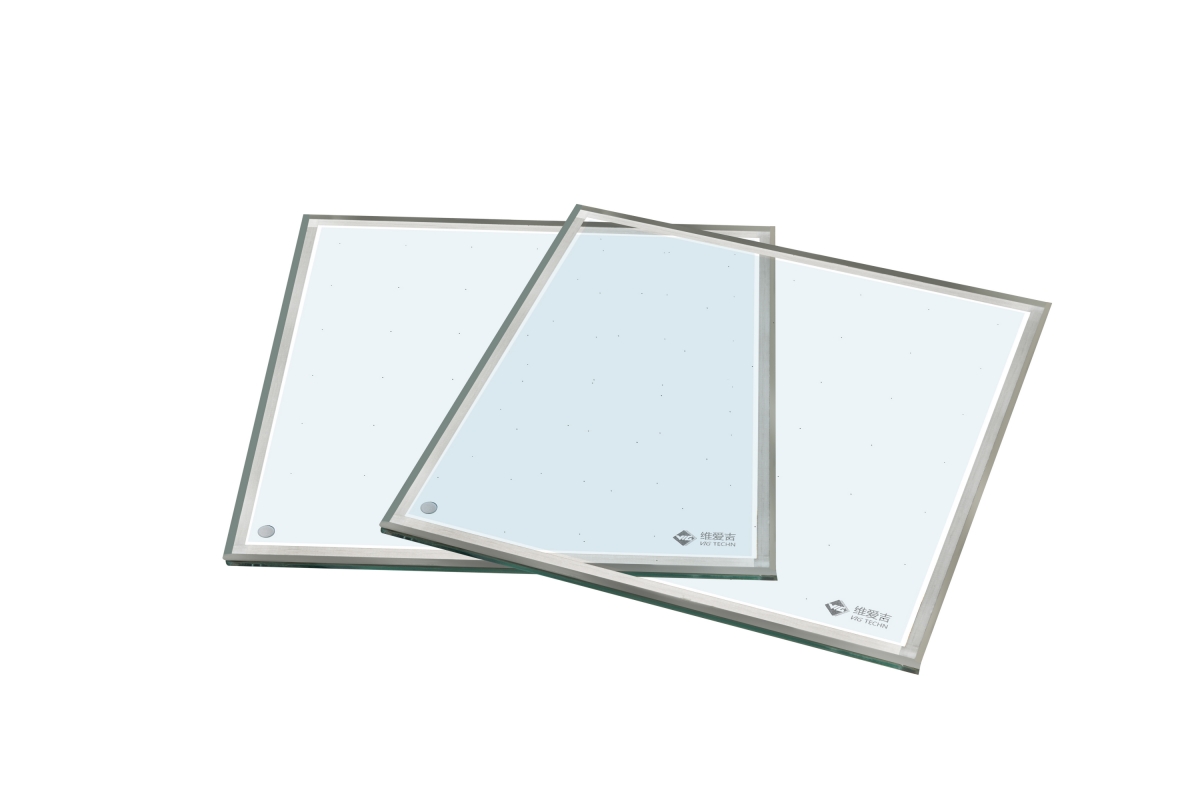
Residual organics in the edge-sealing material reduce VIG thermal performance under ultraviolet exposure.
1. The root cause of the problem
In glass-frit and silver-paste edge sealing,
organic resin solvents are often added to help with coating and forming.
In theory, these organic solvents should fully decompose and volatilize during sintering,
but incomplete decomposition can occur.
Residual organics + ultraviolet exposure
↓
↓
decomposition into CO₂ and H₂O
↓
↓
CO₂ → absorbed by getters
H₂O → cannot be absorbed by getters
↓
↓
Vacuum pressure rises → thermal performance decreases
2. UV Resistance
1) Glass-Frit Edge Sealing: High Risk
1. With a sealing temperature of around 400°C, organic decomposition is the least complete, and more residual content remains.
2. Under long-term UV exposure, residual organics can decompose and generate water vapour that cannot be absorbed.
3. If residual organics form connected pathways, decomposition may create gas-leakage channels.
2) Silver-Paste Edge Sealing: Medium Risk
Silver paste goes through the approx. 700°C tempering process, so organic decomposition is more complete than in glass-frit edge sealing.
However, silver-paste sealing may leave residual organics that affect thermal performance:
Thermal performance of VIG using silver-paste edge sealing:
With an evacuation port, heating, and gas ionization:
U-value = 0.42 W/m²·K
Without an evacuation port:
U-value ≈ 0.6 W/m²·K
Differences:
The evacuation-port unit removes air more effectively
Combined with heating and gas ionization, it can remove H₂O molecules from the double-glazing cavity.
By contrast, without an evacuation port, H₂O cannot be removed and continues to affect the vacuum.
3) Solder Alloy Sealing can fix this
It does not use organic solvents.
No harmful gases or organic residues are produced.
➢ No organic-decomposition issues
➢ No CO₂ or H₂O
➢ Resists UV irradiation, long-term sun exposure, and high-temperature/high-humidity conditions.
How good are the three sealing methods at resisting acid/alkali corrosion?
Edge-Sealing | Acid and alkali resistance | Reason |
Glass-frit | Strong | Purely inorganic material with inherent acid and alkali resistance |
ilver-paste | Medium | The Ag₃Sn phase in the solder can undergo electrochemical corrosion, leading to mechanical failure at the seam interface. |
Solder Alloy | Strong | The active solder naturally forms a protective oxide layer and suppresses tin grain-boundary corrosion, giving better long-term stability in salt-spray environments than silver-containing solder. |
Key point: The Ag₃Sn silver-tin intermetallic phase in silver-paste edge sealing can undergo electrochemical corrosion in humid acidic environments. This is a risk that requires particular attention for coastal and high-humidity regions.
As global environmental regulations become more stringent, compliance certification for VIG seals has become a prerequisite for market entry.
Two of the strictest global environmental compliance systems:
1. RoHS: restricts hazardous substances in electrical and electronic equipment
including lead, mercury, cadmium, and hexavalent chromium.
2. REACH: EU regulation on registration, evaluation, authorization and restriction of chemicals
with broader scope and stricter requirements.
Edge-Sealing | RoHS compliance | REACH compliance | Notes |
Leaded glass-frit edge seal | ❌ Fails | ❌ Fails | Contains lead |
Lead-free glass-frit edge seal | ✅ Pass | ❌ Fails | Contains a restricted substance under REACH |
Silver-paste edge seal | ✅ Pass | ⚠️ May fail | Depends on the silver paste |
Solder Alloy | ✅ Pass | ✅ Pass | two certification |
Leaded glass-frit edge sealing is being phased out by economies such as the EU and Japan.
Solder alloy seals are compliant with RoHS and REACH.
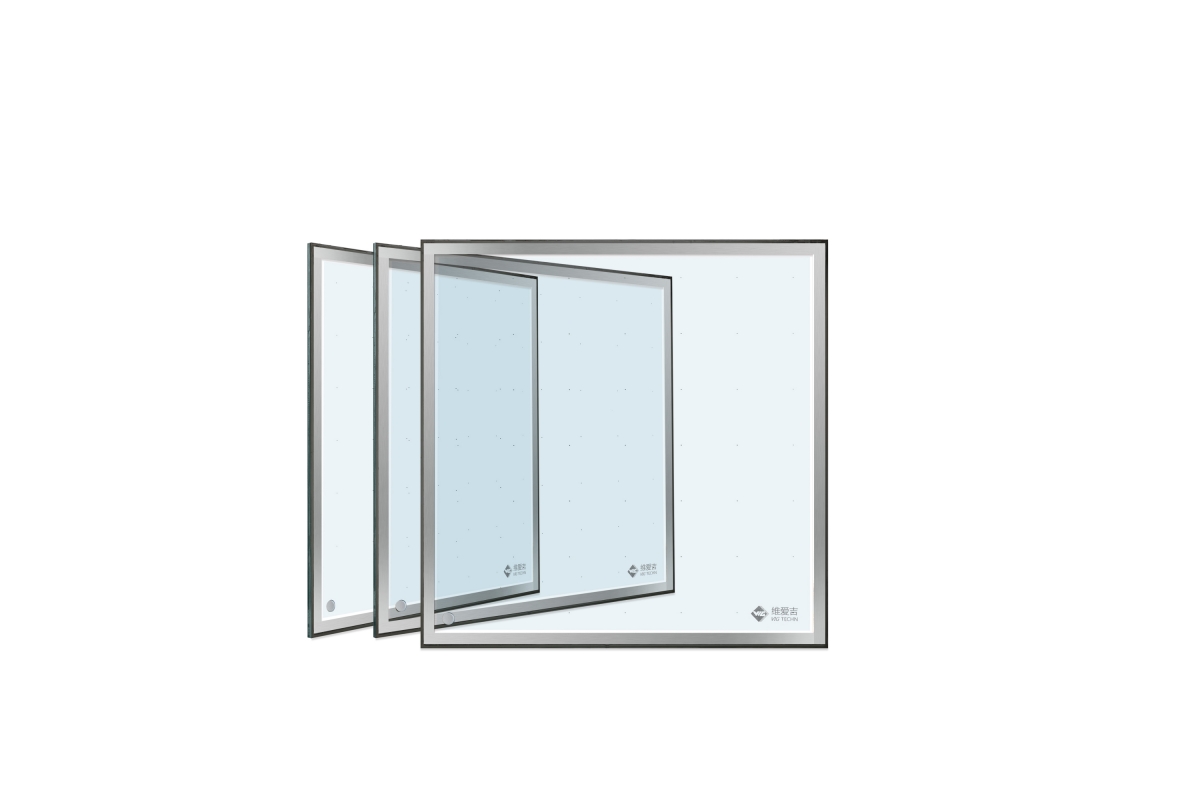
Tempered glass is safer and sometimes a necessity for glass used in construction.
How Tempered Glass Works
Tempered glass is produced by heating and rapid cooling.
This process forms a surface compressive stress layer on the glass surface (≥90 MPa).
When broken, it fragments into small blunt particles.
Consequently: The sealing temperature must stay below the stress-relief or annealing temperature of tempered glass.
Compatibility comparison:
High-Temperature Glass-Frit Edge Sealing: Not compatible
Its sealing temperature exceeds the stress-relief temperature of tempered glass.
Low-Temperature Glass-Frit Edge Sealing: Probably not compatible
Initial surface compression must be raised >140 MPa. Needs precise temperature control. And…
⚠️More:
Ideal tempered-glass surface compression: ≥90 MPa ✅
Low-Temperature Glass-Frit Edge Sealing tempered-glass surface: 64 MPa < Q < 90 MPa
This is unsafe.
because it does not break into small particles like tempered glass,
nor does it shatter like ordinary glass.
The breakage pattern could be unpredictable.
Silver-Paste Edge Sealing & Solder Alloy Edge Sealing: Compatible with Tempered Glass
Both use low-temperature solder alloys. The sealing temperature is far below the stress-relief point.
Concern:
Since solder alloy edge seals have high thermal conductivity, will they create an edge thermal bridge and reduce overall insulation performance?
Using LBNL THERM, a professional thermal-simulation tool, we modelled and analysed the edge thermal performance of three edge-sealing materials:
Simulation:
Edge-seal width: 8 mm
Edge-seal thickness: 0.3 mm
Thermal conductivity of each material at room temperature:
Glass-frit solder: 1 W/m·K
SAC305 alloy: 54 W/m·K
Active alloy solder: 30 W/m·K
Results:
Edge-sealing material | U-value over 65 mm edge area | Difference vs glass frit |
Glass frit | 2.2868 W/㎡·K | Baseline |
Silver-paste & solder alloy | 2.2988 W/㎡·K | +0.012 |
Solder alloy | 2.2983 W/㎡·K | +0.011 |
Conclusion: they are almost identical.
In other words: solder alloy edge sealing does not sacrifice edge thermal performance.
Comparison dimensions | Glass-Frit Edge Seal | Silver-Paste Edge Seal | Solder Alloy Edge Seal |
Bonding method | wetting | wetting | Chemical metallurgical bond |
Shear strength | 3.45 MPa | 12 MPa | 20 MPa |
UV resistance | Low | Medium | Excellent |
Acid and alkali resistance | Excellent | Medium | Excellent |
RoHS compliance | ❌ May fail | ✅ Pass | ✅ Pass |
REACH compliance | ❌ Fails | ⚠️ May fail | ✅ Pass |
Tempered-glass compatibility | ⚠️ No | ✅ Yes | ✅ Yes |
Edge thermal performance | ⭐⭐⭐⭐⭐ Slightly better | ⭐⭐⭐⭐⭐ | ⭐⭐⭐⭐⭐ |
Overall rating | ⭐⭐ | ⭐⭐⭐⭐ | ⭐⭐⭐⭐⭐ More stable |
Notes
RoHS compliance: Depends on formulation.
REACH compliance: Depends on formulation.
Depends on process temperature and surface compression.
✅ Longer Service Life
A chemical-metallurgical bond gives the seam 5.8 times the shear strength of glass-frit edge sealing. It greatly improves resistance to thermal expansion/contraction and mechanical impact.
✅ Long-Term Stable Performance
With no organic residues and resistance to ultraviolet degradation, the vacuum remains stable longer.
✅ Compatible With Tempered Glass
Lower process temperature.
✅ Hazardous-Material Compliant
RoHS & REACH compliance. Access to higher-end markets.
✅ Usable in Coastal and High-Humidity Regions
Impervious to electrochemical corrosion, and hence safe to use in coastal and high-humidity regions.
✅ No Edge Thermal Performance Loss
The edge thermal performance of our products is almost identical to that of glass-frit edge sealing.
✅ Higher Yield
Our solder alloy sealing process has a higher yield.
Terms (Part II)
Term | Explanation |
U-value | Heat transfer coefficient; a key indicator of glass insulation performance. Lower values mean better insulation. |
Getter | A special material built into VIG to absorb residual gases in the cavity and maintain vacuum. |
RoHS compliance | EU Restriction of Hazardous Substances Directive; restricts lead, mercury, and other hazardous substances. |
REACH compliance | EU chemicals regulation covering registration, evaluation, authorization and restriction of chemicals; broader than RoHS. |
Tempered glass | Safety glass made by heating and rapid cooling to create a surface compressive-stress layer; it breaks into small particles. |
Surface stress (MPa) | The compressive stress value on a tempered-glass surface; ≥90 MPa is a standard pass level for tempered glass. |
electrochemical corrosion | Corrosion that occurs when two different metals are in contact in an electrolyte such as moisture. |
Ag₃Sn | A silver-tin intermetallic compound and major alloy phase in silver-paste edge-sealing solder; prone to corrosion in acidic humid environments. |
LBNL Therm | A professional building thermal-simulation tool developed by Lawrence Berkeley National Laboratory and widely used for window and glazing thermal-performance analysis. |
Thermal bridge | An area in a building envelope with much higher thermal conductivity than surrounding materials, causing increased local heat loss. |
Salt-spray environment | A humid atmosphere containing sodium chloride and other salts, common in coastal areas and highly corrosive to metals. |
Grain-boundary corrosion | Corrosion along metal grain boundaries, which can sharply reduce mechanical performance. |
Creep resistance | A material’s ability to resist slow deformation under sustained long-term stress. Better creep resistance means a more durable seam. |
About Super Tech & SuperVIG
Fujian Super Tech Advanced Material Co., Ltd. focuses on R&D and manufacturing of high-performance thermal insulation materials and is a major player in the vacuum insulation... (to be completed)
Solder Alloy VIG Sealing is a proprietary technology of SuperVIG.
Please let us know if you want a quote or want to hear more.
 English
 日本語
日本語 한국어
한국어 français
 Deutsch
 Español
 italiano
 русский
 português
 العربية
 Türkçe