Your RV insulation is already 100mm thick.
So why is it still freezing inside in winter, and basically an oven in summer?
Because piling on thickness doesn’t magically give you “warm in winter, cool in summer.” Sometimes the material itself has simply hit its limit.
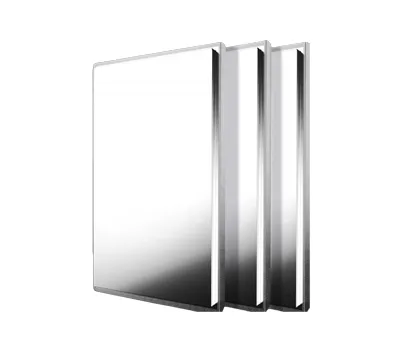
For premium RV insulation upgrades, fumed-silica vacuum insulation panels are getting serious attention. Thermal conductivity goes as low as 0.0045 W/(m·K), so in typical applications you can get the same insulation with way less thickness — and get valuable interior space back.
Picture the Gobi Desert in winter, 20 degrees below zero. Maybe you’re taking an RV on an Antarctic expedition or pushing it to the limit in the middle of nowhere. You’ve already packed in 100mm of insulation. The heater has been running for two hours, and the wall still feels cold. That usually isn’t a heater problem. It’s the insulation material hitting its ceiling.
Polyurethane, XPS, fiberglass wool — traditional insulation has the same basic problem: Want better insulation? Add more thickness. Want it lighter and slimmer? You usually give up thermal performance. And in an RV — literally a home on wheels — that trade-off hurts.
Then fumed-silica VIPs showed up.
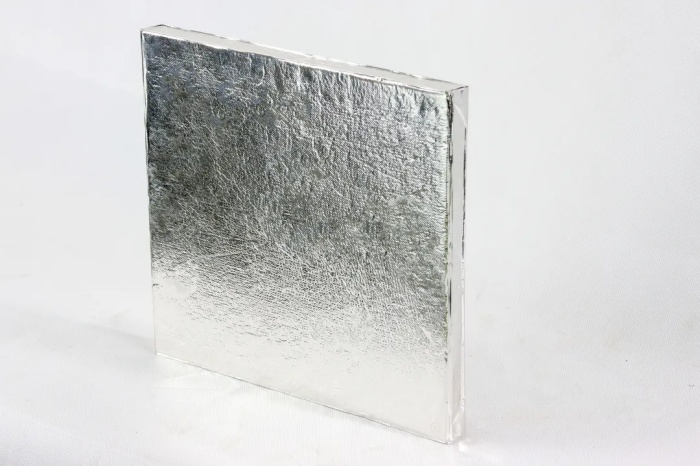
This is a VIP that can still insulate even if the vacuum is lost. People always ask the same thing about VIPs:“What if something sharp punctures it and it leaks?”
For a standard VIP, that’s a totally fair concern.
Once a standard VIP loses vacuum, thermal conductivity usually jumps and insulation performance can fall fast. Fumed-silica VIPs play by different rules.
The core is fumed silica, a high-performance insulation material with a naturally nano-porous structure.
Vacuum boosts its performance even further. But if the vacuum changes, the core can still keep relatively stable insulation performance.
Condition | Standard VIP | Fumed-Silica VIP |
Vacuum intact | ~0.004 W/(m·K) | ~0.0045 W/(m·K) |
After vacuum loss | >0.020 W/(m·K) (performance drops off a cliff) | ~0.012 W/(m·K) (still better than polyurethane) |
Compared with polyurethane after vacuum loss | Still outperforms most traditional insulation materials |
In plain English: A fumed-silica VIP gives you two layers of performance protection — Vacuum intact: seriously strong insulation. Vacuum lost: still better insulation than most traditional materials.
That’s one of the biggest differences versus many conventional solutions.
And that’s exactly why more premium RV makers and experienced conversion teams are looking at it.
Traditional RV insulation is usually polyurethane foam, often 50–100mm thick, with thermal conductivity around 0.022–0.040 W/(m·K).
In harsh environments, going thicker doesn’t always mean the real-world result gets much better.
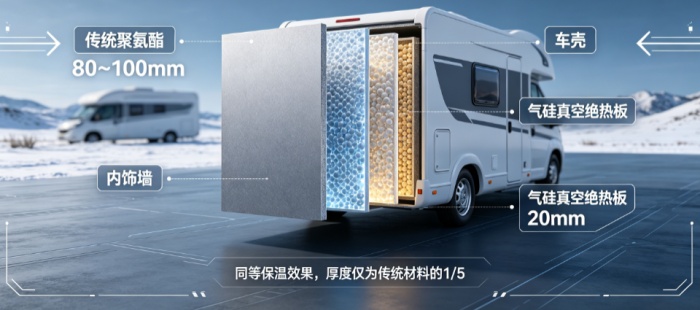
Fumed-silica VIPs go as low as 0.0045 W/(m·K). In typical RV wall structures and operating conditions, you can hit a similar insulation target with dramatically less thickness.
Traditional polyurethane: usually 80–100mm
Fumed-silica VIP: about 20mm for a similar insulation target
Every centimeter you cut is real usable space inside the RV.
And when every millimeter matters, that 20mm difference can mean:
a wider aisle
more storage
a more comfortable bed setup
a smarter wall build-up
Every extra kilogram affects fuel use, power consumption, and handling.
For RV manufacturers and conversion teams, insulation can’t just work — it needs to stay light.
With fumed silica as the core, these VIPs deliver high-efficiency insulation without piling on unnecessary vehicle weight.
So you get better thermal performance without making the RV unnecessarily heavy.
Less weight can help with:
better overall vehicle efficiency
lower energy use
longer range
better handling
For a premium RV, lightweighting isn’t just a spec-sheet flex. You actually feel the difference.
Safety is non-negotiable when your vehicle is also your living space.
The fumed-silica core has excellent flame resistance, and the panel can achieve Class A fire performance, meaning non-combustible and non-flame-supporting.
It also contains no toxic fibers, making it friendlier to people and the environment.
Hot sun, humidity, long winters — the material is built to keep insulation performance more stable across tough conditions.
For something that’s both a vehicle and a home, that safety margin matters.
RV upgrades and maintenance already cost time and money.
If the insulation degrades fast and you have to tear everything apart again later, the hidden cost gets ugly.
Fumed-silica VIPs offer good long-term stability, with a service life of 10+ years.
The material is resistant to aging and can maintain stable performance over a long period.
That means:
install it once and use it long term
less maintenance later
fewer repeat modification costs
a more consistent experience after delivery
Fumed-silica VIPs are moving beyond premium RVs into more applications where insulation really gets tested.
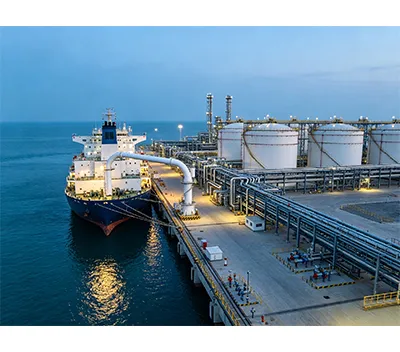
Helps improve vehicle thermal management, reduce energy use, and support better range.
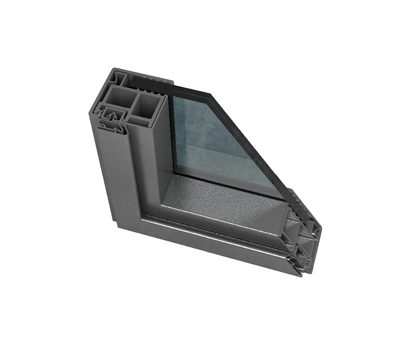
More efficient insulation in tight spaces, improving energy efficiency and temperature retention.
Supports green buildings and ultra-low-energy buildings with higher efficiency targets.
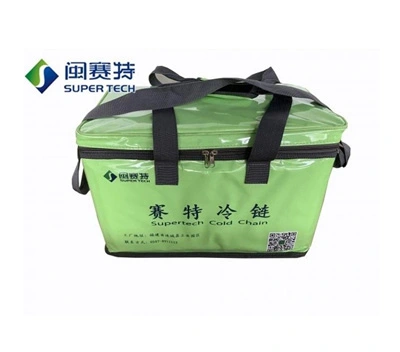
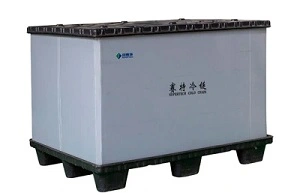
Helps keep temperatures stable in transit and protect vaccines and medicines through the cold chain.
From premium RVs to EVs, buildings to pharma cold chains, fumed-silica VIPs are becoming a serious option wherever high-performance insulation matters.
Performance | Fumed-Silica VIP | Traditional Polyurethane | Standard VIP |
Thermal conductivity (vacuum intact) | 0.0045 W/(m·K) | 0.022~0.040 W/(m·K) | ~0.004 W/(m·K) |
Thermal conductivity (after vacuum loss) | ~0.012 W/(m·K) | — | >0.020 W/(m·K) |
Fire rating | Class A (non-combustible) | Class B | Depends on barrier-film material |
Service life | 10+ years | 5–8 years | Depends on the encapsulation |
Toxic fibers | None | None | Depends on the core material |
Thickness needed for equivalent insulation | 1× | 5× | About 1×, but performance drops sharply after vacuum loss |
You wake up in the forest at first light.
Snow and frost outside. Warm and comfortable inside.
Not magic. Just a material way thinner than you’d expect, quietly doing its job inside the wall.
Thin, so you get more room.
Light, so the trip feels easier.
Safe, so you can actually relax.
Durable, so that comfort doesn’t fade as the material ages.
You’re on the road. We’re in the walls. Traditional insulation solves the problem by adding thickness. We’d rather make insulation more efficient, lighter, and more reliable. A fumed-silica VIP isn’t just a small upgrade to the old solution. It changes the logic of RV insulation altogether.
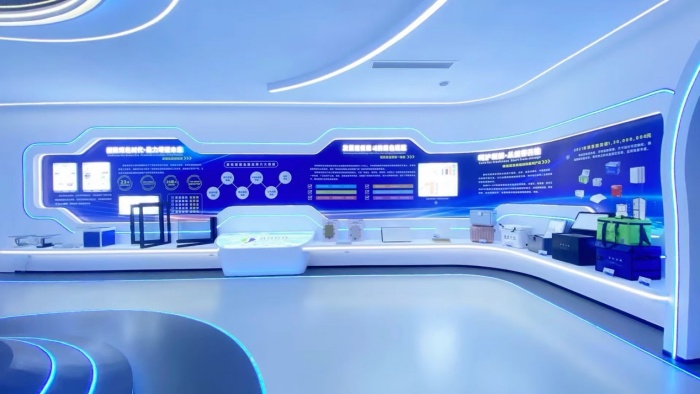
If you’re choosing the insulation package for your next RV, we can tailor insulation testing and technical support to your exact vehicle and use case. We’re not here to hard-sell you. We’d rather show you data that’s closer to real operating conditions before you decide.
RV manufacturers and conversion teams — talk to us. Let’s build the next generation of RV insulation: lighter, more efficient, and safer.
Looking for an alternative to fumed-silica VIPs? Catch the next post: a new lightweight VIP solution with similar thermal performance, upgraded weight savings, and a stronger overall cost advantage.
 English
 日本語
日本語 한국어
한국어 français
 Deutsch
 Español
 italiano
 русский
 português
 العربية
 Türkçe