Vacuum Insulation Panels (VIPs) are widely recognized as one of the highest-performing thermal insulation materials available today. Their extremely low thermal conductivity makes them a preferred choice in applications where both insulation performance and space efficiency are critical — from pharmaceutical cold chain packaging and refrigerators to building insulation and EV battery thermal management.
But before specifying or purchasing VIPs, engineers, procurement teams, and product designers consistently ask the same practical question:
How long does a Vacuum Insulation Panel actually last?
Unlike conventional foam insulation, VIP performance depends entirely on maintaining its internal vacuum environment. Once that vacuum degrades — even partially — thermal conductivity rises and insulation efficiency declines. This guide explains:
Typical VIP service life across different applications
Why VIP performance changes over time
The seven key factors that determine how long a VIP lasts
How manufacturers extend VIP longevity
What to look for when evaluating VIP suppliers
Before examining lifespan, it helps to understand the operating principle.
A Vacuum Insulation Panel reduces heat transfer by removing air from a sealed internal structure. Heat moves through materials via three mechanisms: conduction, convection, and radiation. By evacuating the internal space, VIPs eliminate most conductive and convective pathways — dramatically reducing the effective thermal conductivity of the panel.
| Component | Function |
|---|---|
| Microporous core (fumed silica, glass fiber) | Structural support + low-conductivity matrix |
| Multilayer gas barrier film | Prevents air and moisture ingress |
| Vacuum-sealed enclosure | Maintains low internal pressure |
| Getter materials | Absorbs residual gases over time |
| Desiccant materials | Absorbs internal moisture |
Because of this structure, VIPs can achieve thermal conductivity values of approximately 0.002-0.008W/m·K — far below conventional insulation materials.
| Material | Typical λ (W/m·K) |
|---|---|
| VIP (new, high quality) | ~0.002-0.008 |
| Aerogel blanket | ~0.012–0.020 |
| PU foam | ~0.020–0.030 |
| XPS | ~0.028–0.035 |
| EPS | ~0.030–0.040 |
| Fiberglass | ~0.030–0.045 |
Note: Actual values depend on core type, temperature, aging state, and test conditions.
Maintaining this performance advantage over time is the central challenge of VIP design and manufacturing.
There is no single universal answer — VIP lifespan varies significantly depending on application, environment, and manufacturing quality. However, based on industry experience and published research, high-quality VIPs generally deliver:
| Application | Typical Effective Lifespan |
|---|---|
| Refrigerators and freezers | 15–25 years |
| Building insulation (protected installation) | 20–30+ years |
| Pharmaceutical cold chain packaging | 3–10 years (reusable systems) |
| EV battery thermal management | 8–15+ years (design-dependent) |
| Industrial and energy storage systems | 10–20 years |
Key point: VIP performance does not typically fail suddenly. Degradation is usually gradual — thermal conductivity increases slowly over time as internal pressure rises. Even a partially aged VIP often still outperforms conventional foam insulation.
The primary aging mechanism in VIPs is gas and water vapor permeation through the barrier film and edge seals.
Although VIPs are vacuum-sealed, no barrier film is perfectly impermeable. Over time:
Small amounts of air and gas molecules slowly diffuse through the barrier film
Water vapor penetrates through the film or edge seal areas
Internal pressure gradually increases
As pressure rises, conductive and convective heat transfer increase
Thermal conductivity rises — insulation performance declines
This process is unavoidable to some degree. However, high-quality barrier films, precision sealing, and effective getter/desiccant systems can dramatically slow the aging rate — extending effective service life by many years.
The barrier film is the single most important factor in long-term VIP performance. Its primary function is to prevent gas and moisture from entering the vacuum chamber.
What makes a high-quality barrier film?
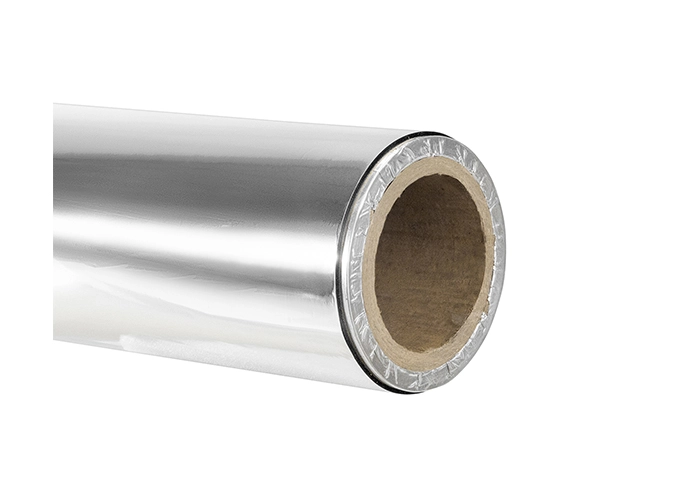
Multilayer laminate construction (often combining aluminum foil, metallized polymer films, and gas-resistant coatings)
Low gas transmission rate (GTR)
Low water vapor transmission rate (WVTR)
Consistent film thickness and lamination quality
Resistance to delamination under thermal cycling
Why it matters: A barrier film with even slightly higher permeation rates will allow faster vacuum degradation — shortening effective lifespan from 20+ years to potentially 5–8 years.
When evaluating VIP suppliers, always request:
Barrier film construction details
Gas transmission rate data
Water vapor transmission rate data
Aging test results
Even if the barrier film itself performs well, poor edge sealing is a common failure point. VIP edges are structurally more complex than flat film areas and are more vulnerable to gas leakage over time.
Factors that affect seal quality:
Seal width and geometry
Sealing process temperature and pressure control
Cleanliness during manufacturing
Consistency across production batches
Industry insight: In industrial applications, sealing quality can be the difference between a VIP lasting 5 years and one lasting 20+ years. Manufacturers using automated precision sealing systems with in-process quality control generally achieve significantly better long-term performance.
The internal core material affects both initial thermal performance and how the panel behaves as internal pressure gradually increases over time.
Common VIP core materials:
| Core Material | Thermal Performance | Aging Resistance | Notes |
|---|---|---|---|
| Fumed silica | Excellent | High | Preferred for demanding applications |
| Glass fiber | Good | Moderate | Cost-effective option |
| Open-cell foam | Moderate | Lower | Less common in premium VIPs |
| Aerogel composite | Very good | High | Premium, higher cost |
Fumed silica is widely preferred for high-performance VIPs because its microporous structure maintains relatively low thermal conductivity even as internal pressure rises — making it more tolerant of gradual vacuum degradation.
Many high-performance VIPs contain getter and desiccant materials inside the sealed panel. These components play a critical role in extending service life.
Getters:
Absorb residual gases (nitrogen, oxygen, CO₂) that accumulate inside the panel over time
Slow the rate of internal pressure increase
Help maintain lower thermal conductivity over extended periods
Desiccants:
Absorb water vapor that permeates through the barrier film
Prevent moisture from affecting core material stability
Reduce the risk of condensation-related degradation
Why this matters: Advanced getter technology is one of the primary reasons modern VIPs last significantly longer than early-generation products. When comparing VIP suppliers, ask specifically about getter type, quantity, and placement strategy.
Moisture is one of the most significant long-term threats to VIP performance. Water vapor entering the panel can:
Increase internal pressure faster than dry gas alone
Affect core material thermal properties
Accelerate barrier film degradation in some constructions
High-risk environments for moisture exposure:
Refrigeration and freezer applications (condensation cycles)
Cold chain packaging (temperature transitions)
Outdoor building insulation (rain, humidity)
Tropical or high-humidity climates
Design response: Applications in humid environments require:
Higher-specification moisture barrier films
Larger desiccant capacity
Robust edge sealing with moisture-resistant materials
Protective outer structures that minimize direct moisture contact
Unlike conventional foam insulation, VIPs are sensitive to physical damage. If the barrier film is punctured or the seal is compromised:
Vacuum conditions may be partially or fully lost
Thermal conductivity can increase significantly
Insulation performance may decline rapidly
Common causes of mechanical damage:
Sharp edges during installation
Compression stress from fasteners or structural loads
Vibration wears over time (especially in transport applications)
Impact during handling or shipping
Improper cutting or trimming
Best practice design responses:
Integrate VIPs within protective rigid shells or housings
Use foam cushioning layers around VIP edges
Design recessed mounting pockets
Specify controlled fastener torque
Provide clear handling and installation guidelines
Important: A damaged VIP generally cannot be repaired to restore original vacuum levels. Replacement is the standard response — which is why protection-by-design is essential.
Repeated thermal cycling stresses VIP materials over time. Frequent temperature fluctuations can affect:
Barrier film dimensional stability
Seal integrity at film fold points
Internal gas diffusion rates (higher temperatures accelerate permeation)
Applications with significant thermal cycling:
Refrigerators and freezers (door opening cycles)
Pharmaceutical cold chain shippers (ambient temperature transitions)
EV battery systems (charge/discharge cycles)
Building insulation in climates with large seasonal temperature swings
VIPs intended for high-cycling applications should be specifically designed and validated for thermal cycling resistance — including appropriate barrier film selection and seal geometry.
Not all VIPs are manufactured to the same standard. Manufacturing consistency directly affects long-term performance.
Critical manufacturing quality factors:
| Factor | Impact on Lifespan |
|---|---|
| Vacuum level achieved during sealing | Higher vacuum = better initial performance and slower aging |
| Film lamination consistency | Inconsistent lamination creates weak permeation points |
| Seal width and uniformity | Narrow or inconsistent seals increase edge leakage risk |
| Moisture control during production | Residual moisture accelerates internal degradation |
| Getter activation and placement | Affects long-term gas absorption capacity |
| In-process inspection | Catches defects before they reach the field |
For critical applications, supplier quality systems, production process documentation, and aging test data are important evaluation criteria — not just initial thermal conductivity specifications.
Because VIP degradation is gradual, it is not always immediately obvious. Depending on the application, signs may include:
System-level indicators:
Reduced temperature hold time in cold chain shippers
Higher energy consumption in refrigerators or freezers
Increased temperature drift under stable ambient conditions
Reduced thermal resistance measured during periodic testing
Physical indicators (less common, application-dependent):
Slight panel swelling in some constructions (as internal pressure rises)
Changes in panel rigidity
In most cases, performance monitoring (temperature logging, energy consumption tracking) is more reliable than visual inspection for detecting VIP aging.
Appliance manufacturers require VIPs to maintain performance for the full product lifetime — typically 15–20+ years. VIPs enable thinner cabinet walls and larger internal storage volume while meeting energy efficiency standards. Long-term vacuum stability is essential.
Construction applications require insulation systems that perform reliably for decades. VIPs used in high-performance buildings, passive house systems, and energy-efficient facades must maintain low thermal conductivity throughout the building’s service life — often 25–50 years or more.
Reusable pharmaceutical shippers require consistent thermal performance across hundreds of shipping cycles. VIP performance directly affects temperature excursion risk and regulatory compliance. Barrier film quality and mechanical protection are critical.
EV battery packs are designed for 8–15+ year service lives. VIPs used in battery thermal management must maintain insulation performance through thousands of thermal cycles, vibration exposure, and varying temperature conditions.
Stationary battery energy storage systems require long-term thermal stability. VIPs help maintain stable operating temperatures and reduce thermal management energy consumption over extended service periods.
Leading VIP manufacturers continue to improve product lifespan through several approaches:
Advanced barrier film development
Higher-performance multilayer laminates
Improved metallization and coating technologies
Better edge barrier solutions to reduce thermal bridging and leakage
Improved sealing processes
Automated precision sealing systems
Enhanced seal geometry for reduced edge leakage
In-process seal integrity testing
Better getter and desiccant systems
Higher-capacity getter formulations
Optimized placement within the panel structure
Improved activation processes
Core material innovation
More stable fumed silica formulations
Composite core structures with improved aging resistance
Quality assurance systems
Accelerated aging test protocols
Statistical process control
Long-term field performance monitoring
These improvements mean that modern high-quality VIPs significantly outperform early-generation products in terms of long-term vacuum stability and service life.
When specifying VIPs for a new application, consider asking suppliers:
What is the barrier film construction (layer structure, materials)?
What are the gas transmission rate (GTR) and water vapor transmission rate (WVTR) values?
What getter and desiccant systems are included?
What accelerated aging test data is available?
What is the expected thermal conductivity after 10 years / 20 years?
What mechanical protection is recommended for this application?
What quality control processes are used during manufacturing?
Are there field performance case studies available?
Q: How long do vacuum insulation panels last?
High-quality VIPs typically maintain effective thermal performance for 10 to 25 years or more, depending on application, environment, barrier film quality, and mechanical protection. Refrigerators and building applications often achieve the longest service lives.
Q: Do VIPs fail suddenly or gradually?
VIP performance typically degrades gradually as gas slowly permeates the barrier film over time. Sudden failure is uncommon unless the panel is physically punctured or the seal is mechanically compromised.
Q: What is the most important factor for VIP lifespan?
Barrier film quality and seal integrity are generally the most critical factors. Even a high-quality core material cannot compensate for a barrier film with high permeation rates or a poorly sealed edge.
Q: Can a damaged VIP be repaired?
In most cases, no. A punctured VIP generally cannot be restored to its original vacuum level reliably. Replacement is the standard approach, which is why mechanical protection design is essential.
Q: Do getters and desiccants really extend VIP life?
Yes. Getter and desiccant systems absorb residual gases and moisture that accumulate inside the panel over time, slowing the rate of internal pressure increase and extending effective service life.
Q: How does temperature affect VIP aging?
Higher operating temperatures generally accelerate gas permeation through barrier films, increasing the aging rate. Applications at elevated temperatures require barrier films specifically selected for thermal stability.
Q: Are VIPs still better than foam even when partially aged?
In many cases, yes. Even a partially aged VIP with slightly elevated thermal conductivity often still outperforms conventional foam insulation materials — particularly PU foam and EPS.
The lifespan of a Vacuum Insulation Panel is not determined by a single factor — it is the result of a complete system: barrier film quality, seal integrity, core material selection, getter performance, moisture management, mechanical protection, and manufacturing consistency.
High-quality VIPs, properly designed and protected, can deliver effective thermal insulation performance for 10 to 25 years or more across demanding applications, including cold chain logistics, appliances, building insulation, and EV battery systems.
Understanding what drives VIP aging — and what separates a 5-year panel from a 20-year panel — is essential for making informed procurement and engineering decisions.
As VIP manufacturing technology continues to advance, modern panels are becoming increasingly durable, reliable, and suitable for long-term thermal insulation across a growing range of industries.
 English
 日本語
日本語 한국어
한국어 français
 Deutsch
 Español
 italiano
 русский
 português
 العربية
 Türkçe