Many factory managers in precision coating and electronics baking industries have mentioned a particularly frustrating issue:
Even though strict cleanroom controls are in place, with significant investment in air showers and filters, and workers fully equipped with protective gear before entering the workshop, the product yield rate remains stuck at 92% and simply cannot improve. Customer complaint penalties are even more painful than electricity bills.
During every inspection, tiny “fibers” or foreign particles can always be found on product surfaces.
Rework, polishing, and repainting take time and effort, while also delaying customer delivery schedules.
The management becomes frustrated during meetings, the quality assurance department conducts repeated investigations, but the issue often ends without a clear solution and is eventually blamed on “poor air quality.”
But the real problem may not actually be in the air.
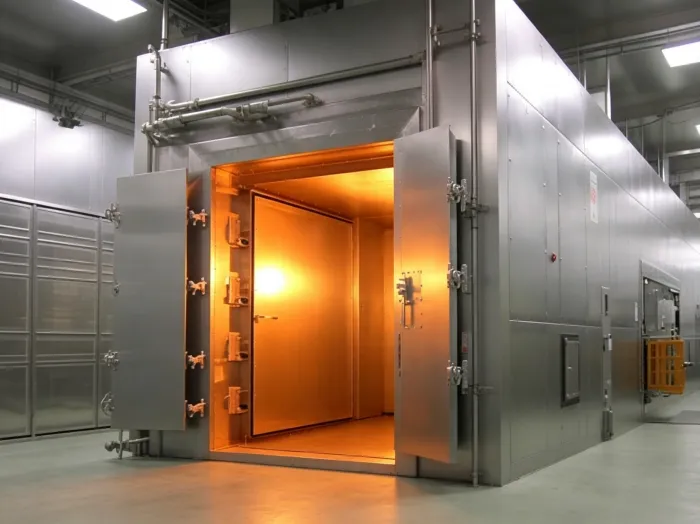
Many industrial ovens and industrial tunnel furnaces require continuous cycles of drying, baking, curing, tempering, preheating, shaping, and aging processes. After three to five years of operation, if you remove the outer wall for inspection, you may find that the originally thick rock wool or aluminum silicate wool has already lost its structural integrity due to long-term high-temperature exposure and airflow vibration, resulting in powdering and brittle cracking.
The most serious issue is that the inside of the oven is a circulation system.
Once hot air flows, these tiny fibers and dust particles hidden deep inside the insulation layer can enter the circulating air through gaps, becoming the “hidden culprit” that contaminates products.
This not only affects the temperature control accuracy and cleanliness of industrial ovens, but also increases costs.
The cost impact can be alarming:
Yield Loss: Even a 1 percentage point decrease in yield can result in several tons of defective products per day for a production line with a daily output of hundreds of thousands of units.
Rework Costs: Polishing, cleaning, and repainting lead to continuous increases in labor and material costs.
Brand Risk: If defective products are delivered to customers, orders for the next quarter may be at risk.
This is a typical case of “saving on material costs but losing profit.”
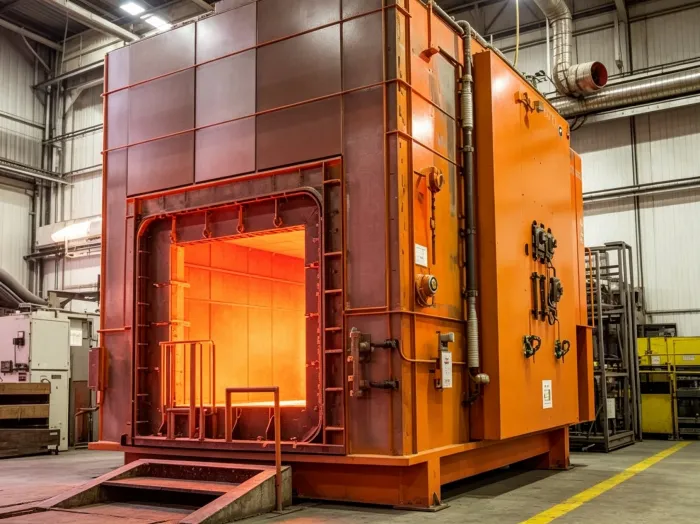
Is there a material that can withstand high temperatures while naturally preventing powdering and particle shedding?
To address this issue, VacuEco SITER Energy Saving’s Yujia®VAP High-Temperature Metal Vacuum Insulation Panel provides a fundamental solution.
(SITER New Materials, the parent company of VacuEco SITER Energy Saving, is listed under stock code 688398.)
It is not about “reducing dust,” but achieving “zero dust.”
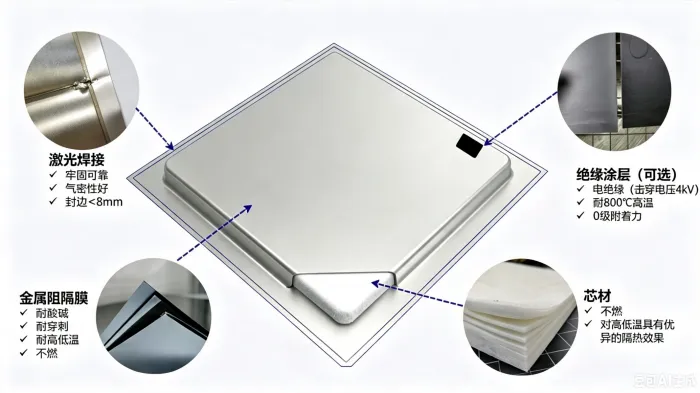
Principle: The panel uses a 0.1mm-thick SUS304 stainless steel prefabricated shell. After filling with an inorganic high-temperature-resistant core material, it is sealed through laser welding and vacuumed to form a fully enclosed structure. At the same time, it reduces heat conduction, heat convection, and thermal radiation.
The fibers are completely sealed inside the stainless steel “armor.” There is no exposed surface, no fiber shedding, and no dust release.
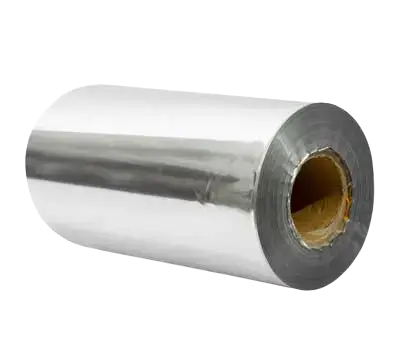
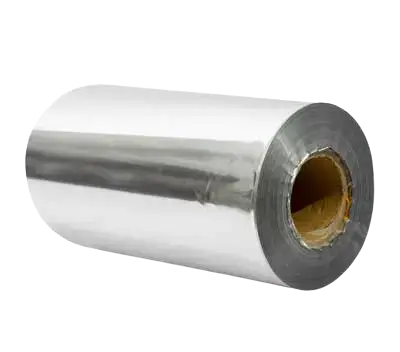
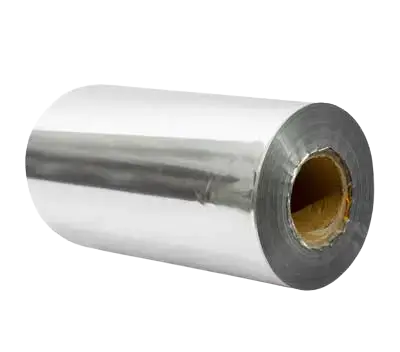
Fully sealed stainless steel encapsulation — the SUS304 mirror-finish surface is smooth, does not attract dust, and does not generate airborne fibers.
The vacuum treatment not only provides excellent insulation performance, but also means there is no internal air movement, preventing fibers from aging and powdering.
Meets Class 100/Class 1,000 cleanliness requirements, with no contamination risk for high-end production lines such as precision electronics and automotive coating.
Simply put, this is a thermal insulation panel that is “obsessed with cleanliness.”
When used in industrial ovens, drying tunnels, curing furnaces, and industrial tunnel furnaces, even after ten years of use, the inside remains clean with zero dust release when inspected.
For high-end production lines in Class 1,000 and Class 100 cleanrooms, this provides true “peace of mind.”
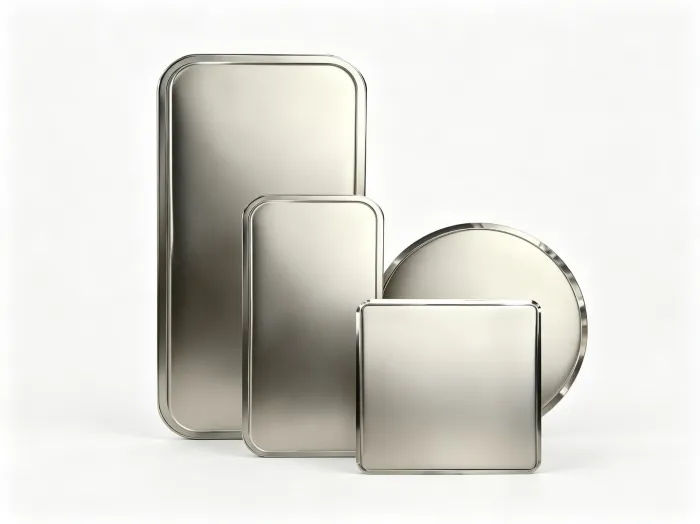
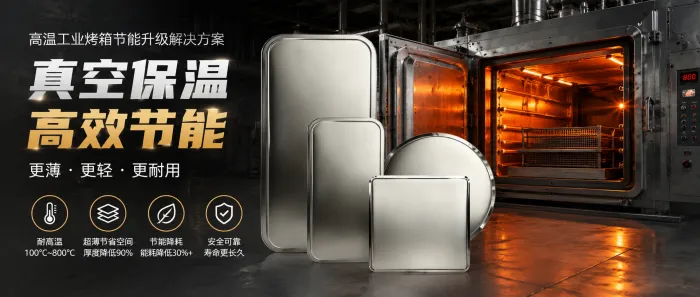
In addition to “zero particle shedding,” its primary functions as an insulation material — energy saving and temperature resistance — are also outstanding.
Let’s look at the data and make a simple comparison:
Dimension | Traditional Rock Wool | Aerogel Blanket | Yujia®VAP High-Temperature Metal Vacuum Insulation Panel |
Dust / Environmental Performance | Severe powdering, fiber dispersion, and health risks | Dust is generated during installation, with a risk of powdering during long-term use | Fully sealed SUS304 structure, zero dust, environmentally friendly and non-toxic |
Thermal Conductivity | 0.035-0.045 W/(m·K) | 0.013-0.025 W/(m·K) | ≤0.0018W/(m·K) (Extremely Low) |
Thickness for Equivalent Insulation Performance | Bulky(100-200mm) | Thinner (50-100mm) | Ultra-thin (only 5-20mm required) |
Maximum Temperature Resistance | Generally ≤600℃ | Generally ≤650℃ | Temperature resistance up to 800℃ with no performance degradation |
Waterproof and Corrosion Resistance | Highly prone to water absorption, causing CUI corrosion | Hydrophobic but not waterproof | Fully sealed metal structure prevents moisture penetration |
Service Life | Requires replacement every 3-5 years | 5-10 years | 20+ years, with a service life 3-5 times longer than traditional materials |
If you are responsible for a high-end coating production line, you need to consider not only yield costs, but also space costs:
A 200mm-thick rock wool insulation layer can be replaced with only 20mm of Yujia®VAP High-Temperature Metal Vacuum Insulation Panel.
The outer wall of the oven becomes significantly thinner. Within the same factory space, the internal oven chamber space can increase by 10%-15%, which means higher production capacity.
A thermal conductivity that is one order of magnitude lower means faster oven heating and less heat loss through the outer wall.
With energy savings improved by more than 30%, the electricity or gas costs saved in one year may be enough to recover the material investment.
Traditional insulation materials need to be replaced every three years, requiring production shutdowns, while removal and installation generate dust.
The service life of Yujia®VAP High-Temperature Metal Vacuum Insulation Panel is 3-5 times longer than traditional materials. With almost no maintenance required, the hidden costs of downtime and labor can be directly converted into savings.
For applications such as high-end coating and electronics manufacturing, insulation materials are also an important part of stable equipment operation.
Yujia®VAP High-Temperature Metal Vacuum Insulation Panel achieves A1-class non-combustibility. Its metal sealed structure can also prevent the intrusion of moisture, humidity, dust, and oil fumes.
SITER Energy Saving aims to incorporate cleanliness, energy consumption, space utilization, and maintenance cycles into equipment solutions, rather than only comparing the purchase price of an insulation material.
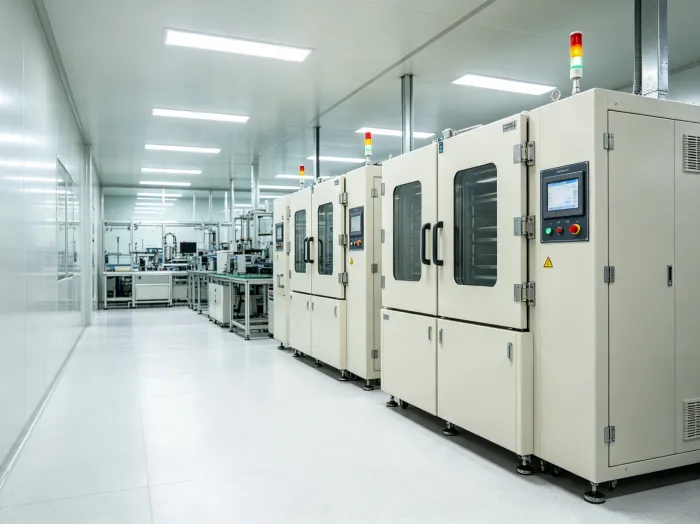
As the manufacturing industry moves toward high-quality and low-carbon transformation, insulation materials are connected to product yield, cleanliness, ESG carbon reduction goals, and full life-cycle TCO.
Replacing old insulation layers with dust-free metal vacuum insulation panels may appear to be a minor material adjustment, but it is actually a strategic move for companies seeking refined cost reduction, efficiency improvement, and differentiation from low-end competition.
VacuEco SITER Energy Saving is your industrial energy efficiency management partner with expertise in thermal engineering and the ability to handle demanding challenges.
Answer: Yujia®VAP High-Temperature Metal Vacuum Insulation Panel supports customized designs for irregular shapes. Through modular cutting and assembly, elbows, flanges, and reducers can all be covered.
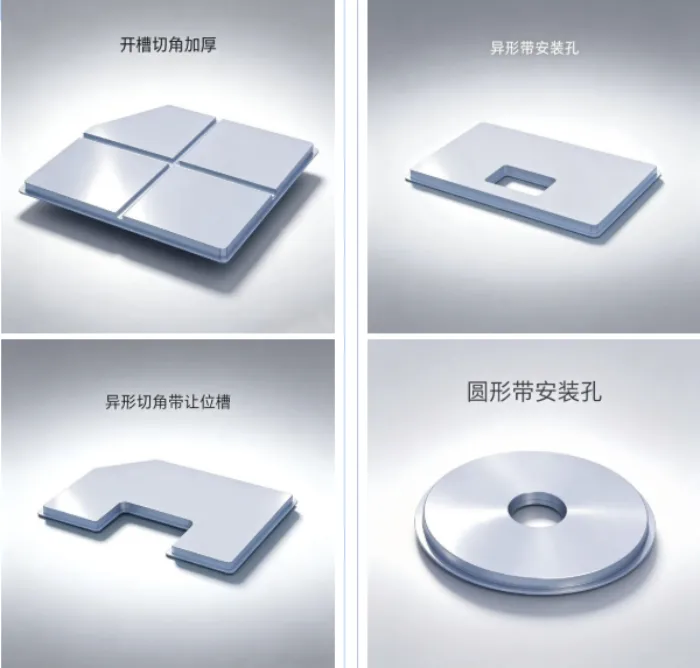
Answer: The panel uses SUS304 stainless steel with stress relief treatment and laser welding. It can withstand temperatures from -253℃ to 800℃, while maintaining stable vacuum performance under long-term high-temperature conditions.
Answer: Yes. The metal shell can be formed with pressed edges and pre-compressed fitting, combined with thermal bridge-breaking anchors to solve traditional insulation issues such as “door frame thermal bridges and insufficient filling at corners.”
Interaction: Have you ever encountered “unexplained dust” from industrial ovens in your workshop? Feel free to share your experience in the comments!
 English
 日本語
日本語 한국어
한국어 français
 Deutsch
 Español
 italiano
 русский
 português
 العربية
 Türkçe