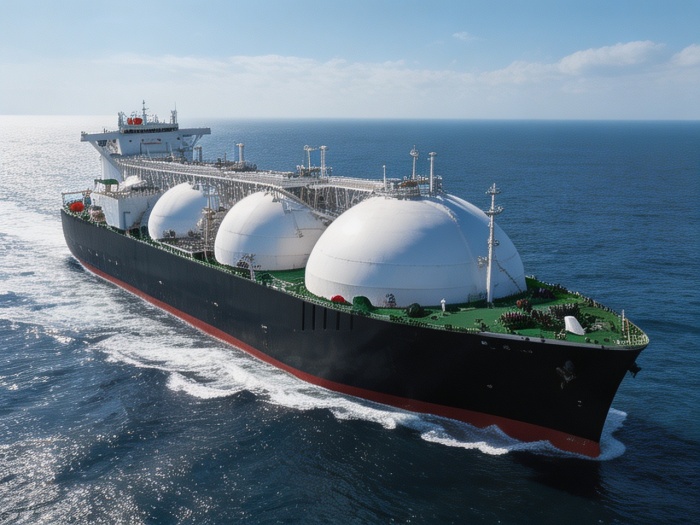
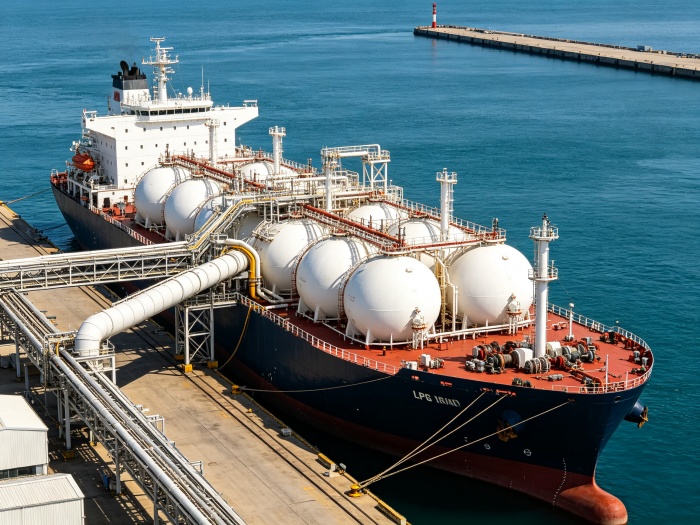
LNG carriers are known as the tiaras of shipbuilding because of their high technical barriers and construction complexity. As global shipbuilding supply chain has matured, core components—including cryogenic steel plate, cargo pumps, and navigation systems—have gradually shifted to domestic supply, and insulation materials for cargo-containment systems have already been localized.
But competition has not stopped there. Shipowners and shipyards now expect more than a workable insulation system: they want higher thermal efficiency, better tank-volume utilization, and more stable long-term performance.
Whether used in the insulation spaces of membrane-type LNG carriers following the Mark III or NO96 designs, or on the external insulation of self-supporting tanks, conventional systems are approaching their limits in thermal conductivity, thickness, and boil-off control at -162°C.
The industry’s next challenge is to use more advanced insulation technology to release cargo volume, reduce energy consumption, and strengthen supply-chain independence.
Improving insulation performance in LNG/LPG marine cryogenic applications is not a simple material substitution; three core challenges must be solved together:
LNG is stored and transported at atmospheric pressure at about -162°C, placing extremely high demands on thermal conductivity and structural stability. Conventional insulation materials struggle to maintain stable long-term performance under cryogenic conditions, and the boil-off rate (BOR) depends directly on actual insulation performance.
Vacuum insulation is not determined by a single material.
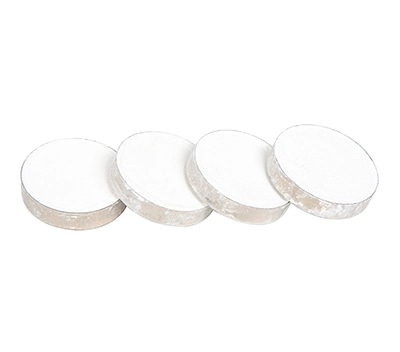
It is a system requiring coordinated performance from PU foam, PIR, adsorbents, laser-welding processes, test standards, and other critical elements. A weakness in any one area can reduce vacuum retention, create local thermal bridges, increase vessel-wide boil-off, and shorten effective service performance over the vessel’s lifecycle.
Classification societies such as DNV, ABS, and CCS apply strict certification standards and rigorous procedures to marine insulation materials. A material must pass full-condition performance validation before entering the supply chain for mainstream cargo-containment systems.
This is why, despite that thermal solutions abound, ones that are suitable for high-end vessel designs and extreme performance requirements remain scarce. The market needs an upgrade that can meet international high level thermal performance need.
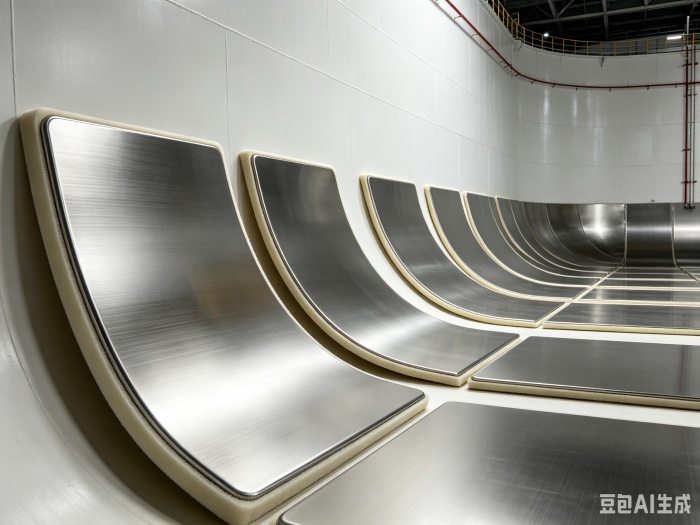
To meet the industry’s demand for higher performance, VacuEco Supertech drew on nearly 20 years of vacuum-insulation expertise from its parent company, Supertech, to develop the VPU composite panel.
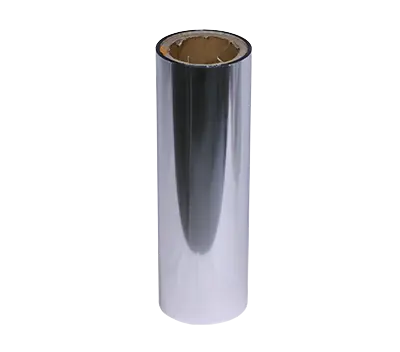
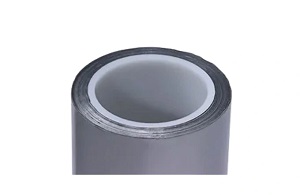
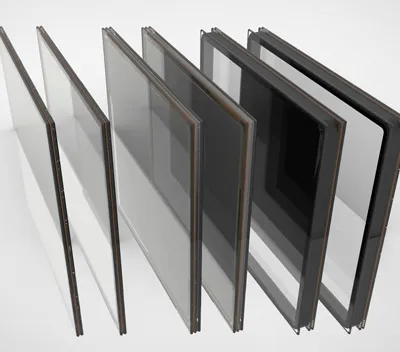
Independently developed stainless steel-encapsulated vacuum insulation panels (VIP), with measured thermal resistance more than 6.2 times that of conventional insulation
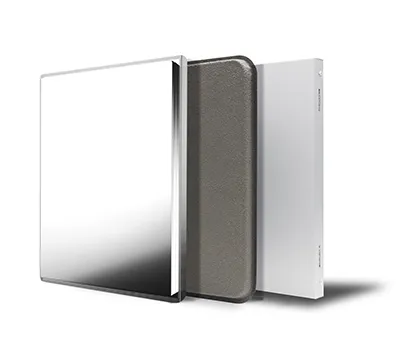
VIP combined with PIR foam to form a VPU composite panel designed for LNG/LPG marine cryogenic conditions, balancing thermal conductivity and structural stability while supporting lower boil-off and better tank-volume utilization
A fully controlled supply chain: more than 80 core technologies covering core materials, barrier films, adsorbents, and sealing equipment, without dependence on external critical-process suppliers
China National Intellectual Property Advantage Enterprise
China National Specialized and Innovative "Little Giant" Enterprise
Key High-Tech Enterprise under the China National Torch Program
Contributor to industry-standard development
This combination of technology and qualifications reflects nearly 20 years of development by Supertech, an A-share STAR Market-listed company (stock code: 688398). It also provides the foundation for VacuEco VPU to enter high-safety applications such as LNG and LPG carriers.
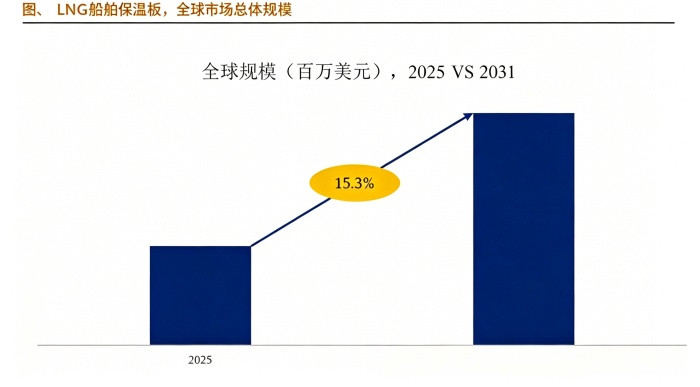
According to QYResearch’s Global LNG Carrier Insulation Panel Market Report 2025–2031:
The compound annual growth rate (CAGR) is about 15.3%
The global LNG carrier insulation panel market is projected at USD 1.85 billion by 2031
Membrane-type vessels accounted for more than 90% of new global LNG carrier orders in 2024, expanding demand for cryogenic insulation materials
Data disclosed by Clarksons, GIIGNL, and other organizations indicate that global LNG trade and new-vessel orders have continued to rise in recent years. Orderbooks at Chinese shipyards including Hudong-Zhonghua and Jiangnan Shipyard already extend beyond 2029. The tighter the shipbuilding capacity, the more urgent the demand for localized materials and equipment.
The VacuEco Supertech VPU composite panel is moving from independently controlled technology toward large-scale engineering application during this market window.
Want specific application cases and technical data for VPU on LNG/LPG carriers and marine cargo tanks? Follow VacuEco Supertech or message us for detailed information.
 English
 日本語
日本語 한국어
한국어 français
 Deutsch
 Español
 italiano
 русский
 português
 العربية
 Türkçe