Thicker LNG tank insulation can cost more than space—it can reduce transport revenue.
For an LNG carrier, hull dimensions, tank capacity, and sailing efficiency determine the vessel’s overall economic value.
Common priorities include:
Main engine efficiency;
Hull-form optimization;
Higher loading capacity;
But one important factor is often overlooked: The LNG tank insulation system.
In an LNG carrier tank, insulation not only blocks external heat and reduces LNG boil-off gas (BOG), but also directly affects usable tank volume.
This raises two questions:
How should LNG tank insulation materials be selected?
Which insulation system can balance thermal performance with cargo capacity?
The answer lies in the engineering logic of cryogenic insulation design.
Assume the internal diameter of an LNG carrier tank is fixed. With the same insulation-performance requirement:
A thicker insulation layer means less usable tank volume. On a large LNG carrier, a difference of only a few dozen millimetres is magnified across the tank circumference and overall dimensions, creating a substantial difference in usable space.
For example:
Reduce the insulation thickness by 10 mm;
Gain usable space around the full tank circumference;
Across multiple areas, this releases additional cargo volume.
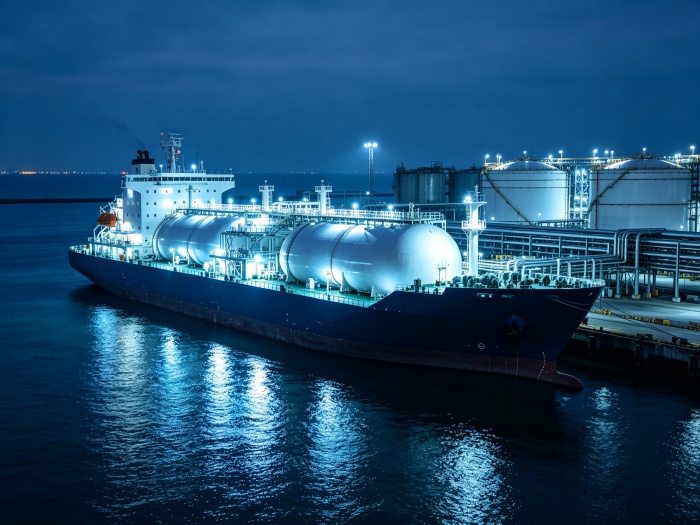
This is why LNG carriers, LPG carriers, and other liquefied-gas vessels increasingly prioritize high-efficiency, low-conductivity insulation and lightweight cryogenic systems during design.
For shipowners:
More usable tank volume means:
More cargo per voyage;
Lower transport cost per unit;
Better long-term operating returns.
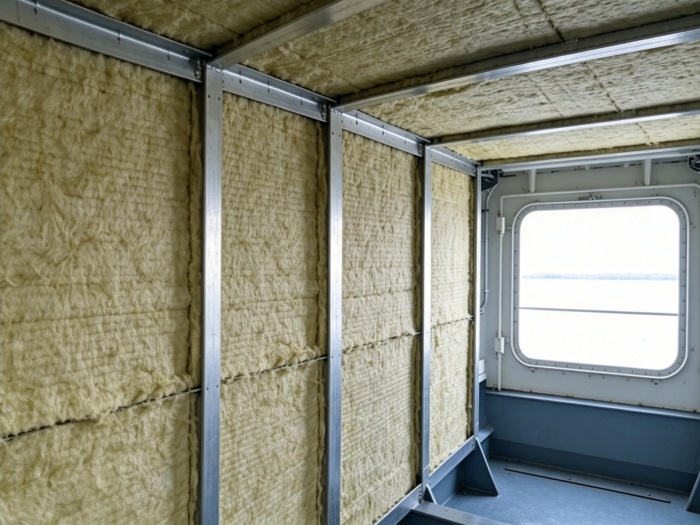
For the same LNG/LPG marine insulation system and the same thermal performance—using 100 mm PU foam as the reference—the required thickness varies greatly by material:
Insulation Material | Thickness Required for Equivalent Thermal Performance |
Expanded perlite | Approx. 180 mm or more |
Glass wool | Approx. 160 mm or more |
Polystyrene | Approx. 150 mm or more |
Polyurethane foam (PU) | Approx. 100 mm |
VacuEco VPU (VIP composite module) | Approx. 40 mm |
VacuEco Supertech VPU is about 60 mm thinner than conventional PU foam and more than 120 mm thinner than glass wool.
That 60–120 mm difference is cargo space quietly consumed by conventional insulation.
For LNG and LPG carriers, where revenue depends on volume, this space has direct commercial value.
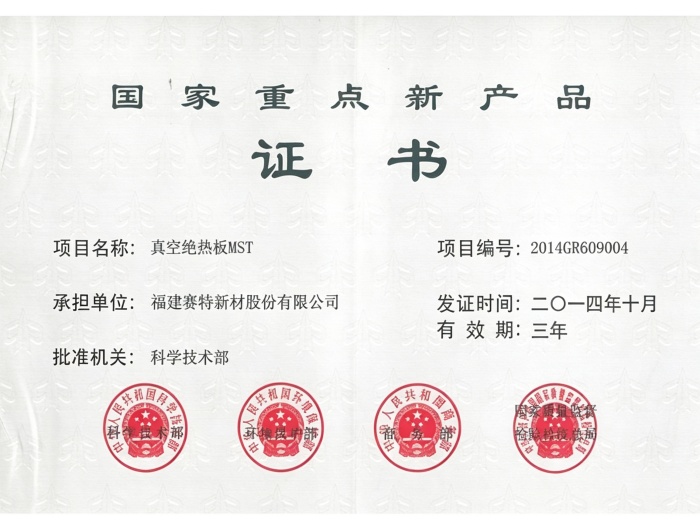
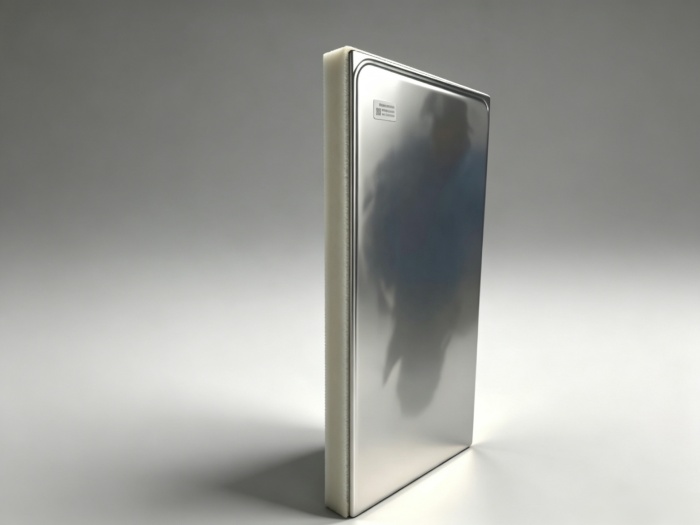
To meet the demand for high-performance cryogenic insulation in liquefied-natural-gas transport and low-temperature storage equipment, VacuEco Supertech, a Supertech subsidiary, developed:
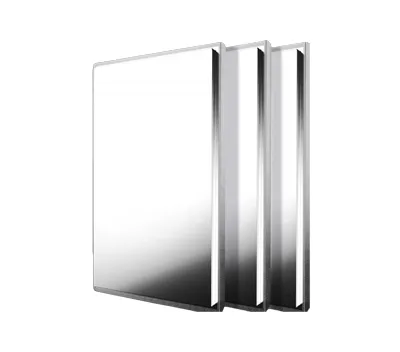
The VPU metal-barrier vacuum insulation composite module—"VIP + PIR/PU Composite Insulation Panel"—combining ultra-low thermal conductivity with a modular engineering design.
Core structure: A 304 stainless steel high-barrier vacuum insulation panel (VIP) combined with a PU/PIR composite module. Its composite thermal conductivity can be as low as about 1.2 mW/m·K (0.0012 W/m·K), far below the roughly 30–40 mW/m·K of conventional perlite—about 25 times the insulation performance.
Vacuum insulation suppresses gas-phase heat transfer, while the engineered composite structure provides efficient cryogenic insulation.
Key advantages:
Lower thermal conductivity for a thinner insulation system;
Lower BOG and better vessel economics;
A metal-barrier VIP structure for greater reliability under cryogenic conditions.
For LNG and LPG carrier builders, insulation is not merely an auxiliary component; it directly affects the competitiveness of the vessel design.
The VacuEco Supertech VPU solution helps shipyards:
With the same vessel dimensions:
Increase usable cargo space
Improve transport efficiency
When shipowners compare technical proposals:
A low-conductivity, highly reliable, lightweight insulation system can give the shipyard a clear competitive advantage.
As the International Maritime Organization (IMO) tightens requirements for ship energy efficiency and emissions reduction:
Reducing heat loss and energy consumption is becoming a major design priority for LNG/LPG carriers.
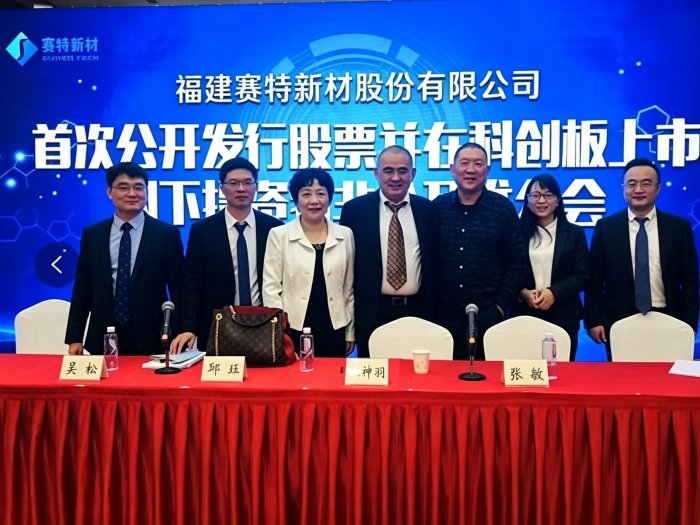
VacuEco Supertech is a Supertech subsidiary focused on vacuum-insulation R&D and applications.
Since its establishment in 2007, Supertech (stock code: 688398) has remained focused on vacuum-insulation technology.
Its capabilities include:
More than 180 patented technologies;
More than 110 R&D specialists, with long-term cooperation with vacuum-technology teams in China’s aerospace sector;
Applications covering vacuum insulation panels, vacuum insulated containers, vacuum glazing, vacuum insulated piping, and more.
From consumer products to industrial cryogenic equipment, and from energy storage and transport to marine cryogenic insulation, Supertech continues to expand the use of vacuum-insulation technology in high-end thermal applications.
For LNG carriers, LPG carriers, and other liquefied-gas vessels, insulation determines not only whether the cargo stays cold, but also how much cargo the vessel can carry.
Future LNG tank insulation will increasingly prioritize: Low thermal conductivity, high reliability, low weight, and long service life.
The VacuEco Supertech VPU metal-barrier vacuum insulation composite system gives LNG storage tanks, LNG carrier tanks, and cryogenic transport equipment a new option that balances thermal performance with space utilization.
Want to learn how VacuEco Supertech VPU is used in self-supporting tanks and full-containment or membrane-type LNG/LPG carriers?
Follow VacuEco Supertech or message us for technical information.
Term | Definition |
LNG | Liquefied Natural Gas: natural gas liquefied at about -162°C. |
VPU | "VIP + PIR/PU Composite Insulation Panel": a high-efficiency cryogenic insulation material developed by Supertech, combining a vacuum insulation panel with a PU/PIR composite panel. |
VIP | Vacuum Insulation Panel: a high-performance insulation material that greatly reduces thermal conductivity by maintaining a vacuum. |
BOR | Boil-Off Rate: the percentage of the total stored LNG that evaporates over a given period. |
PIR | Polyisocyanurate: a modified insulation foam with better heat resistance and flame resistance than PU, commonly used in high-performance cryogenic modules. |
Perlite | A natural volcanic glass that expands at high temperature. Its low density, low thermal conductivity, water absorption, and chemical stability make it widely used in construction and engineering insulation. |
PU | Polyurethane foam: a base insulation material commonly used in LNG membrane insulation modules. |
Glass wool | A cotton-like man-made mineral fibre produced by melting and fibreizing glass. |
IMO | International Maritime Organization: a UN agency responsible for maritime safety and preventing pollution from ships, headquartered in London. |
LPG carrier | A vessel designed to transport liquefied petroleum gas. |
LNG carrier | A vessel designed to transport liquefied natural gas at atmospheric pressure and about -162°C. |
Thermal conductivity | A measure of a material’s heat-transfer capability, expressed in mW/m·K. Lower values indicate better insulation. |
LPG | Liquefied Petroleum Gas: a colourless, volatile, flammable gas, mainly propane or butane, liquefied under pressure. |
Polystyrene | Polystyrene (PS): a thermoplastic polymer made from styrene, one of the most widely used general-purpose plastics. |
 English
 日本語
日本語 한국어
한국어 français
 Deutsch
 Español
 italiano
 русский
 português
 العربية
 Türkçe