A Decision Many Terminal Owners Later Regret
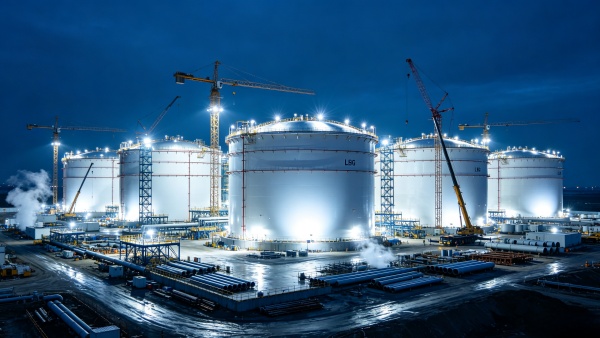
During the planning stage of a large LNG tank project, insulation-budget discussions often sound like this:“This material costs XX more. Can we use a cheaper option?”
There is nothing wrong with the question itself. But asking only this question can cost far more than the initial saving over decades of operation.
Today, we explain why LNG tank insulation must be evaluated on total lifecycle cost.
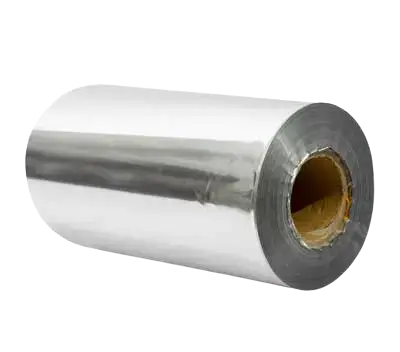
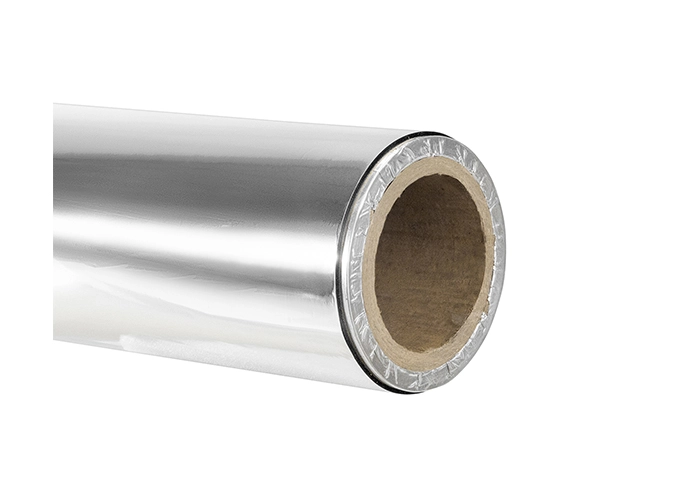
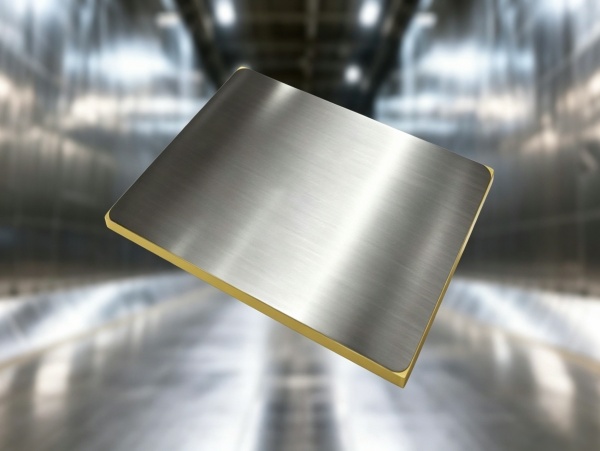
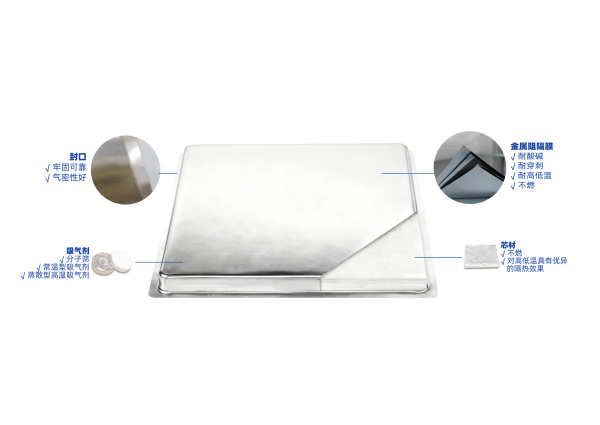
Super Tech VPU can fix this. VPU—a metal-barrier vacuum insulation panel and polyurethane composite module ["VIP + PIR/PU Composite Insulation Panel"] developed by the VacuEco team under Super Tech New Material.
It is a new insulation material combining vacuum insulation panels (VIP) with foamed polyurethane. By using a vacuum to eliminate gas conduction, it achieves thermal conductivity of about 1.2mW/m·K (0.0012W/m·K), providing 25 times the insulation performance of conventional perlite.
In simple terms, VacuEco VPU is one of the most efficient insulation materials currently available for engineered use in large LNG tanks.
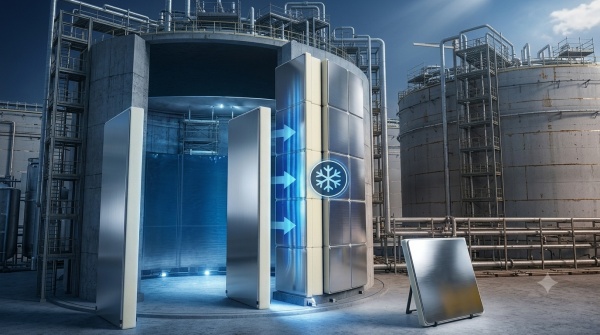
The insulation system is a major investment in a large LNG tank project. Material and installation costs matter, but for a long-life asset such as an LNG terminal, initial cost alone gives an incomplete picture.
The real calculation is total lifecycle cost:
Cost | Conventional insulation | Super Tech VPU composite solution |
Initial investment | Lower | Slightly higher |
Insulation-system life | Baseline | Stable for up to 80 years |
BOR | Baseline | Can be reduced by about 50% |
Daily BOG-handling volume | Baseline | Significantly lower |
Compressor load | Baseline | Substantially lower |
Long-term operating energy use | Baseline | Ongoing savings |
Total lifecycle cost | Baseline | Higher |
For a 270,000m³ LNG tank calculated at a BOR of 0.05%/d:
About 54.7 tonnes of BOG per day
About 76,300Nm³/d at standard conditions
This BOG requires continuous compression and recondensation
Compressors and recondensers must operate every day to handle it
From this perspective, insulation is not a passive material; it is a critical system that affects daily operating costs.
If VacuEco VPU reduces BOR by 50%, the daily BOG-handling load falls by about 27 tonnes, and the savings accumulate every day the tank operates.
Daily savings because of VacuEco VPU may look small; over 30 years, they become substantial.
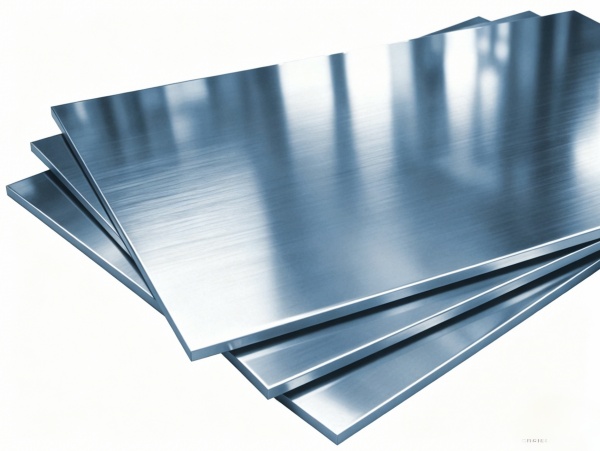
VacuEco VPU, a metal-barrier vacuum insulation panel and polyurethane composite module, works with conventional perlite, PU, PIR, and other materials in a composite insulation system; its value is not simply replacing traditional materials, but improving their thermal performance to further reduce tank heat ingress.
With proper design, VacuEco VPU can reduce BOR by about 50%, lowering the BOG-handling load.
The benefit is not a one-time saving; it continues throughout the tank’s operating life.
When evaluating LNG tank insulation, do you include operating energy use in the decision?
Or do you focus mainly on initial construction cost?
Share your experience in the comments and join the discussion.
A lower BOR is not automatically better if cost is ignored. Improving insulation requires balancing material cost, installation conditions, structural requirements, and economic return.
The advantage of VacuEco VPU is that it offers a more efficient balance:
No simple reliance on thicker conventional insulation;
No major increase in structural dimensions;
Higher insulation performance through more efficient materials;
A balance of reliability, installability, and operating value.
This is the decision logic required for large energy projects.
Customers are not buying one insulation panel; they are buying decades of operating efficiency for an LNG tank.
From a lifecycle perspective, VPU’s real commercial value lies in lower BOR, less BOG, lower energy use and equipment load, and greater stability.
Construction focuses on cost; operation reveals the return.
For LNG tank insulation, the soundest decision is to calculate long-term value from day one.
VacuEco helps you calculate the full cost clearly.
Want the VPU lifecycle economic analysis report?
Follow the VacuEco team for a project-specific economic assessment.
The glossary below explains the main technical terms used in this article
Term | Definition |
LNG | Liquefied Natural Gas: natural gas liquefied at about -162°C, reducing its volume by about 600 times for easier transport and storage. |
VPU | A metal-barrier vacuum insulation panel and polyurethane composite module developed by Super Tech New Material, with thermal conductivity as low as 1.2mW/m·K and 25 times the insulation performance of conventional perlite. |
VIP | Vacuum Insulation Panel: a high-performance insulation material that uses a vacuum to greatly reduce thermal conductivity and serves as the core component of VPU. |
BOR | Boil-Off Rate: the percentage of LNG that naturally evaporates each day due to heat ingress; a lower value indicates better insulation. |
BOG | Boil-Off Gas: gas generated when LNG evaporates due to heat ingress and must be handled through compression, recondensation, or other processes. |
Full-containment tank | A large LNG tank with a 9% nickel steel inner tank and a prestressed-concrete outer tank, currently the most common LNG tank type in China. |
Perlite | A conventional LNG tank insulation material with thermal conductivity of about 30~40mW/m·K, widely used to fill the annular space of full-containment tanks. |
PU/PIR | Polyurethane/polyisocyanurate, commonly used as the base material in membrane-tank insulation modules and offering good low-temperature insulation. |
Thermal conductivity | A measure of how readily a material transfers heat; lower values indicate better insulation. Unit: mW/m·K. |
Recondensation | The process of compressing and reliquefying BOG, a primary BOG-handling method at LNG terminals that consumes electricity. |
Lifecycle cost | The total cost of equipment from construction and operation through decommissioning, used to assess the economics of large engineering projects. |
VacuEco | Super Tech New Material
Lifecycle insulation value that turns every investment into long-term returns.
Follow us for more LNG tank insulation technology and economic analysis.
 English
 日本語
日本語 한국어
한국어 français
 Deutsch
 Español
 italiano
 русский
 português
 العربية
 Türkçe