If You Read Only One Article on LNG Tank Insulation, Read This One
This is the final article in our series.
The previous nine articles covered the value of VPU, a metal-barrier vacuum insulation panel and polyurethane composite module developed by the VacuEco team under Super Tech New Material, for onshore LNG tanks—from lower BOR and BOG to membrane-tank applications, lifecycle value, modular installation, reliability, sustainability, and economic performance.
In this final article, we bring all those benefits together and give you the complete answer: Why is VPU a next-generation insulation solution for LNG storage tanks?

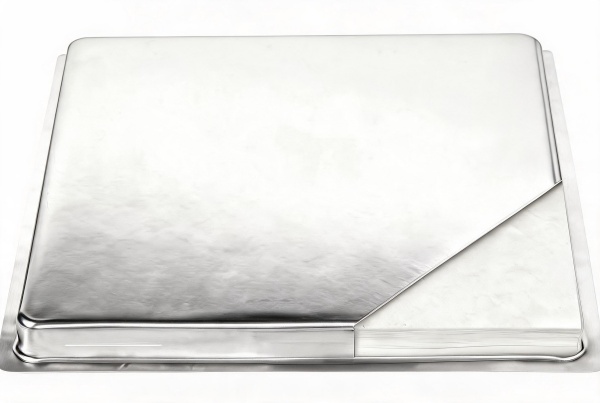
VPU, short for metal-barrier vacuum insulation panel and polyurethane composite module ["VIP + PIR/PU Composite Insulation Panel"], is a core product of the VacuEco brand under Super Tech New Material, developed by the Super Tech Energy Saving team.
It consists of two parts:
Metal-barrier vacuum insulation panel (VIP): a high-barrier 304 stainless steel shell, vacuum core, thermal conductivity as low as 0.6mW/m·K, high-performance getters, and laser-welded edges provide vacuum stability for up to 80 years;
Polyurethane (PU) composite layer: the VIP is embedded in a foamed-polyurethane module to create an installation-ready composite insulation module with thermal conductivity of about 1.2mW/m·K (0.0012W/m·K).
VPU = maximum vacuum-insulation performance + the engineering practicality of polyurethane
This is VacuEco’s purpose-built insulation solution for large LNG storage tanks.
VPU:Vacuum insulation Panel composite Polyurethane module
Breakdown:
Abbreviation | English | Chinese term |
V | Vacuum insulation Panel | Vacuum insulation panel |
P | composite Polyurethane | Composite polyurethane |
U | polyUrethane module | Polyurethane module |
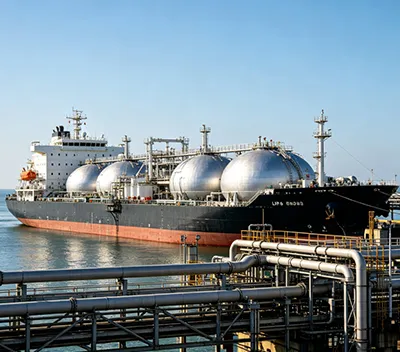
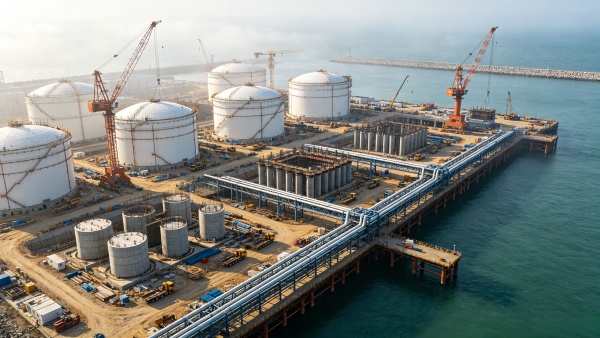
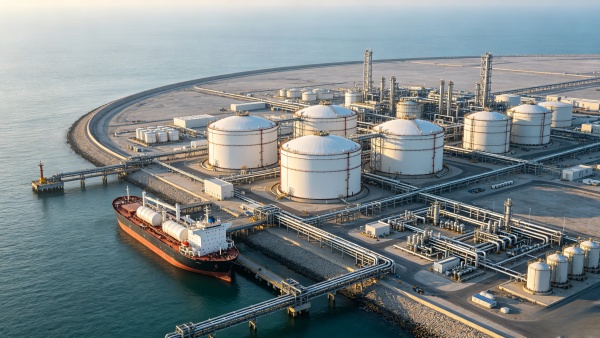
Onshore LNG terminals are critical links between marine LNG transport and land-based gas supply. They handle unloading, storage, regasification, send-out, peak shaving, and distribution, making them essential to national and regional energy security.
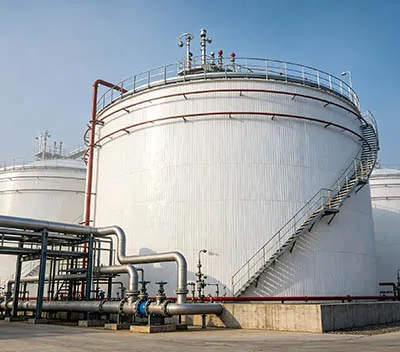
As individual tank capacity rises, large LNG tanks worldwide have reached effective capacities of about 270,000m³:
Diameter: about 100.6m
Height: about 55m
Total surface area: about 25,328m² (equivalent to 3.5 football pitches)
The larger the tank, the more critical its insulation system becomes. Even minor heat ingress per square metre adds up across the tank’s vast surface area and generates substantial BOG.
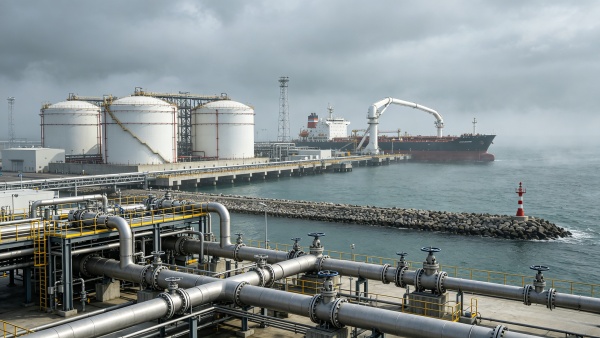
LNG tank projects once focused mainly on capacity, safety, and proven engineering. As terminal operations become more refined, customers are now looking at deeper performance metrics:
Can BOR be reduced further?
Can the BOG-handling load be reduced?
Can the tank operate with lower energy use?
Can the insulation system remain stable for 80 years?
Can both new-build and retrofit projects remain economically viable?
All these questions point in one direction: LNG tanks need more efficient insulation technology.
VacuEco VPU, a metal-barrier vacuum insulation panel and polyurethane composite module, can be applied across different tank types:
In full-containment tanks:
VPU is bonded to the inner face of the concrete outer wall and combined with perlite to form a composite insulation system
Adding 200mm of VPU provides insulation equivalent to an additional 1000mm of perlite
BOR can be reduced by about 50%, significantly lowering daily boil-off
In membrane tanks:
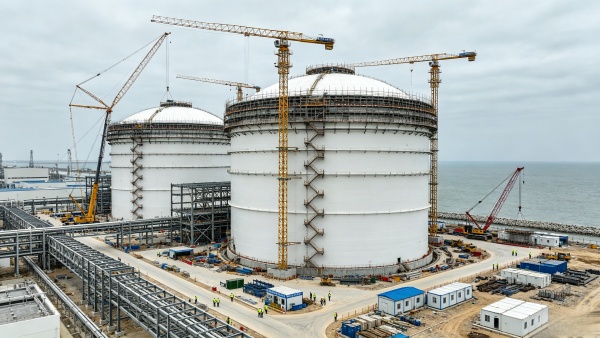
VPU is factory-embedded into PU/PIR insulation modules
Modular construction simplifies on-site installation
Insulation performance is substantially improved for next-generation membrane-tank designs
Whether the project uses a conventional full-containment tank with a 9%Ni steel inner tank or an onshore membrane LNG tank, VacuEco VPU can substantially enhance insulation performance.
The table below summarizes the value that Super Tech New Material VPU delivers:
Value | Customer benefit |
Insulation performance | Thermal conductivity of 1.2mW/m·K (0.0012W/m·K), with 25 times the insulation performance of perlite |
Lower BOR | Can be reduced by about 50% with proper design |
Less BOG | Significantly lower daily boil-off |
Lower energy use | Substantially lower compressor and recondensation-system loads |
Easy installation | Modular design; thicknesses from 5~200mm; custom shapes available |
Long-term reliability | Metal shell + getter + laser welding for 80 years of vacuum stability |
Lower carbon impact | Lower BOG-handling energy use in support of ESG goals |
Lifecycle economics | Slightly higher initial investment, significantly lower long-term operating costs |
LNG tanks are essential energy infrastructure. Every technical upgrade affects the efficiency of energy storage and transport.
VacuEco VPU is not designed to create a complex new system; it strengthens the performance of proven tank-insulation systems:
In full-containment tanks, it serves as a high-efficiency insulation enhancement layer;
In membrane tanks, it serves as a high-performance composite insulation module;
For customers, it offers a new way to lower BOR, reduce energy use, and improve asset efficiency.
Future LNG terminals must be more than large and robust; they must also operate economically, reliably, and efficiently over the long term.
VacuEco | Super Tech New Material is providing a new materials solution for this goal.
Want the full VPU technical solution?
Scan the QR code to follow the official VacuEco account, or message us for:
VPU Technical Manual
LNG Tank Insulation Solution White Paper
Lifecycle Economic Analysis Report
Project-Specific Consulting
Thank you for reading the series. Below is a complete glossary of the technical terms used throughout—save it for reference
Term | Full definition |
LNG | Liquefied Natural Gas: natural gas liquefied at about -162°C, reducing its volume by about 600 times for easier marine transport and storage. |
VPU | A metal-barrier vacuum insulation panel and polyurethane composite module (Vacuum insulation Panel + Polyurethane) developed by Super Tech New Material, with the metal-barrier VIP embedded in a polyurethane module; the composite has thermal conductivity of about 1.2mW/m·K and 25 times the insulation performance of conventional perlite. |
VIP | Vacuum Insulation Panel: a high-performance insulation material that uses a vacuum to greatly reduce thermal conductivity; it is the core component of VPU and can reach 0.6mW/m·K. |
BOR | Boil-Off Rate: the percentage of LNG that naturally evaporates each day due to heat ingress (%/day), a key measure of tank insulation performance; lower is better. |
BOG | Boil-Off Gas: gas generated when LNG evaporates due to heat ingress and must be handled through compression, recondensation, or other energy-consuming processes. |
Full-containment tank | A large LNG tank with a 9% nickel steel (9%Ni steel) inner tank and a prestressed-concrete outer tank, currently the most common LNG tank type in China. |
Membrane tank | A newer LNG tank design with an approximately 1.2mm corrugated stainless steel membrane supported by an external prestressed-concrete structure, reducing steel use by about 90% and increasing usable capacity by about 10%. |
Perlite | A conventional LNG tank insulation material with thermal conductivity of about 30~40mW/m·K, widely used in the annular space of full-containment tanks and currently the most common insulation for large storage tanks. |
PU | Polyurethane, commonly used as the base material in membrane-tank insulation modules and offering good low-temperature insulation. |
PIR | Polyisocyanurate, a modified insulation material with better temperature resistance and fire performance than PU, commonly used in high-performance insulation modules. |
Thermal conductivity | A measure of how readily a material transfers heat; lower values indicate better insulation. Unit: mW/m·K (milliwatts per metre-kelvin). |
Thermal bridge | A local area of higher thermal conductivity within an insulation system that increases heat ingress; staggered joints can reduce its effect. |
Getter | A functional material inside a vacuum insulation panel that absorbs residual gas and trace gas entering over time to maintain a stable vacuum. |
Recondensation | The process of compressing and reliquefying BOG, a primary BOG-handling method at LNG terminals that consumes electricity; less BOG means lower recondensation energy use. |
9%Ni steel | A cryogenic steel containing about 9% nickel that retains good toughness at -196°C and is the primary material for full-containment inner tanks. |
Prestressed concrete | A structural material preloaded with compressive stress, used for the outer tanks of full-containment and membrane tanks because of its load-bearing and sealing performance. |
Laser welding | A high-precision welding process used to seal the edges of the VPU metal shell, providing better sealing than conventional welding and helping maintain the vacuum over time. |
Lifecycle cost | The total cost of equipment from construction and operation through decommissioning, used to assess the economics of large engineering projects. |
ESG | Environmental, Social, and Governance: a major framework for evaluating corporate sustainability. |
LNG terminal | An LNG receiving terminal that receives LNG unloaded from carriers, then stores, regasifies, and sends it out as a key hub in the natural gas supply chain. |
VacuEco | Super Tech New Material
Next-generation LNG tank insulation for more efficient, energy-saving, and sustainable energy infrastructure.
Follow us for the latest LNG storage technology insights
 English
 日本語
日本語 한국어
한국어 français
 Deutsch
 Español
 italiano
 русский
 português
 العربية
 Türkçe