From LNG carriers to LPG carriers, this article explains the core logic behind cryogenic tank insulation material selection.
-162°C。
This is the storage temperature of liquefied natural gas (LNG). Liquefied petroleum gas (LPG) is stored at less extreme temperatures, but it is still a cryogenically liquefied medium.
At this temperature, most materials become brittle or crack, and most conventional insulation systems gradually fail under repeated low-temperature cycling.
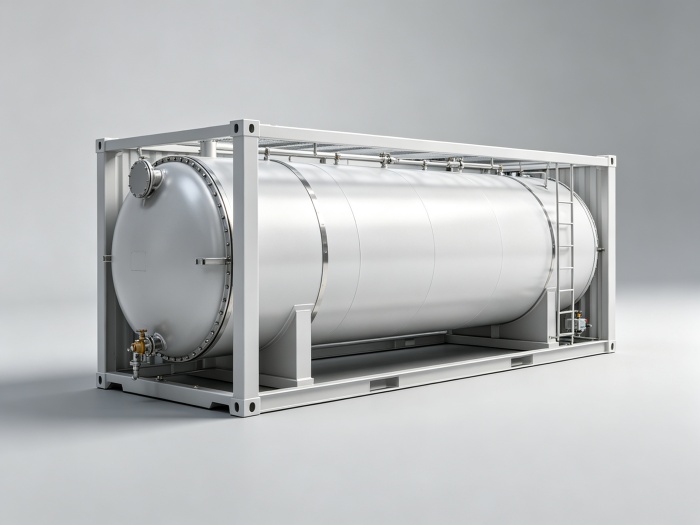
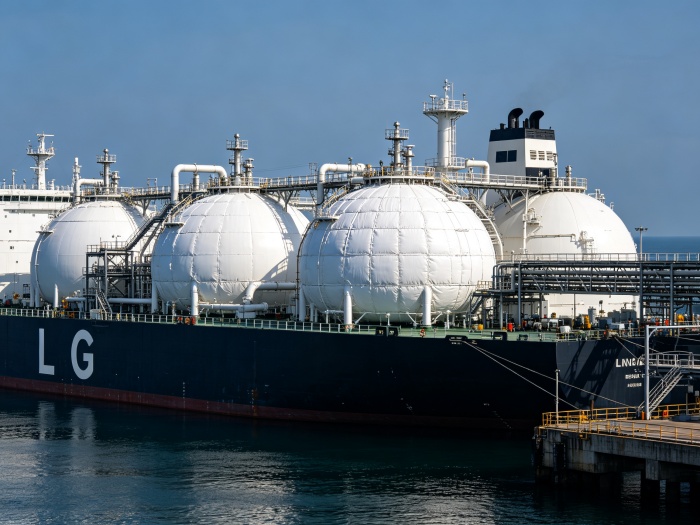
Whether it is a membrane tank on an LNG carrier or a self-supporting tank commonly used on LPG and ethylene carriers (IMO Type A/B/C), the insulation system has one critical task: limit external heat ingress, reduce LNG/LPG evaporation losses (BOG), and ensure long-term safe and efficient vessel operation.
The selection of marine cryogenic insulation therefore directly affects the economics and safety of liquefied-gas carriers.
For LNG/LPG carrier tanks, LNG terminal storage tanks, LPG tank containers, and other cryogenic equipment, insulation materials must pass four tests:
The greater the temperature difference, the more demanding the insulation requirements.
At -162°C, the material must maintain extremely low thermal conductivity.
The material must not shrink, crack, or deform under cryogenic conditions, as this can create thermal bridges and cause local insulation failure.
A fire on a vessel can have severe consequences because the space is enclosed.
DNV, ABS, CCS, and other classification societies impose clear and strict fire-performance requirements on LNG/LPG carrier insulation materials.
The cabin is an enclosed environment, so the insulation must not release VOCs or fibre dust. These substances can endanger crew health, contaminate cargo, and affect measurement accuracy.
For EPC contractors and shipyards, conventional insulation solutions are revealing more practical limitations:
Its thermal conductivity is relatively high, so a thicker layer is needed to meet performance targets, directly reducing valuable cargo volume. On a vessel, thickness determines capacity, and capacity determines revenue.
Its performance may also deteriorate at extremely low temperatures.
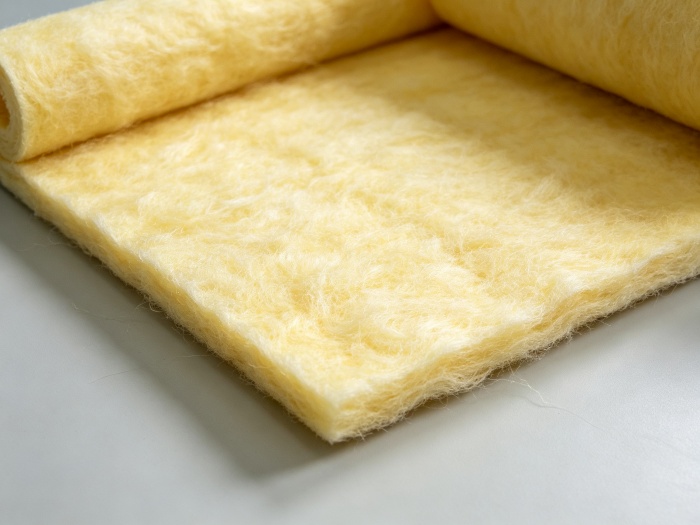
It can release fibre dust, making it unsuitable for enclosed cabins with strict requirements for air quality and cargo purity.
Its relatively high thermal conductivity requires a thicker insulation layer, increasing both space consumption and structural weight.
For shipowners and shipyards, these issues ultimately become direct costs:
Reduced cargo volume, greater structural weight, more frequent maintenance, longer construction cycles, and repeated revisions during classification-society drawing approval.
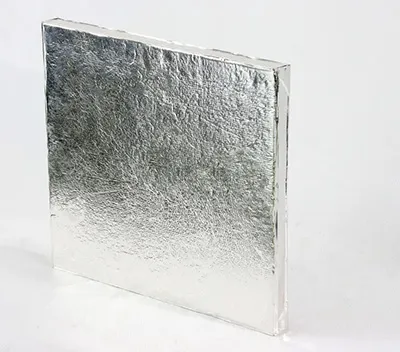
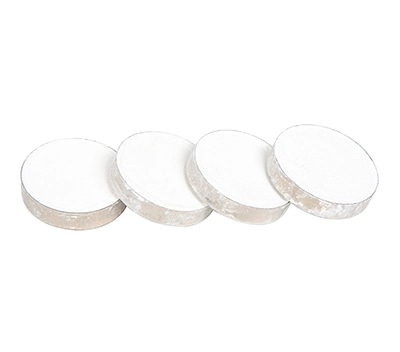
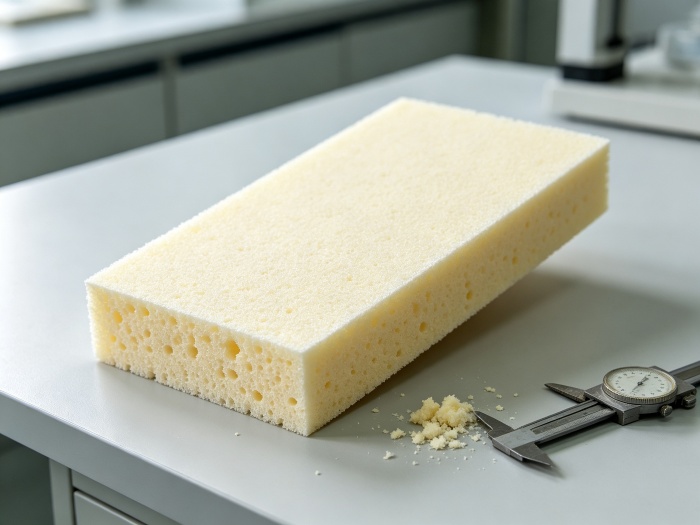
VPU, a metal-envelope vacuum insulation panel and polyurethane composite module ["VIP + PIR/PU Composite Insulation Panel"], combines a 304 stainless-steel high-barrier vacuum insulation panel (VIP) with polyurethane (PU).
Developed by VacuEco, a Fujian Super Tech company, this new cryogenic insulation module combines extremely low thermal conductivity—approximately 1.2mW/m·K (0.0012W/m·K) after lamination—with modular engineering advantages.
How does VPU address the four challenges above?
The composite thermal conductivity is as low as approximately 1.2mW/m·K (0.0012W/m·K). At the same insulation performance, 40mm of VPU can match 100mm of conventional polyurethane foam.
For the same tank size, this releases more usable cargo volume for the shipowner, directly improving capacity and economics per voyage.
Its performance curve also remains stable under cryogenic conditions without a sudden low-temperature drop.
The 304 stainless-steel high-barrier VIP uses a hot-pressed rigid base shell for deformation and puncture resistance, stable lifecycle performance, and an extremely low corner leakage rate.
Compared with conventional polyurethane, PIR offers significantly better fire performance and is better suited to the strict insulation fire-rating requirements of marine applications.
It releases no fibre dust and contains no VOCs, meeting stringent marine environmental and safety requirements while also providing excellent fire and corrosion resistance.
It is suitable for LNG/LPG carriers, gas carriers, and other high-safety applications.
For shipyards, shipowners, EPC contractors, and other customers, insulation selection involves far more than whether a material can retain cold.
It requires a complete system-level assessment:
A thinner insulation layer creates more usable volume and directly improves vessel economics.
A lightweight modular structure helps control vessel weight and reduce fuel consumption.
Meeting classification-society fire and safety standards reduces the time spent on drawing review and corrective work.
Stable long-term cryogenic performance reduces maintenance costs and safety risks during operation.
For membrane or self-supporting tanks on LNG and LPG carriers, as well as onshore LNG terminal tanks and cryogenic pipeline insulation projects, VacuEco provides an integrated solution balancing performance, space, and safety.
-162°C tests more than the material itself.
It tests the technical expertise and engineering experience behind it.
VacuEco is one of the marine insulation solutions currently capable of meeting all four requirements under cryogenic conditions.
Follow VacuEco for more practical information on vacuum insulation technology for LNG and LPG carriers.
LNG | Liquefied Natural Gas: natural gas liquefied at approximately -162℃. |
VPU | “VIP + PIR/PU Composite Insulation Panel” |
VIP | Vacuum Insulation Panel: a high-performance insulation material with greatly reduced thermal conductivity created by evacuation. |
BOR | Boil-Off Rate: the percentage of LNG that evaporates from the total tank inventory over a given period. |
PIR | Polyisocyanurate: a modified insulation material with better temperature resistance and flame-retardant performance than PU, commonly used in high-performance cryogenic insulation modules. |
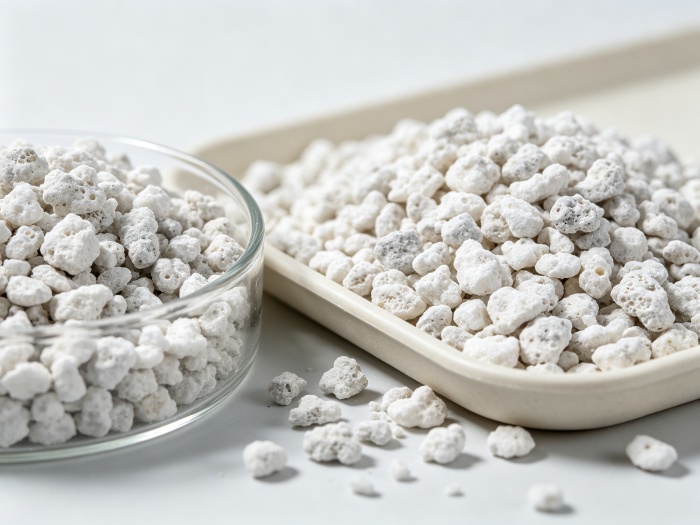
Perlite | Perlite is a natural volcanic rock expanded at high temperature. |
PU | Polyurethane foam, commonly used as the base material in LNG membrane-tank insulation modules. |
Glass wool | Glass wool is a man-made inorganic fibre produced by fibre-forming molten glass into a wool-like material. |
VOCs | Volatile Organic Compounds: organic chemicals with high vapour pressure that readily evaporate under normal temperature and pressure. |
LPG | LPG means liquefied petroleum gas. |
Receiving Terminal | An LNG receiving terminal accepts LNG unloaded from carriers, stores it, regasifies it, and sends it into the distribution network. |
LPG Carrier | An LPG carrier is a vessel specifically designed to transport liquefied petroleum gas. |
LNG Carrier | An LNG carrier is a vessel specifically designed to transport liquefied natural gas at an extremely low temperature of -162℃ under atmospheric pressure. |
Thermal Conductivity | A measure of a material’s heat-transfer capability, expressed in mW/m·K. |
Thermal Bridge | A thermal bridge is a local area with significantly higher heat transfer than the surrounding structure, concentrating heat flow and creating a localised low-temperature zone. |
 English
 日本語
日本語 한국어
한국어 français
 Deutsch
 Español
 italiano
 русский
 português
 العربية
 Türkçe