Suppose a large LNG storage tank consumes the energy equivalent of dozens of tonnes of natural gas every day because its insulation is underperforming— Would you reassess the value of its insulation system?
This article will not discuss broad carbon emission concepts. It focuses on one practical issue:
How directly LNG tank insulation performance affects carbon emissions.

Before we begin, here is a quick introduction for readers unfamiliar with the term.
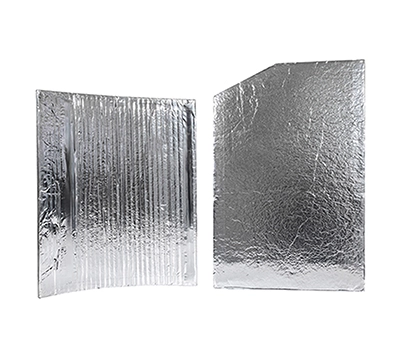
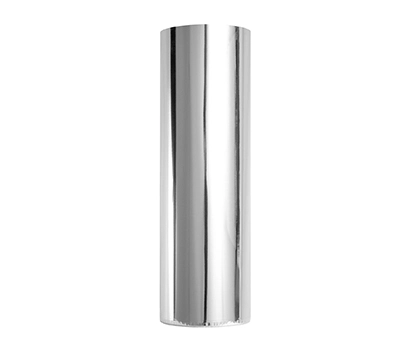
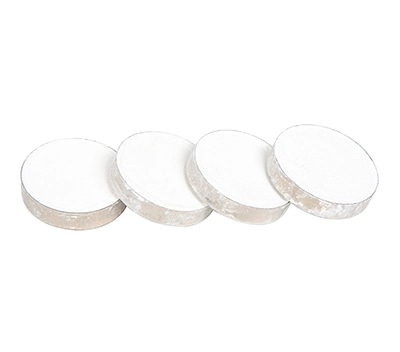
VPU (Vacuum Insulation Panel / Polyurethane Composite Module), or a metal-envelope vacuum insulation panel–polyurethane composite module [“VIP + PIR/PU Composite Insulation Panel”], is a new LNG tank insulation material developed by VacuEco, a Super Tech company.
The idea is straightforward: vacuum insulation removes nearly all gas from the material, greatly limiting heat transfer. The composite has a thermal conductivity of about 1.2mW/m·K (0.0012W/m·K), delivering roughly 25 times the insulation performance of conventional perlite.
Put simply, VPU gives an LNG tank a high-performance thermal jacket.
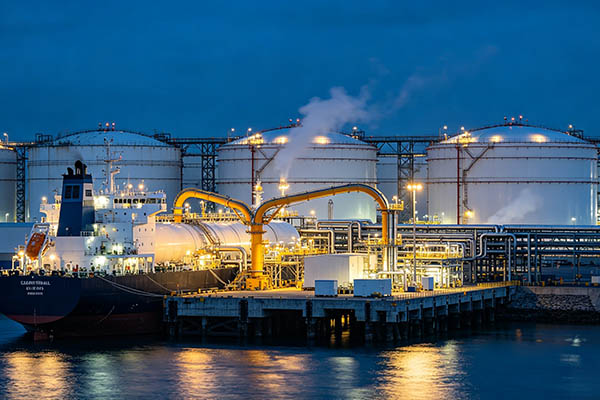
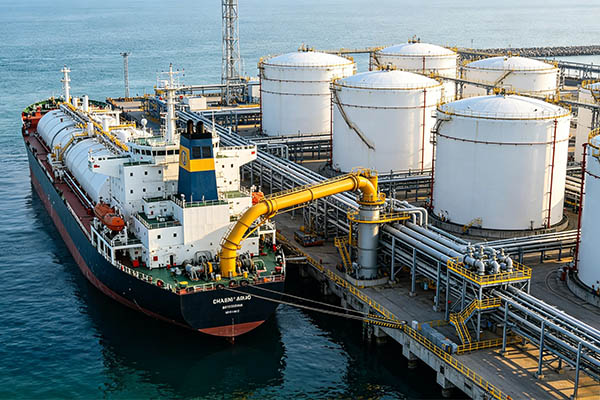
LNG is widely used for city gas, industrial fuel, and peak shaving. As a key hub in the natural gas supply chain, onshore LNG terminals must ensure energy supply while meeting increasingly stringent energy-saving and carbon-reduction requirements.
At LNG terminals, storage-tank BOG handling is a continuous source of energy consumption.
BOG must be compressed, recondensed, or sent out, and each process consumes electricity and equipment capacity.
Reducing BOG therefore lowers not only cost, but also terminal energy use and carbon-emission pressure.
Many efficiency improvements focus on equipment, such as improving compressor efficiency or optimizing recondensation.
But the earlier and more fundamental solution is to reduce BOG generation.
The key is better tank insulation that limits heat ingress.
With its ultra-low thermal conductivity, VacuEco VPU (metal-envelope vacuum insulation panel–polyurethane composite module) helps storage tanks form a more effective thermal barrier.
With proper design, VPU can be integrated with conventional insulation systems to further reduce BOR (Boil-Off Rate) and BOG generation at the source, cutting daily boil-off by about 50%.
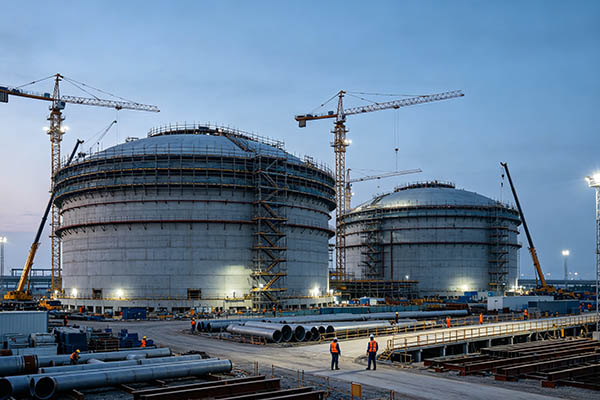
A simple calculation shows the impact:
For a 270,000m³ LNG storage tank at a BOR of 0.05%/d, daily BOG generation is about 54.7 tonnes.
If VacuEco VPU lowers BOR by 50%, it can prevent about 27 tonnes of BOG per day.
Those 27 tonnes no longer require compression or recondensation, which means:
50% less compressor operating time;
50% lower load on the recondensation system;
Significantly lower electricity consumption;
Lower carbon emissions.
That is 27 tonnes per day, or nearly 10,000 tonnes per year.
This is a substantial for saving energy cost and carbon emission reduction.
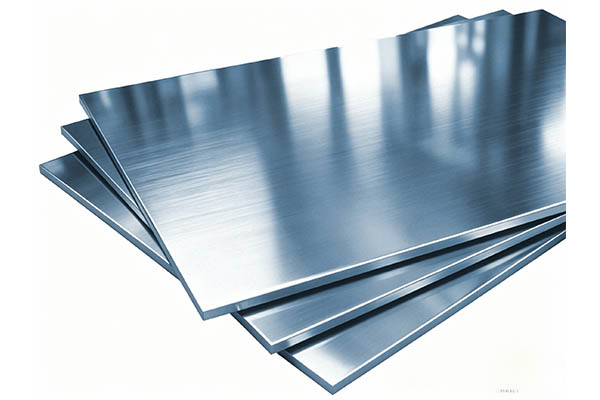
The sustainability benefits of VacuEco VPU are direct and measurable:
Lower energy use for BOG compression
Lower recondensation system load
Less energy consumed by extended equipment operation
Higher overall terminal energy efficiency
Support for corporate ESG targets and low-carbon operating reports
VPU is therefore more than an insulation material; it is going to be a part of an LNG terminal’s energy-saving and carbon-reduction strategy.
How does your terminal currently handle BOG?
Compression and reliquification, direct send-out, or another method?
Share your approach in the comments so we can discuss further optimization.

Unlike fans, pumps, and compressors, insulation materials usually go unnoticed. Yet they affect energy efficiency every day.
An effective insulation system:
Reduces heat ingress every day;
Reduces BOG every day;
Reduces unnecessary energy use every day.
The value of VPU continues to accumulate throughout long-term operation.
As energy saving and carbon reduction become long-term priorities, tank insulation systems should meet higher standards.
VacuEco helps large LNG storage tanks move toward a lower-carbon, more efficient future.
Want to know how VPU can reduce energy use and carbon emissions at your terminal?
Follow the VacuEco technical team for a tailored energy-efficiency assessment.
LNG terminology can be complex. Here are the key terms used in this article
Term | Definition |
LNG | Liquefied Natural Gas: natural gas cooled to about -162°C until it becomes liquid. Its volume is reduced by about 600 times, making storage and transport easier. |
VPU | A metal-envelope VIP and polyurethane composite module developed by Super Tech, combining a vacuum insulation panel (VIP) with polyurethane. Thermal conductivity can be as low as 1.2mW/m·K. |
BOR | Boil-Off Rate: the percentage of LNG that naturally evaporates from a storage tank each day due to heat ingress. It is a key measure of insulation performance; lower is better. |
BOG | Boil-Off Gas: gas generated when LNG evaporates due to heat ingress. It must be handled through compression, recondensation, or other processes, which consume energy. |
Recondensation | The process of compressing and reliquefying BOG. It is a main BOG treatment method at LNG terminals and requires electricity. |
Thermal Conductivity | A measure of how readily a material transfers heat. Lower values indicate better insulation. Unit: mW/m·K. |
Perlite | A conventional LNG tank insulation material with a thermal conductivity of about 30~40mW/m·K, widely used to fill the annular space of full-containment tanks. |
Full-Containment Tank | A large LNG storage tank with a 9% nickel-steel inner tank and a prestressed-concrete outer tank. It is the most common LNG tank type in China. |
ESG | Environmental, Social, and Governance: a key framework for evaluating corporate sustainability. |
VIP | Vacuum Insulation Panel: a high-performance insulation material that uses a vacuum to greatly reduce thermal conductivity. It is the core component of VPU. |
VacuEco | Super Tech
Reducing carbon emissions at the source of heat ingress and supporting greener LNG terminal operations.
Follow us for more practical insights on LNG storage and energy efficiency.
 English
 日本語
日本語 한국어
한국어 français
 Deutsch
 Español
 italiano
 русский
 português
 العربية
 Türkçe