How long should an LNG storage tank remain in service?
A. 20 years
B. 30~50 years
C. 50~80 years
D. As long as possible
Share your answer in the comments. This article explains why insulation service life directly affects the tank's long-term operating value.
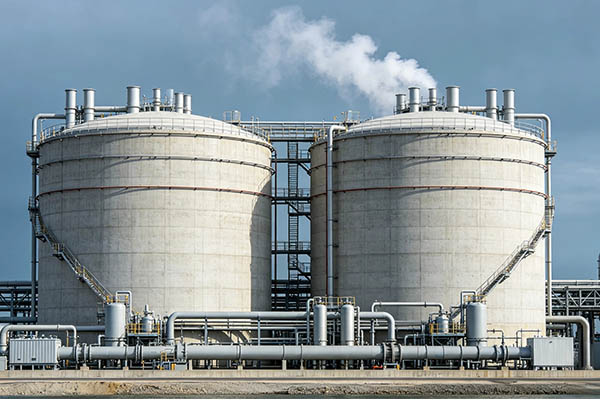
A large onshore LNG tank often remains in service for decades, from design and construction through operation. What matters is whether it remains stable, reliable, and effective throughout long-term service.
If insulation performance deteriorates, BOR may rise, BOG may increase, energy consumption may grow, and tank operating strategies may be affected.
LNG tank cold insulation systems must therefore be designed from a full life-cycle perspective.
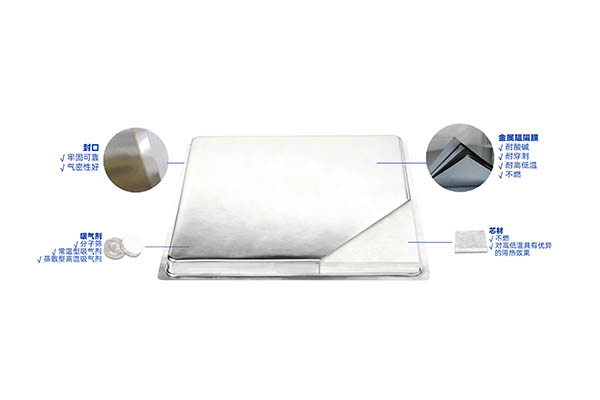
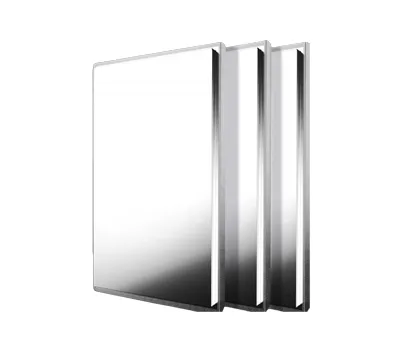
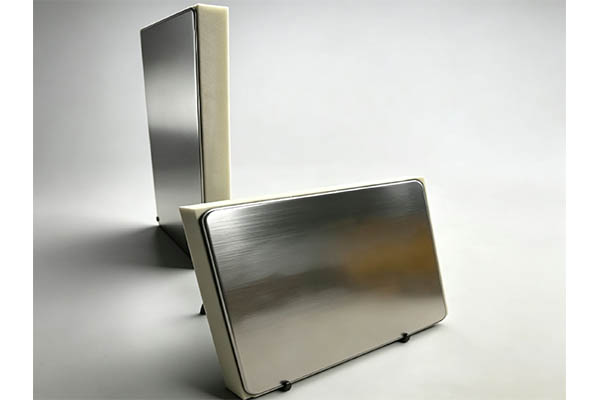
VacuEco VPU, a Metal-Envelope VIP + PU Composite Module ("VIP + PIR/PU Composite Insulation Panel"), is a new cold insulation material developed by Super Tech. Its core is a metal-envelope Vacuum Insulation Panel (VIP), which eliminates gas-phase heat transfer through vacuum sealing to achieve extremely low thermal conductivity. By combining VIP with polyurethane (PU), VPU provides both high insulation efficiency and modular engineering compatibility.
VacuEco VPU uses a 304 stainless steel high-barrier enclosure, providing excellent gas-barrier performance and mechanical protection.
An efficient getter system absorbs residual gas from evacuation and trace gases that may enter during service, helping maintain a stable vacuum inside the VIP.
Laser-welded edges improve sealing reliability.
Together, these features are designed to maintain excellent insulation performance throughout long-term service—theoretically up to 80 years.
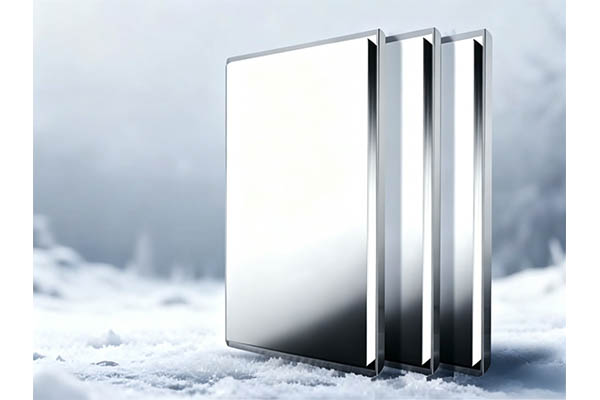
In LNG tanks, insulation degradation is not immediately visible, but it appears as a continuing increase in BOG.
If insulation performance declines, customers may see:
More BOG;
Longer compressor operating time;
Higher reliquefaction load;
Higher system energy consumption;
Rising operating costs year after year.
Good insulation requires more than low initial thermal conductivity. It must remain stable over time.
VacuEco VPU combines a high-barrier metal enclosure, a getter system, and laser welding to provide a strong material foundation for stable long-term service.
Procurement teams may compare the initial cost of different insulation materials. From an asset-operation perspective, however, total returns over decades of operation matter more.
If VacuEco VPU helps keep tank BOR low over the long term, its value is realized every day of operation:
Every reduction in heat ingress creates long-term value;
Every reduction in BOG improves operations;
Every delay in performance degradation protects the asset.
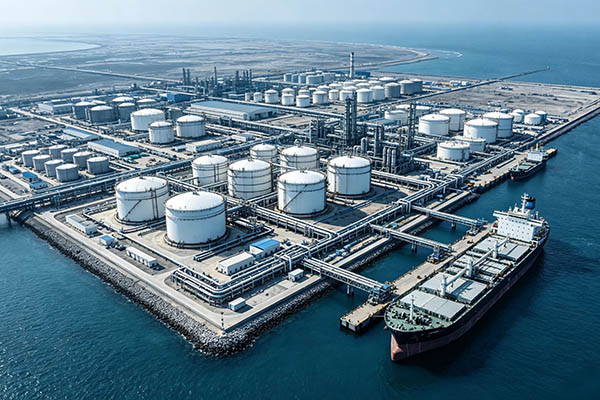
LNG terminals are critical energy infrastructure and require safety, stability, and long-term reliability. The customer value of VacuEco VPU extends beyond material performance to the full asset life cycle.
It supports not only project construction, but decades of tank operation.
Choosing VacuEco VPU means more than selecting a new cold insulation material.
It means adopting an insulation-system strategy built for long service life, sustained energy savings, and long-term stability.
Contact VacuEco for VacuEco VPU.
Share this with colleagues planning long-term storage tank operations.
Term | Definition |
LNG | Liquefied natural gas stored as a liquid at approximately -162°C |
BOG | Boil-Off Gas generated when LNG vaporizes naturally because of heat ingress |
BOR | Boil-Off Rate, the percentage of total LNG inventory that evaporates each day |
VPU | Metal-envelope VIP + PU composite module, a high-efficiency cold insulation material developed by Super Tech |
VIP | Vacuum Insulation Panel, vacuum-sealed to achieve extremely low thermal conductivity |
Thermal | A measure of heat transfer through a material, in mW/m·K; lower values indicate better insulation |
Getter | A functional material inside a VIP that absorbs residual gases and helps maintain the vacuum |
Laser Welding | A high-precision welding process using a laser beam, used to seal VPU edges and improve sealing reliability |
304 Stainless | A common austenitic stainless steel with good corrosion resistance and gas-barrier performance |
Full Life | The complete service period from design and construction through operation and decommissioning; typically 50~80 years for LNG tanks |
Reliquefaction | The process of compressing and liquefying BOG again |
Heat Ingress | Heat entering the tank from outside through the insulation system |
 English
 日本語
日本語 한국어
한국어 français
 Deutsch
 Español
 italiano
 русский
 português
 العربية
 Türkçe