In large LNG storage tank projects, what concerns you most about a new insulation material?
A. Whether its performance meets the requirements
B. Whether installation is complex
C. Whether quality is consistent
D. Whether it is compatible with existing systems
Share your biggest concern in the comments. This article addresses each one.

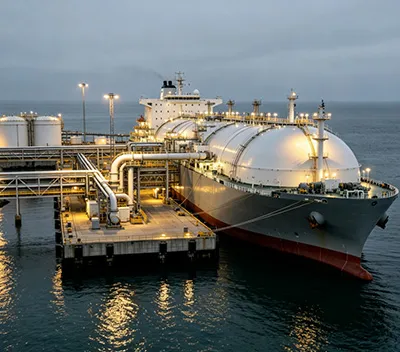
Any material or process used in a large LNG storage tank project must meet real-world engineering conditions.
Construction sites are large, schedules are long, workflows are complex, and quality control is demanding. A solution that performs well only in the lab but cannot be installed efficiently and consistently creates little practical value.
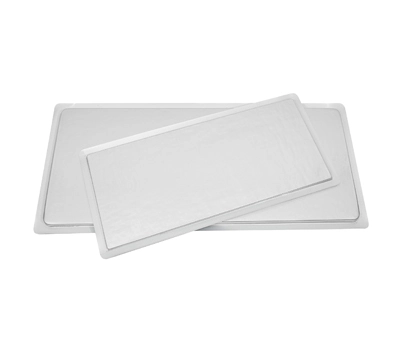
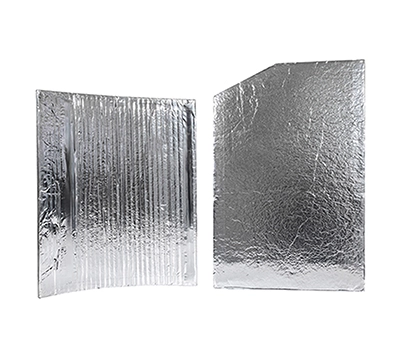
The VPU developed by VacuEco, a Super Tech brand, is a metal-envelope VIP + PU composite module. Its value lies not only in high insulation performance, but also in a modular design suited to engineering use.
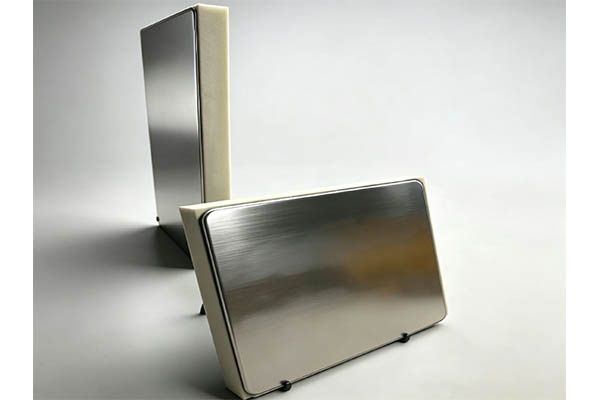
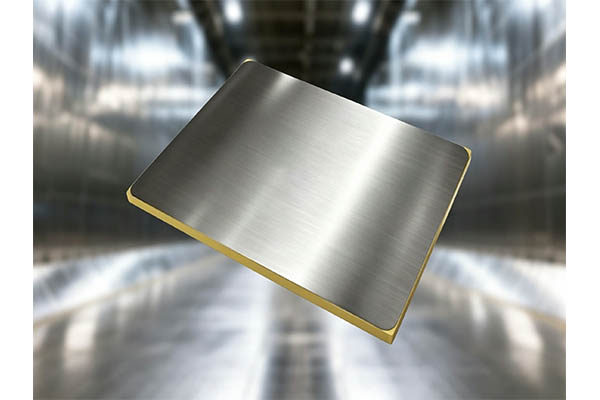
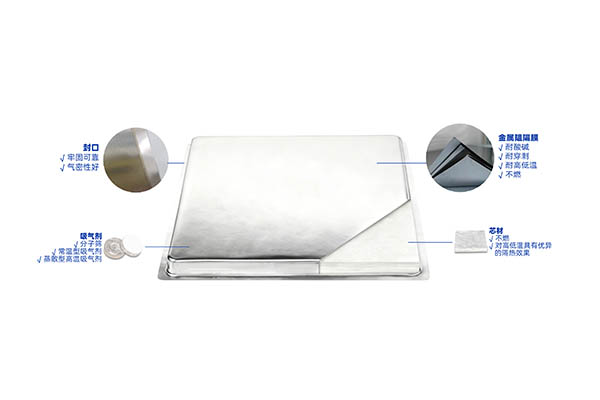
VPU (Metal-Envelope VIP + PU Composite Module), also described as a "VIP + PIR/PU Composite Insulation Panel," combines a high-barrier 304 stainless steel VIP with PU. Developed by VacuEco for large cryogenic storage tanks, it provides extremely low thermal conductivity—about 1.2mW/m·K after lamination—together with the advantages of modular installation.
VacuEco VPU is available in different thicknesses, widths, and lengths to suit different applications:
Parameter | Specification Range |
Thickness | 5mm ~ 200mm |
Module Width | Maximum 1000mm |
Module Length | Maximum 2000mm |
Custom Shapes | Available for special spaces |
VPU is not limited to a single standard size. It can be engineered around the tank structure.
For customers, the benefits are direct:
Easier integration with complex structures;
Easier staggered-joint installation;
Simpler on-site installation management;
Better suited to standardized project execution.
In full-containment tanks:
VacuEco VPU can be bonded to the inner face of the outer concrete wall and combined with perlite filling to improve insulation. Installation is simple: the modules are bonded in place without major structural changes.
In membrane tanks:
VPU can be pre-laminated into PU or PIR insulation modules, integrating high-performance insulation during factory production.
Both methods have one advantage:
They turn high-performance insulation into modular products that are easier to install and manage. Compared with extensive on-site processing, this improves installation efficiency and quality consistency.
Thermal bridge control is critical in VIP applications.
A thermal bridge is a more conductive part of the insulation system through which heat flows more readily, reducing overall performance. In VPU applications, module joints are potential thermal bridges.
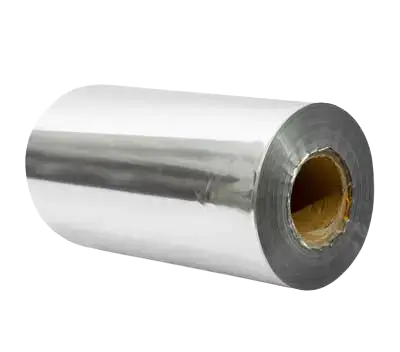
VacuEco VPU uses a metal barrier layer only about 0.1mm thick. Staggered-joint installation extends the heat-flow path and greatly reduces thermal bridging, bringing system performance closer to the intrinsic performance of the insulation material.
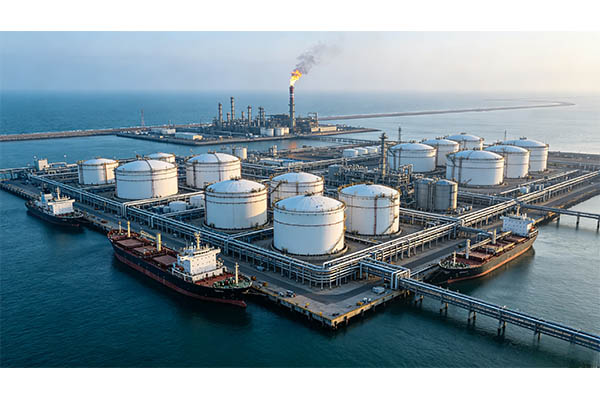
Large energy projects are naturally cautious about new materials. Customers need to know whether performance is proven, installation is practical, quality is controllable, and risk can be managed.
Through modular design, VacuEco makes high-performance insulation easier to engineer and deploy.
High performance should not mean high complexity.
VacuEco VPU turns LNG tank insulation upgrades from a technical possibility into an engineering-ready solution.
Term | Definition |
LNG | Liquefied natural gas stored as a liquid at approximately -162°C |
VPU | Metal-envelope VIP + PU composite module, a high-efficiency cold insulation material developed by Super Tech |
VIP | Vacuum Insulation Panel, vacuum-sealed to achieve extremely low thermal conductivity |
Thermal | A measure of heat transfer through a material, in mW/m·K; lower values indicate better insulation |
Thermal Bridge | A more conductive part of an insulation layer through which heat flows preferentially, reducing overall insulation performance |
Staggered-Joint | An installation method that offsets joints between adjacent module layers to lengthen the thermal bridge path and reduce its effect |
Full-Containment | A large LNG tank with a 9% nickel-steel inner tank and a prestressed-concrete outer tank |
Membrane Tank | An LNG tank using an approximately 1.2mm corrugated stainless steel membrane as the sealing layer |
Perlite | Insulation fill commonly used in the annular space of full-containment LNG tanks |
PU/PIR | Polyurethane/polyisocyanurate foam, commonly used as the base material in membrane tank insulation modules |
Modular Installation | A construction method in which materials are prefabricated as standard modules, manufactured in a factory, and installed on site |
BOG | Boil-Off Gas generated when LNG vaporizes naturally because of heat ingress |
BOR | Boil-Off Rate, the percentage of total LNG inventory that evaporates each day |
 English
 日本語
日本語 한국어
한국어 français
 Deutsch
 Español
 italiano
 русский
 português
 العربية
 Türkçe