Five questions—from cryogenic performance and structural safety to supply-chain capability—determine the reliability of the insulation system.
For cryogenic transport assets such as LNG and LPG carriers, insulation is not just another functional material. It is a critical component affecting vessel safety, operating efficiency and long-term reliability.
During material selection, many projects focus on price, lead time and datasheets.
But a few more fundamental questions determine whether the material can withstand decades of service:
Will performance remain stable at -196℃?
Can the vacuum insulation structure be maintained over the long term?
Does it comply with classification-society and other applicable requirements?
Can the supplier provide stable, continuous delivery?
These are the issues that shipyards, design institutes and shipowners should assess when selecting marine insulation.
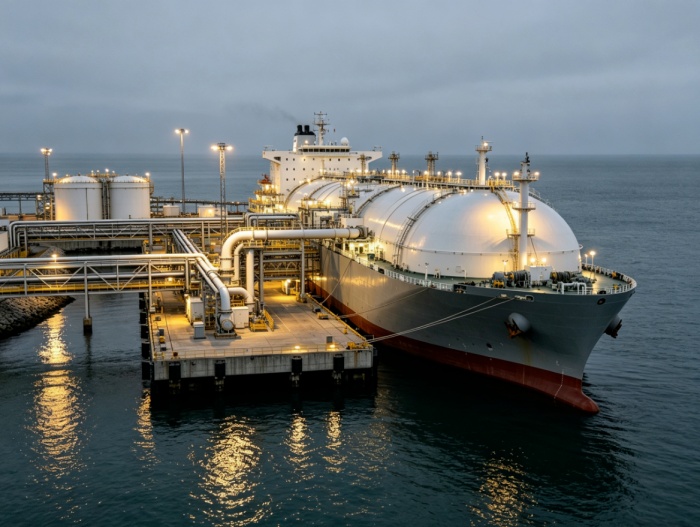
LNG carriers transport liquefied natural gas at -162℃.
To keep LNG stable during long-term storage, vessels typically use membrane containment systems or independent tanks, while the insulation must withstand extreme cold, vibration, pressure changes and complex marine conditions.
The insulation must limit external heat ingress, protect the hull structure and reduce LNG boil-off losses.
A decline in insulation performance can lead to:
Higher tank boil-off rate (BOR);
Increased load on the BOG handling system;
Lower fuel-use efficiency;
And potentially compromised vessel safety.
Selecting marine insulation is therefore a decision about long-term operational assurance.
Thermal conductivity at room temperature does not represent performance under cryogenic conditions.
LNG carriers operate near -162℃, so the material must maintain stable low-temperature insulation performance.
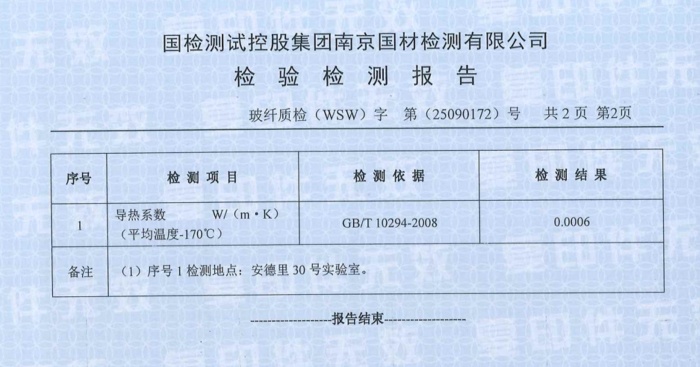
VacuEco VPU maintains extremely low and stable thermal conductivity under cryogenic conditions, supported by complete test data (at an average temperature of -170℃, the core VIP achieves thermal conductivity as low as 0.0006W/m·K).
Vacuum is essential to the high insulation performance of VIP.
Conventional pouch-type encapsulation may develop leakage during long-term use.
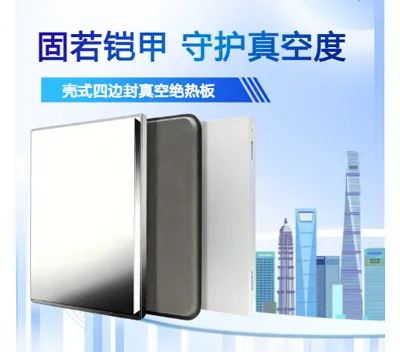
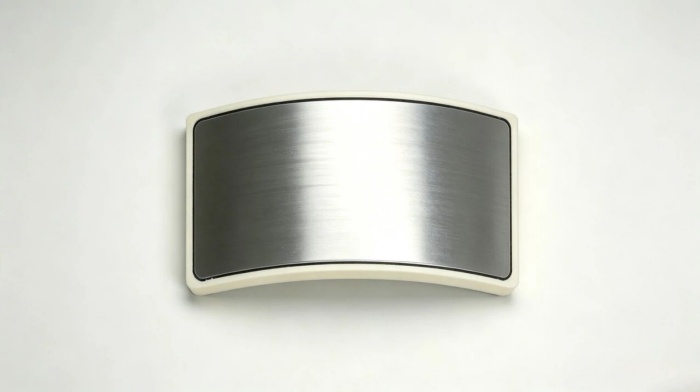
VacuEco VPU uses high-barrier stainless-steel encapsulated VIP formed by hot pressing, with extremely low corner leakage and stable full-life-cycle performance.
Marine materials must meet classification-society and applicable regulatory requirements, not just performance specifications.
VacuEco has established a technical validation system for cryogenic applications including LNG and LPG carriers, providing reliable material support for marine insulation projects.
A marine insulation system cannot simply be installed after the materials arrive.
Every stage—from system design and detail optimisation to installation guidance and project delivery—affects the final result.
VacuEco provides integrated services covering material R&D, manufacturing and technical support.
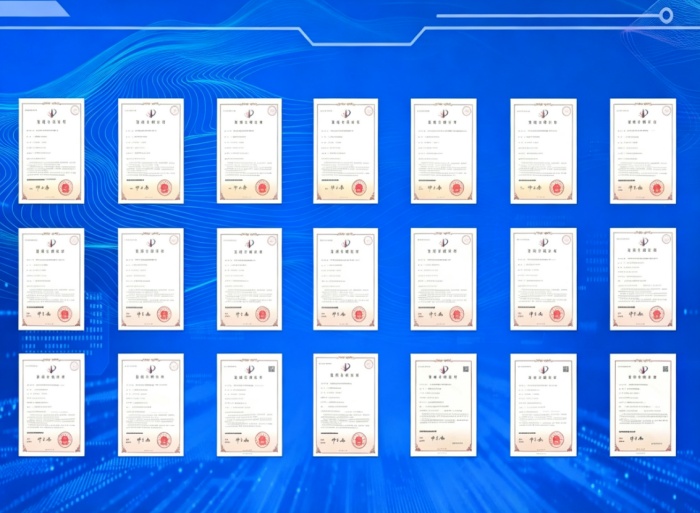
Cryogenic equipment projects have long schedules and demand reliable material supply.
Super Tech Advance Material continues to develop core technologies independently and has accumulated 180+ patents, strengthening supply assurance from material R&D through manufacturing.
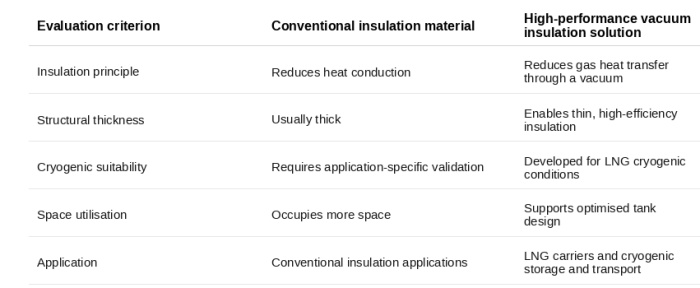
For long-life assets such as LNG carriers, material selection should consider total life-cycle value, not procurement price alone.
An LNG carrier typically remains in service for decades.
Throughout its operating life, the insulation system continuously affects energy loss, safety and equipment load.
When choosing a supplier, ask these questions:
Are the material’s cryogenic-performance data reliable?
Can the vacuum structure remain stable over the long term?
Does the supplier have marine project experience?
Can it provide complete technical support?
Is the supply chain reliable?
A company that can answer these questions clearly deserves consideration for the project shortlist.
VacuEco VPU focuses on insulation for LNG/LPG carriers and cryogenic equipment. It uses vacuum insulation technology to advance domestic high-performance marine insulation materials and provide reliable solutions for global cryogenic energy transport.
Q1: Why do LNG carriers need high-performance insulation materials?
A: LNG must be stored and transported at extremely low temperatures. Insulation reduces external heat ingress and LNG boil-off losses while protecting the hull structure.
Q2: How do VIPs differ from conventional insulation materials?
A: VIPs reduce heat transfer through a vacuum environment, providing higher insulation efficiency at the same thickness and suiting cryogenic applications with strict space and performance requirements.
Q3: Where is VacuEco VPU mainly used?
A: Low-temperature applications (LNG carriers, LNG storage tanks and LNG receiving terminals) and high-temperature applications (industrial furnaces, steam pipes and thermal equipment).
Q4: What are the most important criteria when selecting marine insulation?
A: In addition to thermal conductivity, assess low-temperature stability, structural reliability, fire requirements, certification status and supply-chain capability.
Q5: Can your marine insulation materials meet the needs of large projects?
A: As our cryogenic insulation technology develops, we are progressively meeting the requirements of high-end cryogenic equipment through R&D and accumulated engineering experience.
 English
 日本語
日本語 한국어
한국어 français
 Deutsch
 Español
 italiano
 русский
 português
 العربية
 Türkçe