Read this article to see why shipowners are actively switching to cryogenic insulation materials.
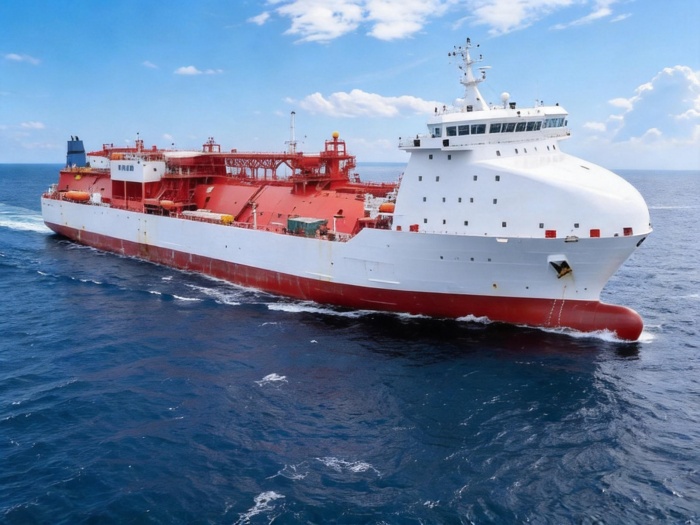
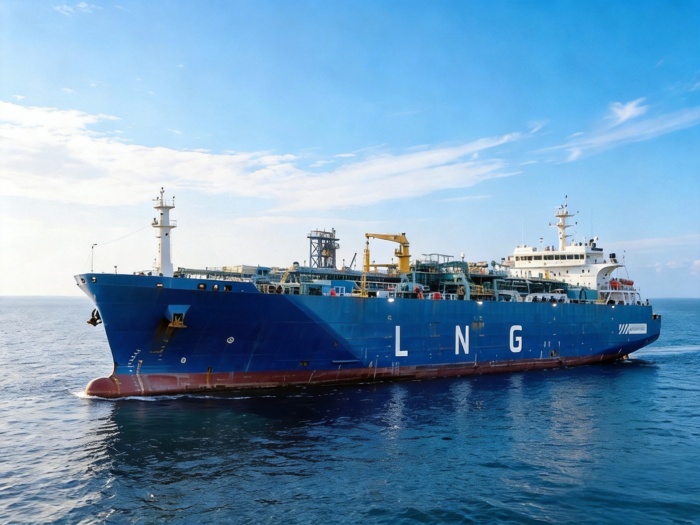
What determines the competitiveness of an LNG carrier?
Many would say its engine, speed, or deadweight capacity.
But experienced LNG operators know there is another hidden metric: boil-off rate (BOR).
Simply put, BOR is the amount of LNG that naturally evaporates each day during a voyage because of insufficient insulation.
Every kilogram that evaporates is lost cargo.
Better insulation lowers BOR, reduces cargo loss on every voyage, and improves returns for the shipowner.
This is why insulation material selection directly affects the profitability of an LNG carrier.
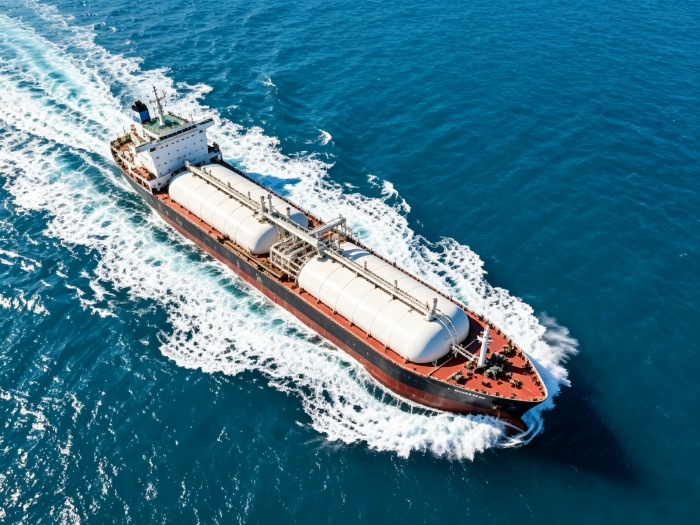
The insulation materials commonly used in LNG/LPG carrier tanks fall into three main categories:
Porous materials (such as expanded perlite)
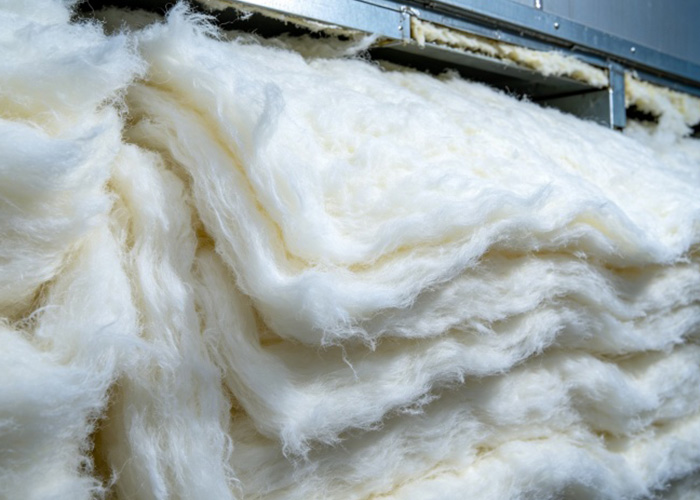
Fibrous materials (such as glass wool)
Cellular materials (such as polyurethane foam and polystyrene)
These materials have been used in buildings for decades.
The technology is mature and relatively inexpensive.
The problem is: LNG carriers operate under far harsher conditions than ordinary buildings. Tank temperatures can fall to -162°C for LNG, or even lower. At sea, the hull is continuously exposed to vibration, impact, and pressure changes.
Insulation thickness is tightly restricted because excessive thickness takes up valuable cargo space.
Traditional materials often require 500mm or more to provide adequate insulation.
Every extra millimetre of insulation means less cargo capacity.
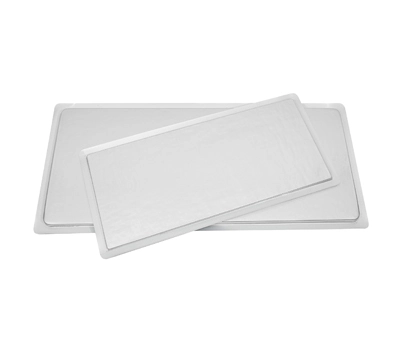
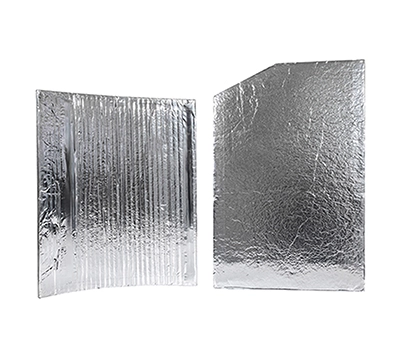
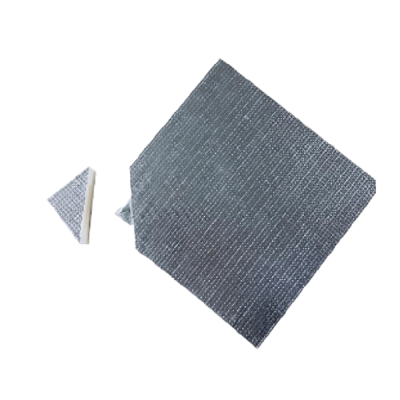
VacuEco VPU, a metal-envelope vacuum insulation panel and polyurethane composite module ["VIP + PIR/PU Composite Insulation Panel"], is a new cryogenic insulation material developed by Super Tech.
It combines a high-performance metal-envelope vacuum insulation panel (VIP) with polyurethane (PU), delivering extremely low thermal conductivity in a modular, engineering-ready system.
One of the main advantages of the VPU developed by Super Tech is: It is designed for LNG and LPG carrier tank insulation, delivering exceptional thermal performance at a much lower thickness.
Specifically: A 40mm VPU panel provides the same insulation performance as 100mm of polyurethane foam.
The composite thermal conductivity is extremely low, approximately 1.2mW/m·K (0.0012W/m·K), with stable performance under cryogenic conditions.
The core is a stainless-steel-encapsulated vacuum insulation panel (BVP), laminated with polyisocyanurate (PIR) foam.
This means: For the same tank size, VacuEco VPU creates more usable cargo volume. It is easy to install, strong, thermally efficient, and reliable. It is suitable not only for LNG/LPG carrier tanks but also for any self-supporting tank, directly improving the economics of each vessel.
VIPs offer excellent thermal performance, but they have a critical weakness: they are vulnerable to damage and vacuum loss.
Once punctured, their insulation performance drops sharply.
VacuEco VPU solves this through:
Armour-like strength: A proprietary stainless-steel BVP protects the vacuum layer like armour, eliminating the leakage and swelling risks of conventional pouch-type VIPs.
Its rigid base shell is hot-pressed for excellent deformation and puncture resistance.
Maximum cryogenic protection: The PIR foam cover is designed for -196°C to -100°C conditions and offers better fire performance than conventional polyurethane.
Easy installation: The modules are bonded with a cryogenic-grade adhesive for faster installation.
Armour-like strength, maximum cryogenic protection, and easy installation are all essential.
Traditional Solution | VacuEco VPU Solution |
Thick insulation reduces cargo space | Ultra-thin design releases more cargo volume |
Higher BOR and greater cargo evaporation losses | Significantly lower BOR and reduced cargo loss |
Unstable performance under cryogenic conditions | Designed for -196°C with stable lifecycle performance |
Complex installation and long construction time | Composite panels are directly bonded for faster installation |
Global LNG fleet expansion is accelerating.
Industry reports forecast the global LNG carrier insulation panel market to reach USD 1.85 billion by 2031, with a CAGR of 15.3%.
Suppliers that combine thinner materials, more stable performance, and faster installation will win more orders.
VacuEco VPU was developed for this market.
For more efficient insulation solutions for LNG/LPG carriers, follow us for cryogenic insulation solutions.
LNG | Liquefied Natural Gas: natural gas liquefied at approximately -162℃. |
VPU | “VIP + PIR/PU Composite Insulation Panel” |
VIP | Vacuum Insulation Panel: a high-performance insulation material with greatly reduced thermal conductivity created by evacuation. |
BOR | Boil-Off Rate: the percentage of LNG that evaporates from the total tank inventory over a given period. |
PIR | Polyisocyanurate: a modified insulation material with better temperature resistance and flame-retardant performance than PU, commonly used in high-performance cryogenic insulation modules. |
Perlite | Perlite is a natural volcanic rock expanded at high temperature. |
PU | Polyurethane foam, commonly used as the base material in LNG membrane-tank insulation modules. |
Glass wool | Glass wool is a man-made inorganic fibre produced by fibre-forming molten glass into a wool-like material. |
Polystyrene | Polystyrene (PS) is a colourless, transparent thermoplastic polymer produced by free-radical polymerisation of styrene monomers. |
LPG | LPG means liquefied petroleum gas. |
BVP | Building Vacuum Panel: a high-efficiency panel using a rigid metal casing, usually stainless steel, as the vacuum envelope. |
LPG Carrier | An LPG carrier is a vessel specifically designed to transport liquefied petroleum gas. |
LNG Carrier | An LNG carrier is a vessel specifically designed to transport liquefied natural gas at an extremely low temperature of -162℃ under atmospheric pressure. |
Thermal Conductivity | A measure of a material’s heat-transfer capability, expressed in mW/m·K. |
 English
 日本語
日本語 한국어
한국어 français
 Deutsch
 Español
 italiano
 русский
 português
 العربية
 Türkçe