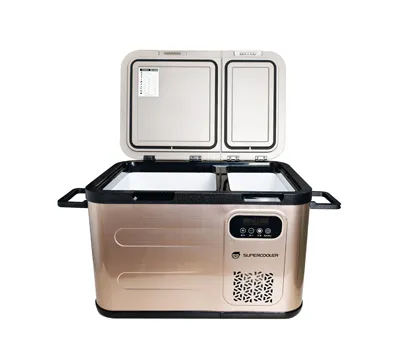
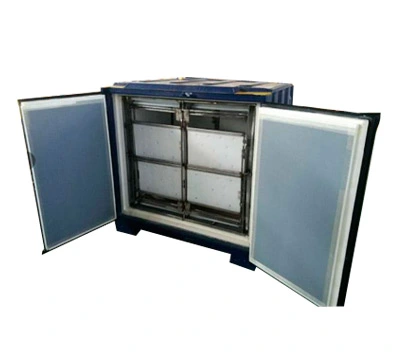
Professionals working with cold-chain tanks, LNG pipelines, high-temperature industrial equipment and insulated specialty transport often face several common problems:
Conventional bag-type VIPs require folded edges. These areas have higher leakage rates and can lose vacuum after impact or minor puncture. Under repeated high- and low-temperature cycling, thermal conductivity gradually rises, increasing equipment energy use. Standard insulation panels also have limited temperature ranges and age faster under ultra-low or high temperatures, leading to more frequent replacement. Many engineers find that the problem is not the performance potential of vacuum insulation itself, but that conventional products cannot reliably handle complex operating conditions.
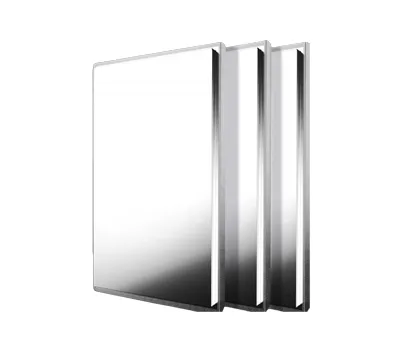
Super Tech's shell-type vacuum insulation product, the VAP® ST stainless-steel welded vacuum insulation panel, uses a laser-welded stainless-steel casing to address key weaknesses of conventional VIPs and provide stable insulation in demanding temperature environments.
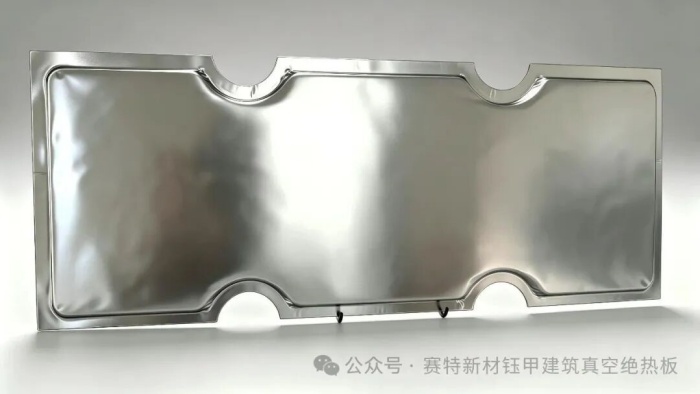
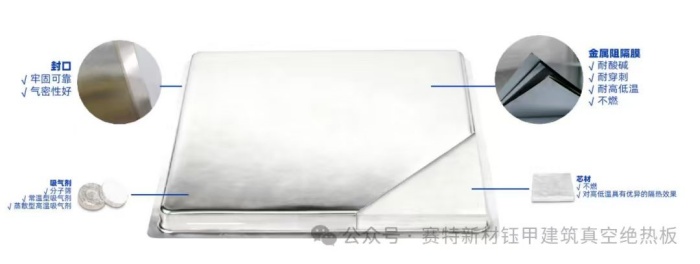
Most VAPs and bag-type VIPs use heat-sealed film structures. The seals are natural weak points and may open under temperature changes or external pressure. VAP® ST uses a prefabricated stainless-steel base shell with seamless laser welding. Its fold-free structure reduces the weaknesses associated with film seals:
Impact resistant seals: Seal strength reaches 330 N/15 mm, clearly outperforming aluminum-based VAPs and conventional bag-type VIPs. The panels withstand normal compression and impact during handling, lifting and installation;
Puncture-resistant stainless-steel shell: The rigid casing resists deformation and puncture, reducing the risk of microleaks at the edges and maintaining the internal vacuum;
Integrated wide-temperature welding: The one-piece welded structure avoids the high-temperature softening and low-temperature embrittlement associated with heat-seal films, supporting a much wider operating range.
The panel combines an inorganic fiberglass core with a long-life composite adsorbent to maintain the internal vacuum. Its rated service life is up to 15 years, with only minor changes in thermal conductivity over time.
Test data across the full product range show that VAP® ST covers a wider operating-temperature range:
VAP-AL aluminum-based panel: −40°C to 100°C; conventional bag-type VIPs are limited to 80°C.
VAP® ST stainless-steel welded panel: Stable operation from −196°C to 800°C for LNG tanks, high-temperature pipelines, metallurgy, marine and aerospace applications, and specialized cryogenic containers.
All relevant performance data have been tested to Chinese national standards and are traceable:
Center-of-panel thermal conductivity at room temperature is ≤1.8 mW/(m·K). The thin panel provides insulation equivalent to multiple layers of conventional materials, greatly reducing insulation thickness compared with rock wool and polyurethane.
After high-temperature, low-temperature and damp-heat aging, thermal conductivity changes by only 0.1 mW/(m·K), with minimal performance loss under long-term thermal cycling.
Puncture strength meets Chinese national standards, so minor impact during installation is unlikely to damage the internal vacuum layer.
The VAP® ST Series includes three models, allowing users to select the right panel for each application and control project costs:
VAP® VAP-ST (laser-welded stainless steel): For wide-temperature applications, including LNG equipment, high-temperature industrial pipelines, specialized cryogenic equipment, and marine and aerospace insulation;
VAP® VAP-ST/PE (stainless steel laminated with PE): Rated for −40°C to 110°C, for home appliances, large cold-chain containers and commercial cold-storage projects;
VAP® VAP-ST/GS (adhesive-sealed stainless steel): Rated for −60°C to 150°C, for chemical pipelines, new-energy equipment and rail-transit vehicle insulation.
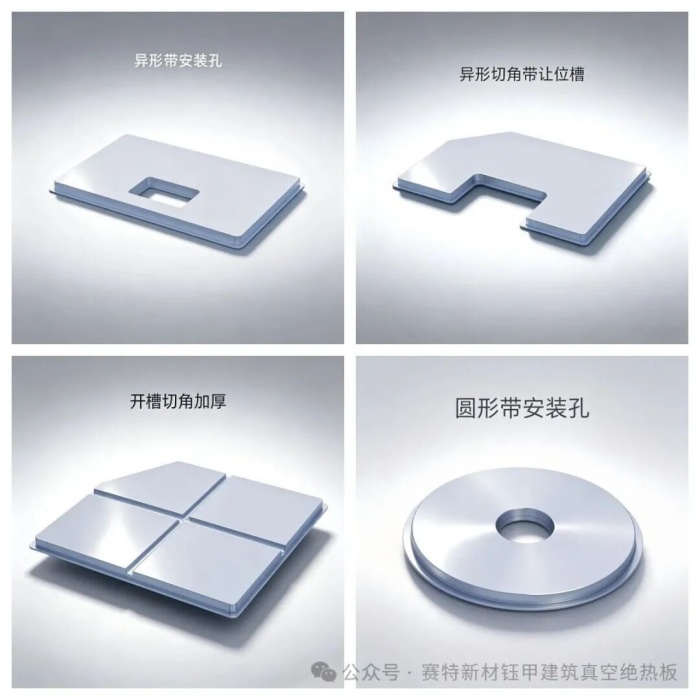
All models support custom dimensions. Square, round and irregular polygonal panels can be tooled and produced. The minimum seal width is only 8 mm, leaving more usable space inside the equipment.
Lower replacement costs: The puncture-resistant shell and lower leakage risk reduce panel scrap. A 15-year service life also reduces repeat purchasing;
Better space utilization: The thin vacuum insulation panel occupies less internal space for the same insulation performance;
More stable long-term energy use: Thermal conductivity changes little after aging, keeping long-term equipment energy consumption more consistent;
More installation tolerance: The rigid stainless-steel shell requires less delicate handling and can shorten on-site installation time.
For high-temperature or ultra-low-temperature applications where conventional insulation lacks stability, VAP® ST stainless-steel vacuum insulation panels offer a reliable solution. Operating-condition calculations and samples are available.
Leave your operating conditions and temperature in the comments. Our technical engineers can provide a tailored insulation proposal. Save this article and share it with insulation professionals.
 English
 日本語
日本語 한국어
한국어 français
 Deutsch
 Español
 italiano
 русский
 português
 العربية
 Türkçe